Hanania Subaru of Orange Park

Blog

Drive Confidently: Subaru Tire Secrets Every Jacksonville Owner Must Know!

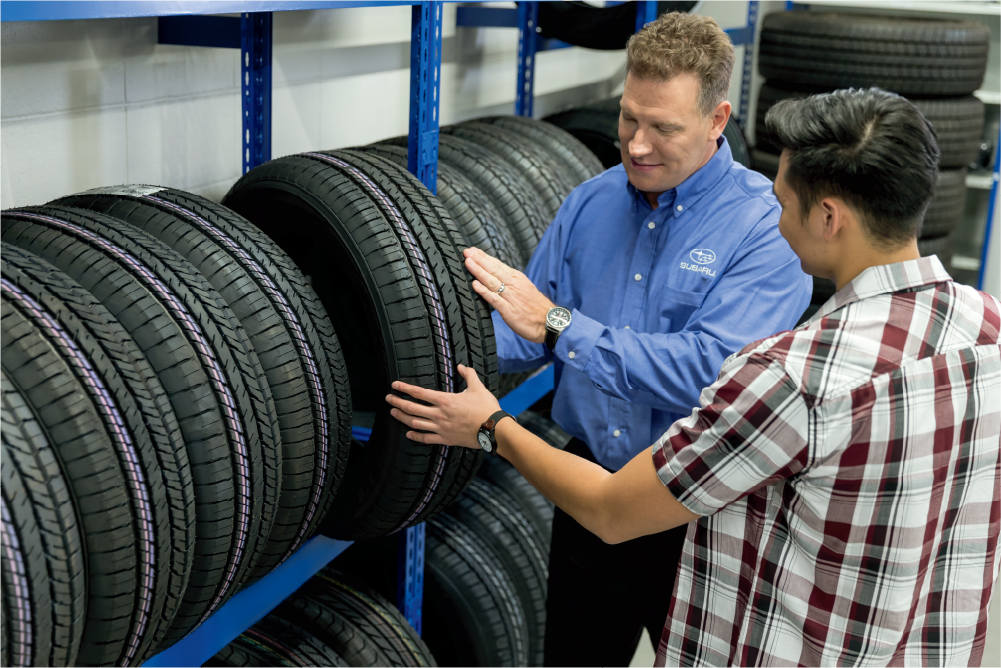
Subaru of New England Tire Center | Subaru of New England

Owning a Subaru means embracing reliability, safety, and performance, especially for families and adventurers navigating Jacksonville’s diverse driving conditions. One key aspect of keeping your Subaru at its best is knowing when to replace your tires. Tire health directly impacts your vehicle’s handling, fuel efficiency, and, most importantly, your safety on roads from Atlantic Beach to Orange Park and beyond. Whether you’re commuting through Ponte Vedra Beach or exploring Middleburg’s backroads, understanding tire replacement guidelines tailored to Subaru’s all-wheel-drive (AWD) systems is essential.

For personalized advice or to schedule a tire inspection, reach out to us at (904) 906-1235 906-1235) or visit us at 6400 Blanding Blvd, Jacksonville, FL 32244. Our expert team at Hanania Subaru is here to help you navigate tire care with confidence.

Table of Contents


Optimal Timing for Subaru Tire Replacement

Tire tread depth is the most reliable indicator for when to replace your Subaru’s tires. As the tread wears down, your vehicle’s grip, especially in wet conditions common around Jacksonville Beach and Neptune Beach, diminishes significantly. Subaru experts recommend considering tire replacement once tread depth falls below 4/32 of an inch to maintain optimal traction, braking, and handling.

Checking tread depth can be straightforward using a tread gauge or the classic quarter test: insert a quarter into the grooves with Washington’s head pointing down. If the top of the head is visible, it’s time to replace your tires. While the legal minimum tread depth in most areas, including Florida, is 2/32 of an inch, Subaru advocates for earlier replacement at 4/32 to prioritize safety, especially given the region's frequent rain and humid conditions.

Driving with worn tires not only reduces your Subaru’s performance but also increases the risk of hydroplaning and longer stopping distances on slick roads. In locations like Middleburg or Orange Park, where weather and road conditions vary, timely tire replacement ensures your family’s safety and keeps your AWD system functioning effectively.

Regular tire inspections at Hanania Subaru, located at 6400 Blanding Blvd, Jacksonville, FL 32244, can help catch tread wear early. Schedule your service appointment through our Subaru Service Center to keep your tires in top condition.


Understanding Subaru Tire Rules and Recommendations

Subaru vehicles come with specific tire requirements to ensure their advanced AWD systems operate smoothly. The general legal requirement for tread depth is 2/32 of an inch, but Subaru recommends replacing tires once tread reaches 4/32 of an inch for enhanced safety. This guideline is crucial for Jacksonville drivers who face wet roads during Florida’s rainy seasons and occasional sandy conditions near coastal areas like Atlantic Beach.

Maintaining proper tire pressure is another Subaru rule that directly impacts tire wear and vehicle safety. Underinflated tires cause uneven wear on the outer edges, while overinflated tires wear faster in the center. Keeping tire pressure at the manufacturer’s recommended levels, which you can find in your owner’s manual or from our Hanania Subaru service experts, promotes even wear and extends tire life.

In addition to tread depth and pressure, Subaru owners should be aware of alignment and suspension conditions. Uneven wear on one side of a tire often signals misalignment or suspension issues, common challenges for drivers navigating the varied terrain around Ponte Vedra Beach or Kingsland. Addressing these promptly at our dealership helps avoid premature tire replacement and maintains your vehicle’s handling precision.

For expert tire inspections and maintenance aligned with Subaru’s standards, visit Hanania Subaru in Jacksonville. Our certified technicians use genuine equipment and parts from our Genuine Subaru Parts department to keep your vehicle running safely.


How to Identify When Your Tires Need Replacing

Recognizing when your Subaru’s tires require replacement involves more than just measuring tread depth. Visual inspections for uneven wear patterns such as more wear on one side than the other can point to alignment or suspension problems. For example, if you notice this uneven wear driving through Yulee or St. Marys neighborhoods, it’s wise to have your vehicle checked to prevent further damage.

Other signs include tire sidewall damage, such as cracks, bulges, or cuts, which compromise tire integrity. These issues can be caused by potholes, debris, or curbs often encountered on Jacksonville’s urban streets or rougher roads near Middleburg. Vibrations or pulling to one side while driving also indicate potential tire or alignment troubles.

Subaru’s EyeSight® Driver Assist technology works best with well-maintained tires, as traction sensors rely on consistent tire performance. If you suspect tire wear problems, our Hanania Subaru team can conduct a thorough inspection and recommend appropriate replacements or repairs. Use our convenient Get Trade Value tool if you’re considering upgrading your vehicle alongside tire maintenance.


Replacing Two Tires on an AWD Subaru: What You Need to Know

Subaru’s symmetrical AWD system requires careful tire management to prevent drivetrain damage. Unlike traditional vehicles, replacing only two tires on an AWD Subaru is generally discouraged unless the new tires closely match the tread depth and wear of the existing ones.

A mismatch in tire circumference, which can happen when new tires replace worn ones, causes uneven wheel rotation speeds. Imagine two people walking the same distance but with different stride lengths — the shorter stride must take more steps, similar to a tire with less tread spinning faster. This discrepancy can confuse Subaru’s traction control system, which constantly monitors wheel speed and grip, potentially causing the vehicle to mistakenly engage four-wheel lock or strain the drivetrain.

If you must replace only two tires, Subaru experts recommend installing them on the rear axle to maintain vehicle stability, especially in wet or slippery conditions common in Jacksonville Beach or Neptune Beach. However, ideally, all four tires should be replaced simultaneously to maintain balance and protect your AWD system.

Our Hanania Subaru service team can measure your current tread depth accurately and advise you on the best replacement approach. Browse our wide selection of new tires and vehicles through our New Subaru Inventory or explore certified pre-owned options at Certified Pre-Owned Inventory.


How Long Do Subaru Tires Typically Last?

Subaru tires usually last between 3 to 4 years, or approximately 12,000 to 15,000 miles annually, depending on driving habits and local conditions. For Jacksonville drivers traveling through areas like Orange Park or Kingsland, factors such as road quality, aggressive driving, and climate can accelerate tire wear.

Frequent potholes, rough road surfaces, and stop-and-go traffic typical of suburban Jacksonville neighborhoods contribute to faster tread degradation. Drivers who frequently accelerate or brake hard, common on busy routes near St. Marys, also reduce tire lifespan.

Preventative maintenance like monthly tire pressure checks, annual alignment inspections, and timely rotations can extend tire life significantly. Hanania Subaru encourages regular vehicle check-ups at our service center to adapt maintenance schedules to your specific driving patterns. Plus, new Subaru owners receive a complimentary Lifetime warranty and two years of maintenance with every new vehicle purchase, a unique benefit you can enjoy at Hanania Subaru of Orange Park.


Recommended Tire Rotation Frequency for Subaru Vehicles

Rotating your Subaru’s tires every 6,000 to 7,500 miles, or roughly every oil change, is key to extending tire life and ensuring balanced wear. Since Subaru’s AWD system distributes power to all four wheels, uneven tread wear can affect traction and handling.

Tire rotation involves strategically moving tires between front and rear and across sides. For Subaru AWD vehicles, the typical pattern moves the front tires to the rear diagonally and vice versa, ensuring even tread wear across all tires. This practice reduces uneven pressure on tires, especially the front ones, which carry more engine weight and handle most steering and braking forces.

Even if your Subaru is parked often, such as in residential areas around Ponte Vedra Beach, rotating tires every six to seven months is advisable. Pressure from stationary weight can cause flat spots or uneven wear, so regular rotations help distribute wear evenly.

Schedule a tire rotation appointment at Hanania Subaru’s Subaru Service Center to maintain optimal tire health and vehicle safety.


Hanania Subaru’s Tire Services and Resources in Jacksonville

At Hanania Subaru, we understand that your tires are the foundation of your vehicle’s performance. From routine inspections and tire rotations to expert advice on when to replace your tires, our team offers comprehensive care to keep your Subaru running safely on Jacksonville’s roads.

We supply Genuine Subaru Parts including tires and accessories designed specifically for your vehicle’s AWD system. Whether you’re upgrading your Subaru Forester or Outback with performance tires found in our New Forester Inventory or New Outback Inventory, or exploring our New Subaru Performance Inventory for sportier options, we have you covered.

If you’re considering trading in your current vehicle to upgrade, use our Get Trade Value tool for a quick and transparent estimate. For all your maintenance needs, including tire replacement and rotations, book your visit with our expert technicians through our Schedule your service appointment page.

Experience peace of mind with Hanania Subaru’s exclusive Vehicle Lifetime Warranty and two years of complimentary maintenance on every new vehicle purchase. Your safety and satisfaction on Jacksonville streets, from Atlantic Beach to Yulee, are our highest priorities.


Drive confidently with well-maintained tires and expert care from Hanania Subaru, your trusted partner in Jacksonville for Subaru safety, performance, and community-focused service. Schedule your personalized appointment today and keep your Subaru ready for every adventure.
Recommended Posts

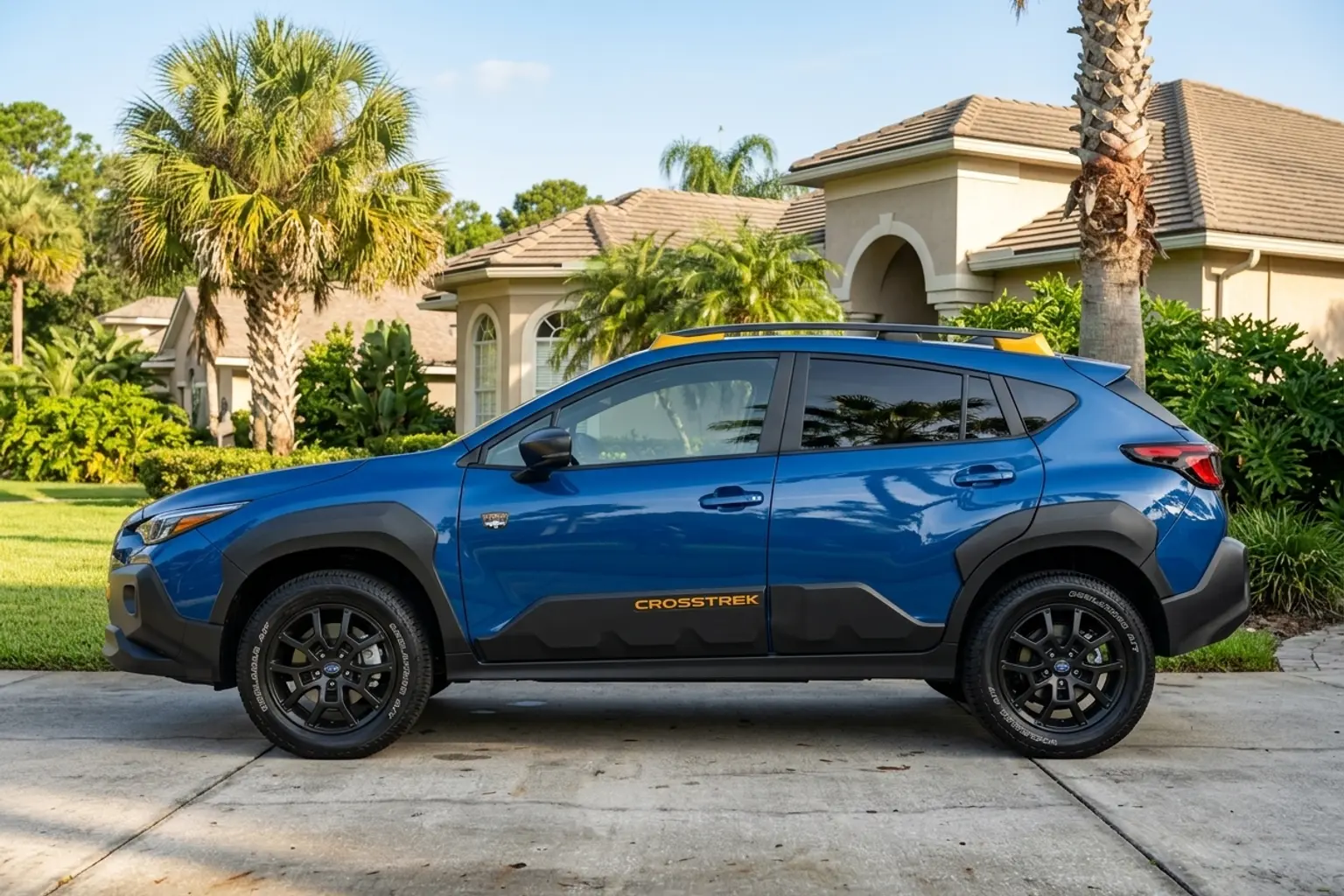
An unbadged SUV parked in a Florida driveway on a sunny morning with palm trees behind it

How Long Do Subaru Engines Last? A Jacksonville Tech Explains

Down here in Jacksonville, heat, humidity, and stop-and-go traffic on I-295 put real stress on any engine. Owners ask me all the time whether their Subaru will hold up over the long haul. The honest answer is that these engines are built to run a long time, but how long depends a lot on how you treat them. Here's the straight talk from the service bay. How long do Subaru engines last? With consistent maintenance, most modern Subaru engines last 200,000 to 250,000 miles, and plenty cross 300,000. That's roughly 13 to 17 years at typical driving of about 15,000 miles a year. Skipped oil changes and ignored leaks are what cut that number short, not the engine design itself. The Subaru boxer engine sits flat and low, which helps with balance and vibration. That layout is durable, but it also means routine care matters. When you keep up with oil, coolant, and timing components, the powertrain tends to outlast the rest of the car. What shortens a Subaru engine's life the most? The biggest killers are low oil and overheating. Running an engine low on oil accelerates wear on bearings and rings, while chronic overheating warps components and damages gaskets. In our humid Florida climate, neglected cooling systems and old, degraded coolant are common culprits behind premature failures we see in the shop. Here are the habits that shorten engine life fastest: Stretching oil changes far past the interval Ignoring small leaks until they become big ones Letting the temperature gauge climb without pulling over Using the wrong oil grade or cheap filters Skipping cooling-system service in a hot climate According to a 2023 iSeeCars study of vehicles reaching 200,000 miles, Subaru models appeared among the brands most likely to hit that mark, which lines up with what we see on high-mileage cars that were maintained on schedule. What maintenance helps a Subaru engine reach 200,000 miles? Regular oil and filter changes, fresh coolant, and clean air filters do the heavy lifting. Address leaks early, replace spark plugs on schedule, and keep an eye on the cooling system, especially in Jacksonville heat. Following the factory maintenance schedule is the single most reliable way to reach 200,000 miles and beyond. Here's a simple reference for common service intervals on many recent Subaru engines. Always confirm against your specific model year and owner's manual. Service Typical interval Engine oil & filter Every 6,000 miles or 6 months Engine air filter Every 30,000 miles Spark plugs Around 60,000 miles Coolant First at 137,500 miles, then every 75,000 Cabin air filter Every 12,000 miles If you're driving mostly short trips or sitting in heavy traffic, treat your car as a severe-duty case and lean toward the shorter end of every interval. Our service team at Hanania Subaru of Orange Park is happy to look over a high-mileage engine and tell you honestly what it needs and what can wait. Written by Mike R., Master Subaru Technician (Service) at Hanania Subaru of Orange Park

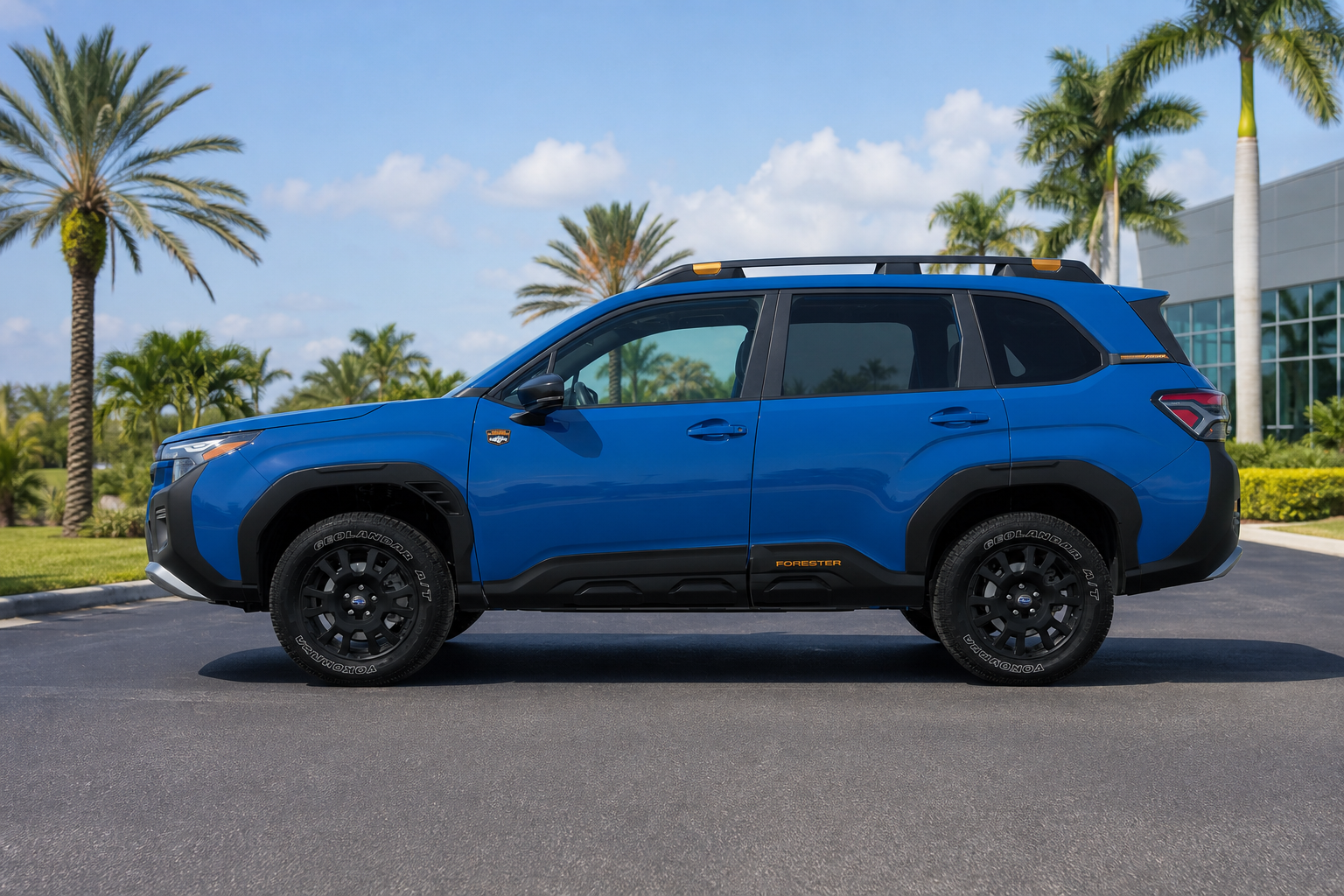
Unbadged crossover parked in a sunlit Florida dealership lot with palm trees and clear blue sky

Is Hanania Subaru of Orange Park a Good Dealership?

It's a fair question to ask before you spend an afternoon on a lot or hand over a deposit. Instead of a sales pitch, here's a plain look at how we operate, where we sit in the Jacksonville area, and how to judge us for yourself. What makes Hanania Subaru of Orange Park a good dealership? A good dealership is one that's clear about pricing, keeps your car healthy after the sale, and treats a return visit the same as a first one. At Hanania Subaru of Orange Park we lean on transparent service estimates, a factory-trained Subaru team, and a location that's easy for west-side Jacksonville and Clay County drivers to reach. The honest truth is that no dealership is perfect for every shopper. What we can promise is that you'll get the numbers before the paperwork, not after. If a repair can wait or a scheduled item doesn't apply to your driving habits, we'll say so rather than pad the ticket. Factory-trained technicians who work on Subaru vehicles every day Genuine Subaru parts for repairs and maintenance Written estimates before work begins A full Jacksonville-area service department for oil changes, brakes, and warranty work According to J.D. Power's 2024 U.S. Sales Satisfaction Index Study, satisfaction scores climb sharply when dealers explain paperwork clearly and avoid surprises at signing, source: J.D. Power. That's the bar we try to hit on every deal. How does Hanania Subaru handle service and repairs? Our service department handles routine maintenance and warranty work using genuine Subaru parts and factory-trained technicians. You get a written estimate before we start, a heads-up if something can safely wait, and a clear explanation of what each visit covers so you're never guessing at the counter. Subaru all-wheel-drive systems and boxer engines have specific maintenance needs, and Florida's heat and humidity add their own wear on batteries, cooling systems, and cabin air filters. Here's a general guide to common intervals so you can plan ahead: Service Typical interval Why it matters in Jacksonville Oil & filter change Every 6,000 miles Stop-and-go heat is hard on oil Tire rotation Every 6,000 miles Keeps all-wheel drive wearing evenly Battery check Twice a year Florida heat shortens battery life Cabin air filter ~12,000–15,000 miles Pollen and humidity clog it faster If you're not sure whether a service applies to you, ask. We'd rather explain why you can skip something than charge you for it. What should I expect when buying a car at Hanania Subaru? Expect the price and financing terms in writing before you sign, plus a walkthrough of any add-ons so you can accept or decline each one. We disclose model year and trim on every quote, and we'll go over Subaru warranty coverage and current factory programs that apply to the vehicle you're actually considering. Test drives, trade-in appraisals, and financing conversations don't require a commitment. If you're comparing a 2026 Subaru Outback trim against a 2026 Forester, for example, we'll break down the differences in cargo space, ground clearance, and features so you're choosing on facts, not pressure. Where is Hanania Subaru of Orange Park located? Hanania Subaru of Orange Park serves the Jacksonville, Florida area from the Orange Park side of the metro, making it convenient for drivers in Clay County, Argyle, Oakleaf, and southwest Jacksonville. Call or check our website for current hours and directions before you head over, especially for the service department. Because we're on the west side, many shoppers find the drive shorter and the parking easier than heading toward the beaches or downtown. If you're coming from farther out, scheduling a service appointment ahead of time keeps your wait short. How can I decide if it's the right dealership for me? Judge us the way you'd judge any dealership: read recent reviews, call with a specific question and see how clearly it's answered, and ask for an out-the-door number in writing. A good dealership welcomes those requests. If the answers are straight and the estimate is in writing, you have what you need to decide. Read a mix of recent Google and third-party reviews Ask for a written, itemized quote with model year and trim listed Test-drive before you talk numbers Confirm service hours and appointment options for your schedule Written by Dana L., Finance Manager (Finance) at Hanania Subaru of Orange Park

used-subaru-outback-for-sale-jacksonville

Used Subaru Outback for Sale in Jacksonville: A Buyer's Guide

The Subaru Outback is one of the most-requested used vehicles we see walk through the door in Orange Park, and it's easy to understand why: standard all-wheel drive, plenty of cargo room, and a reputation for going the distance. But a used vehicle is only a good deal if you know what you're buying. Below is a straight-talk guide to shopping for a used Subaru Outback here in Jacksonville, including what to inspect, what the different model years actually cost, and how the car handles Florida heat and afternoon downpours. What should I look for in a used Subaru Outback in Jacksonville? Focus on maintenance history, tire condition, and the head gasket and CVT transmission on higher-mileage cars. Ask for service records, confirm the all-wheel-drive system engages smoothly, and check that the air conditioning blows cold quickly \u2014 non-negotiable in Jacksonville. A clean vehicle history report and a recent inspection matter more than a shiny exterior. Here's a quick pre-purchase checklist we walk our own used inventory through: Service records: Look for regular oil changes and any CVT fluid service on cars over 60,000 miles. Tires: Subaru all-wheel drive works best with four evenly worn tires; heavily mismatched tread can stress the drivetrain. Air conditioning: Confirm it cools fast and stays cold at idle \u2014 humid Florida traffic is the real test. Leaks and gaskets: Check for oil residue around the engine on 2013\u20132014 four-cylinder models. Electronics: Test the infotainment screen, backup camera, and EyeSight driver-assist features if equipped. How much does a used Subaru Outback cost in Jacksonville? Prices swing with model year, trim, and mileage. In the current 2026 market, older well-kept examples like a 2017 Subaru Outback 2.5i Premium tend to sit in the mid-teens, while a lower-mileage 2021 Subaru Outback Limited often lands in the mid-to-upper twenties. Certified pre-owned units carry a modest premium for the added factory warranty coverage. These are general local ranges to help you set expectations \u2014 the exact figure depends on condition, options, and current inventory: Model Year & Trim Typical Mileage General Price Range 2016 Subaru Outback 2.5i 90k\u2013120k Low teens 2018 Subaru Outback 2.5i Premium 60k\u201390k Mid-to-upper teens 2020 Subaru Outback Premium 40k\u201370k Low-to-mid twenties 2022 Subaru Outback Limited 25k\u201350k Upper twenties Used vehicles keep dominating buyer interest: according to Cox Automotive, roughly 36 million used cars changed hands in the U.S. in a recent year, far outpacing new sales. That volume is part of why a well-maintained Outback holds its value \u2014 demand stays steady. Which used Subaru Outback model years are the best buy? For value and reliability, the 2018\u20132022 range is a strong sweet spot. The 2015\u20132019 generation is proven and affordable, while the redesigned 2020-and-newer models add a bigger touchscreen and updated safety tech. If you want the fewest known quirks, target 2018 or later, when the CVT and infotainment had matured. Budget-focused: 2015\u20132017 Subaru Outback \u2014 lots of choices, lower entry cost, watch mileage. Balanced pick: 2018\u20132019 Subaru Outback \u2014 refined drivetrain and available EyeSight safety features. Newer tech: 2020\u20132022 Subaru Outback \u2014 larger screen, more standard driver assistance, still plenty of warranty life on many units. Is a used Subaru Outback good for Florida driving? Yes. The Outback handles Jacksonville life well: all-wheel drive adds grip during summer thunderstorm downpours, the ground clearance shrugs off flooded intersections better than a low sedan, and the cargo area swallows beach gear or a Costco run. The main Florida concern is a strong air-conditioning system, so verify cooling performance before you buy. Ground clearance around 8.7 inches on recent model years also makes it comfortable on unpaved boat-ramp approaches and rutted trailhead lots \u2014 handy for anyone heading toward the coast or the springs on weekends. Should I buy certified pre-owned or a standard used Subaru Outback? It depends on how much peace of mind you want. A Subaru Certified Pre-Owned Outback comes with a factory-backed powertrain warranty extension and a multi-point inspection, which reduces surprise repair costs. A standard used Outback usually costs less up front, making it a smart choice if the vehicle has strong records and you plan a thorough independent inspection. Whichever route you choose, we're happy to show you the history report and let you take a real test drive around Orange Park before you commit. Stop by Hanania Subaru of Orange Park or check current used inventory online to see what's on the lot this week. Written by Dana L., Finance Manager (Finance) at Hanania Subaru of Orange Park