Hanania Subaru of Orange Park

Blog / Maintenance & Service

Evaluating Subaru Safety Ratings and Real-World Crash Performance

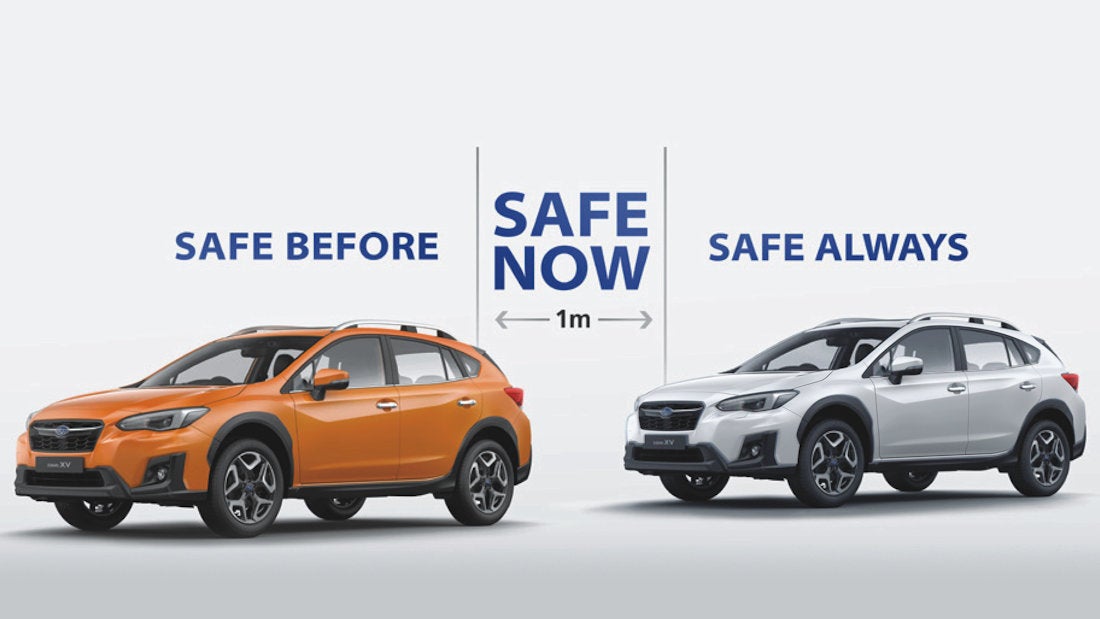
Subaru's Safety-Minded Vehicles are Getting a P200k Discount This Month | CarGuide.PH | Philippine Car News, Car Reviews, Car Prices

Structural integrity serves as the primary defense in any vehicle collision. The engineering behind the lineup focuses heavily on passive safety, utilizing a ring-shaped reinforcement frame constructed of high-tensile steel. This structural cage is designed to absorb and redirect impact energy away from the passenger cabin during a collision. Complementing this frame is a comprehensive airbag suite, including front, side, side-curtain, and driver's knee airbags as standard equipment on every model.

This dedication to structural engineering is consistently recognized by independent safety organizations. As of March 2026, the brand has received 78 IIHS TOP SAFETY PICK+ awards since 2013 . For the 2025 model year, the Outback, Forester, Solterra, and Ascent all earned the IIHS TOP SAFETY PICK+ designation under updated crashworthiness and crash avoidance criteria . Furthermore, the 2025 Forester and Ascent achieved a 5-Star Overall Safety Rating from the NHTSA, earning five stars in frontal and side crash tests, and four stars in rollover evaluations .

For families driving near the coastal plains and sandy dunes of Ponte Vedra Beach, standard all-wheel-drive traction is a necessity for navigating beachside roads and outdoor weekend excursions. Symmetrical All-Wheel Drive works in tandem with the vehicle's structural frame to maintain stability and control before an impact can even occur. For drivers seeking safety combined with sports-tuned handling, our new Subaru performance inventory showcases how safety engineering translates to active road control.

Table of Contents

How Subaru EyeSight Driver Assist Technology Works to Prevent Collisions

Camera-based monitoring represents a distinct engineering approach to crash avoidance. The core of this active safety system is EyeSight® Driver Assist Technology, which is standard on every 2025 Outback, Forester, Crosstrek, Legacy, and Ascent model sold in the United States . This system utilizes dual color cameras mounted unobtrusively near the rearview mirror to scan the road ahead for potential hazards . Select models also feature a third wide-angle camera to enhance pedestrian and cyclist detection .

The camera system operates several integrated safety features designed to intervene in critical situations. Pre-Collision Braking can automatically apply full braking force to help avoid or mitigate frontal collisions, while Pre-Collision Throttle Management reduces engine power if an obstacle is detected ahead in low-speed situations . For highway driving, Adaptive Cruise Control with lane centering helps maintain a safe distance from the vehicle ahead, and Lane Keep Assist along with Lane Departure and Sway Warning provides gentle steering interventions to keep the vehicle in its lane .

Beyond the forward-facing cameras, the active safety suite offers comprehensive surrounding awareness. Rear Cross-Traffic Alert and Blind-Spot Detection use radar sensors to warn of vehicles in adjacent lanes or approaching from the side when in reverse . Additionally, Reverse Automatic Braking can stop the vehicle if an object is detected behind it, while the DriverFocus® Distraction Mitigation System monitors driver attentiveness and alerts those showing signs of drowsiness . This active driver-assist suite is standard across our new Subaru inventory. You can find this technology featured prominently in our new Forester inventory, which offers advanced compact SUV safety. For budget-conscious buyers, our certified pre-owned inventory includes late-model vehicles equipped with previous generations of this protective camera system.

Engine & Performance

Powertrain specs by trim

FeatureLimitedLimited XTPremiumTouringTouring XTWilderness
Engine2.5L2.4L2.5L2.5L2.4L2.4L
Horsepower180 hp260 hp180 hp180 hp260 hp260 hp
Torque178 lb-ft277 lb-ft178 lb-ft178 lb-ft277 lb-ft277 lb-ft
TransmissionLineartronic CVTLineartronic CVTLineartronic CVTLineartronic CVTHigh-torque Lineartronic CVTLineartronic CVT
DrivetrainAll-wheel driveAll-wheel driveAll-wheel driveAll-wheel driveAll-wheel driveAll-wheel drive

Comparing Subaru Safety and Engineering Against Luxury and Mainstream Rivals

Divergent engineering philosophies define how different automotive manufacturers approach occupant protection. When comparing active driver-assist systems, the dual-camera optical stereoscopic system differs significantly from radar-based setups like Toyota Safety Sense. While Toyota's radar-and-camera system provides excellent lane tracing on structured highways, the dual-camera setup of EyeSight excels in wide-angle pedestrian and cyclist detection in complex urban environments. Many drivers also find that the camera-based lane centering offers a more natural, intuitive steering assist compared to radar-based lane tracing.

Comparing these models to luxury brands like Volvo highlights a difference in market accessibility. Volvo has historically been the industry benchmark for safety, focusing on ultra-high-strength steel passenger cages and cutting-edge occupant protection innovations. However, the engineering behind the Symmetrical All-Wheel Drive platform delivers comparable IIHS crash-test safety ratings and advanced active safety features at a mainstream price point. This makes top-tier occupant protection highly accessible to everyday drivers without the premium luxury cost.

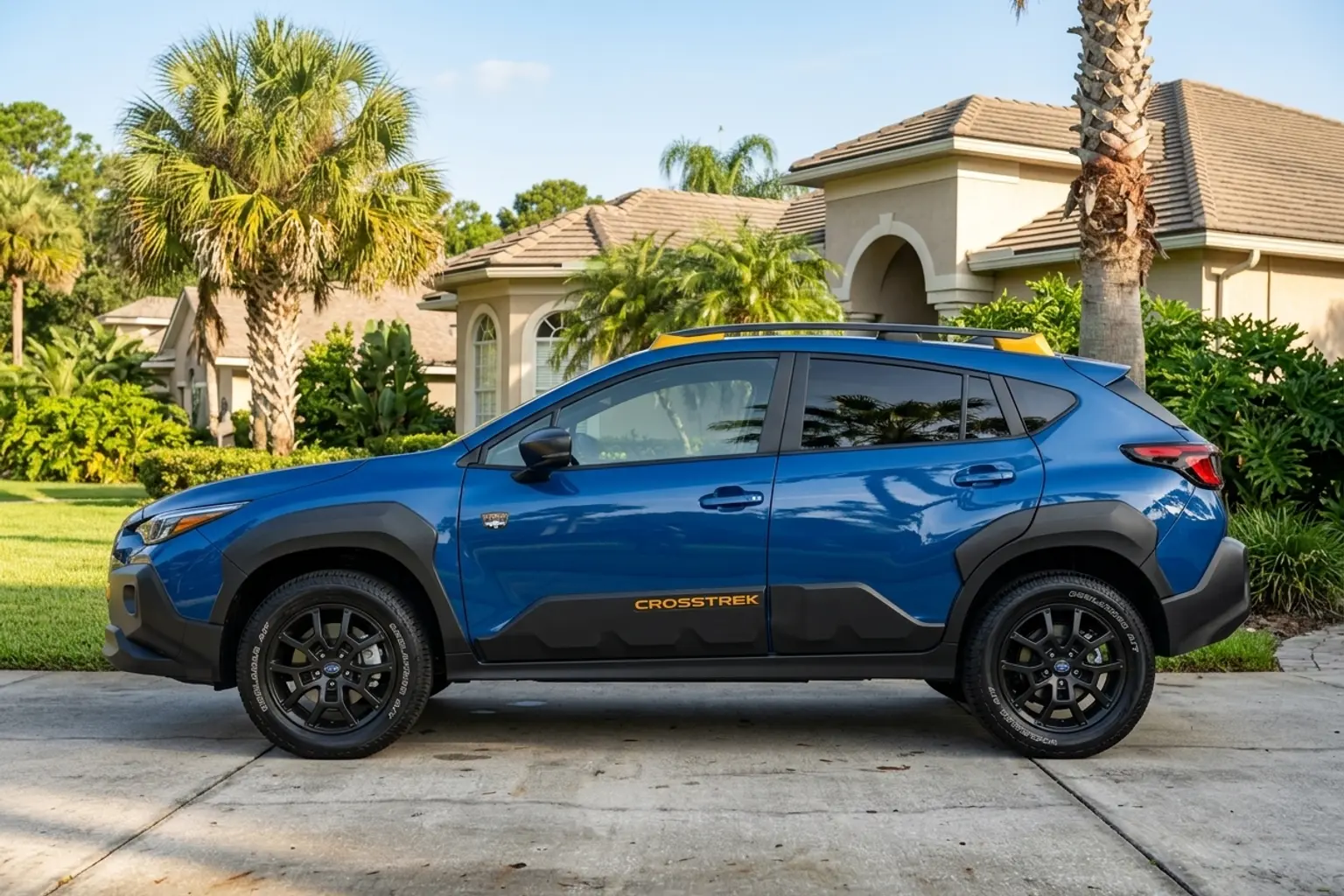
For those comparing different brands, our pre-owned vehicle inventory features a variety of makes and models to cross-shop. Families looking for the ultimate in spacious safety can explore our new Ascent inventory, which provides three rows of seating and standard driver-assist features. Alternatively, those seeking a versatile subcompact option can browse our new Crosstrek inventory to see how compact dimensions can still deliver top-tier crash protection.

Balancing Long-Term Durability, Safety Awards, and Ownership Costs

Long-term value in a vehicle depends on a combination of mechanical durability and predictable operational expenses. The horizontally opposed four-cylinder boxer engine and the turbocharged four-cylinder engine are engineered with a low center of gravity. This mechanical layout allows the engine to slide beneath the passenger cabin in a severe frontal impact, serving as a key passive safety feature. This unique boxer design also contributes to long-term durability when coupled with regular maintenance.

While vehicles with high safety ratings can help moderate insurance costs, actual premiums are determined by individual driver profiles and the cost of replacement parts. To keep your vehicle performing reliably, our service department only uses genuine Subaru parts. You can easily schedule a service appointment online to keep your vehicle's safety systems calibrated and running smoothly.

For the 2026 Subaru Outback lineup, pricing and efficiency vary by trim level. The Premium trim starts at a base MSRP of $34,995, while the Limited trim is priced at $41,715, and the Touring trim comes in at $45,395. Upgrading to turbocharged performance, the Limited XT starts at $44,365, the Touring XT at $47,995, and the off-road-oriented Wilderness trim starts at $44,995. Each of these models requires a destination charge of $1,450. In terms of fuel efficiency, the Premium, Limited, and Touring trims achieve an EPA-estimated 25 city / 31 hwy / 27 combined MPG. The more powerful Limited XT and Touring XT trims are rated at 21 city / 29 hwy / 24 combined MPG, while the rugged Wilderness trim delivers 21 city / 27 hwy / 23 combined MPG.

At our dealership, every new vehicle purchase comes with a complimentary lifetime powertrain warranty and two years of scheduled maintenance. Buyers do not have to choose between long-term coverage and initial upkeep because we provide both benefits as standard. Our team at the showroom on Blanding Blvd often meets commuters from Orange Park who need a reliable, fuel-efficient crossover to handle the daily highway drive into the city.

Pricing

Pricing by trim

FeatureLimitedLimited XTPremiumTouringTouring XTWilderness
Base MSRP$41,715$44,365$34,995$45,395$47,995$44,995
Destination charge$1,450$1,450$1,450$1,450$1,450$1,450

Common Questions About Subaru Safety Technology and Value

Answering critical questions about active driver assistance helps buyers make informed decisions. Before you check our new Outback inventory, let's address some common questions we receive. If you are looking to trade in your current vehicle, you can value your trade-in online to see how it fits your budget. For existing owners, our certified Subaru service center is always available to assist with safety-system maintenance.

Q: Does the active driver assistance system require periodic calibration?

Yes, if the windshield is replaced or if the camera housing is disturbed, the dual cameras must be precisely calibrated. Our certified technicians use specialized targeting equipment to ensure the system scans the road accurately and functions as intended.

Q: How does the boxer engine design contribute to passive safety?

The horizontal layout of the engine allows it to sit lower in the chassis. In a severe frontal collision, the engine is designed to slide under the passenger cabin rather than invading the footwell, protecting the occupants' legs.

Q: What is the benefit of the standard Symmetrical All-Wheel Drive system in dry conditions?

Symmetrical All-Wheel Drive continuously routes power to all four wheels, optimizing traction and stability even on dry pavement. This active safety feature helps prevent loss of control during sudden evasive maneuvers or sharp cornering.

Q: Are there any active recalls for recent Subaru safety systems?

On select 2025 Outback and Legacy models, there was a safety recall regarding a potential issue with the brake light switch that could cause intermittent illumination . Our team can quickly verify your vehicle's status and perform the necessary corrective repair.

Q: How does the vehicle's structural frame protect passengers during a rollover?

Every modern model uses a ring-shaped reinforcement frame made of high-tensile steel. This design encircles the passenger cabin from the roof to the floor, dispersing crash energy away from the occupants and maintaining cabin integrity.

Finding Your Safe and Reliable Subaru

Selecting a vehicle that prioritizes occupant protection provides lasting peace of mind. Every new model comes with manufacturer-backed roadside assistance, providing brand-specific expertise and towing to an authorized facility. If you ever experience an emergency on the road, you can contact Subaru Roadside Assistance at 1-800-261-2155 for immediate, trusted support.

To begin your purchase journey, you can prequalify for financing online using our secure application. When you are ready to experience these advanced safety systems firsthand, you can find our showroom at 6400 Blanding Blvd or give us a quick call to schedule a personalized test drive.


© 2026 Hanania Subaru. All rights reserved.
Posted in:

Related Posts

Close-up of an all-terrain Falken Wildpeak tire on a blue Subaru SUV parked on a coastal road at sunset.

What I Tell Our Customers About Choosing the Right Tires for a Subaru

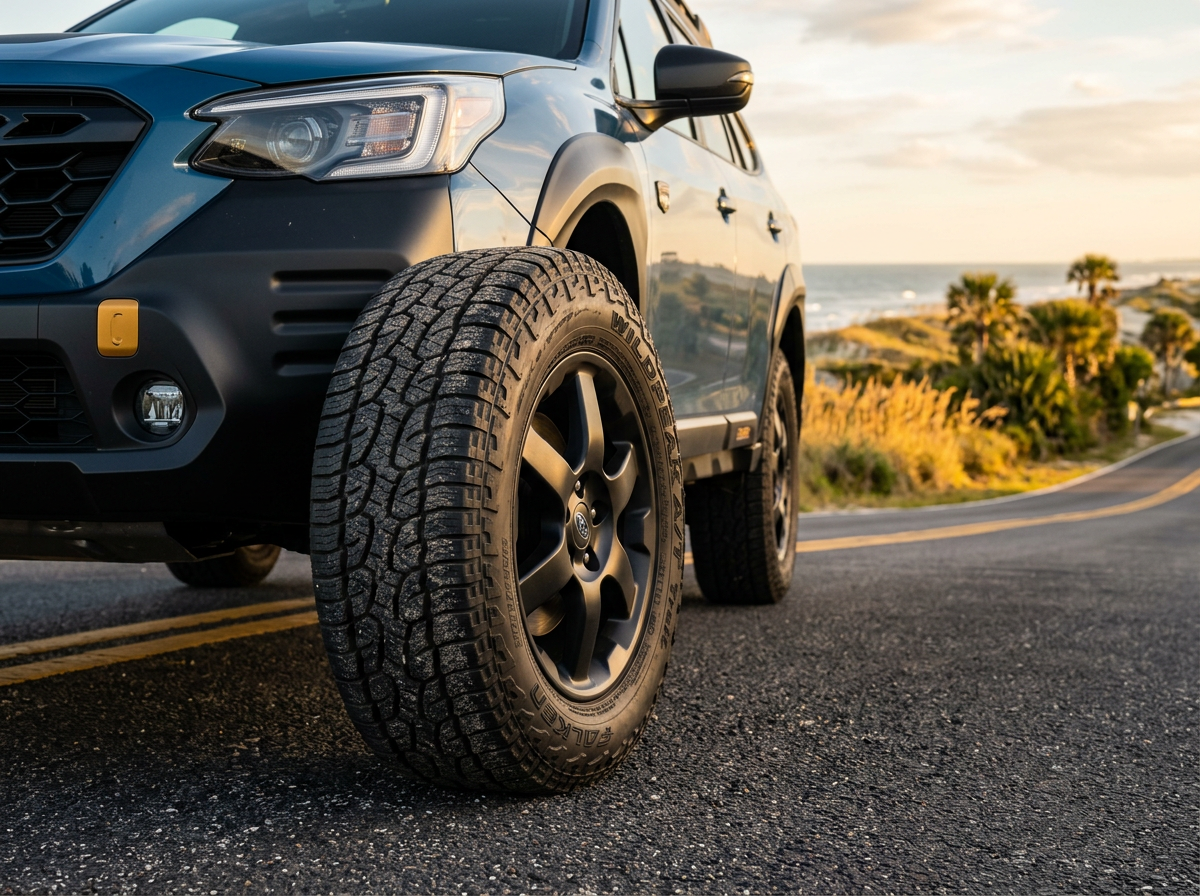
## Understanding Subaru Factory Tire Standards and Recommended Brands My name is Carter Holloway, and as the Parts Manager here at Hanania Subaru with six years of experience helping owners maintain their vehicles, I spend a lot of time talking about rubber. Many drivers do not realize that Subaru vehicles require a higher tier of tire engineering than your average front-wheel-drive sedan because of how our Symmetrical All-Wheel Drive system functions. When your vehicle leaves the factory, it is equipped with high-quality all-season tires from top-tier brands like Yokohama Geolandar, Michelin, or Bridgestone Dueler to ensure optimal fuel economy and grip. For drivers commuting daily around the coastal dunes and humid sea air of Ponte Vedra Beach, choosing a tire that resists rubber degradation from heat and salt is essential. I always advise local owners to look at the Uniform Tire Quality Grading (UTQG) ratings on the sidewall, targeting a traction grade of A or AA and a temperature grade of A or B to handle our hot Florida summers. If you have questions about which brand matches your specific driving habits, you can reach my team directly at (904) 906-1235 or stop by our service and parts department on Blanding Blvd. Maintaining the correct speed rating and load index is crucial for the safety systems in your vehicle, including the EyeSight driver-assist suite. This is particularly true for high-performance setups like the ones we service from our performance-tuned vehicles, where cornering forces place immense stress on the tire sidewalls. At our certified service center, we stock and install only the exact tire specifications recommended by the manufacturer to keep your vehicle performing safely. Table of Contents Why Symmetrical AWD Demands Matching Tread Depth and Precise Fitment Subaru Tire Rotation Patterns and Maintenance Protocols Selecting Tires for Your Crosstrek or Rugged Outback Wilderness Replacement Costs, Budget Alternatives, and Online Ordering Realities Maximizing Protection with Road Hazard Plans and Dealer Packages Why Symmetrical AWD Demands Matching Tread Depth and Precise Fitment One of the most common questions I get in the parts department is whether an owner can replace just one damaged tire instead of all four. Because of the engineering behind Symmetrical All-Wheel Drive, the rolling circumference of all four tires must remain within 1/4 inch of one another, which translates to roughly 2/32 inch of tread depth. If you run mismatched tires, the speed difference forces the center differential to work continuously to compensate, which quickly leads to overheating and expensive drivetrain damage. This strict tolerance applies to every vehicle we service, whether it is a factory-fresh SUV or a model selected from our certified pre-owned inventory. This technical requirement is also why we warn against changing your vehicle's factory tire size or load rating. For commuters making the long drive from Yulee down to the city, running incorrect tire dimensions throws off your speedometer accuracy and disrupts the shift logic of the Lineartronic CVT. If you drive a popular family model like those found in our Forester inventory, keeping the factory-specified load index ensures your suspension can safely support your passengers and cargo. Our technicians always check these specifications against the tire placard on your driver-side door pillar during every multi-point inspection. ​ Subaru Tire Rotation Patterns and Maintenance Protocols To prevent uneven wear and protect your drivetrain, following a strict tire rotation schedule is absolutely vital. For most models, the recommended rotation interval is every 5,000 to 7,000 miles, which aligns perfectly with your standard oil change interval. We utilize a modified cross rotation pattern for non-directional tires, where the front tires move straight back to the rear, and the rear tires cross over to the opposite front positions. This specific pattern counteracts the unique wear forces experienced by the front steering wheels and keeps your tread depths perfectly balanced. Another critical standard that surprises many owners is our recommendation for replacement tread depth. While the legal minimum tread depth in most places is 2/32 inch, the factory recommendation is to replace your tires once they wear down to 4/32 inch. This extra margin of safety is designed to prevent hydroplaning and maintain the excellent wet-weather stopping power that our vehicles are known for. You can easily schedule a service visit online to have our factory-trained technicians measure your tread depths and execute a precise four-wheel alignment to maximize the lifespan of your rubber. ​ Selecting Tires for Your Crosstrek or Rugged Outback Wilderness Choosing the right replacement tire depends heavily on your vehicle model and how you use it. For owners of compact crossovers like those in our Crosstrek models, a premium touring all-season tire is often the best fit, offering a quiet ride, long tread life, and reliable wet traction for daily driving. If you drive one of our larger three-row family haulers from our Ascent models, you will need a tire with a reinforced sidewall and a higher load rating to handle the increased vehicle weight and passenger capacity safely. The tire selection process changes dramatically when we look at our trail-ready vehicles, such as the redesigned 2026 Outback Wilderness. While standard Outback models come equipped with highway all-season tires designed for a smooth ride and 25 city / 31 hwy MPG, the Wilderness trim is factory-fitted with rugged Yokohama Geolandar A/T all-terrain tires. These specialized tires feature aggressive tread blocks and reinforced sidewalls that match the model's elevated ground clearance of nearly 10 inches and 3,500 lbs towing capacity. Additionally, the Wilderness and Onyx Edition XT trims include a matching full-size spare tire under the cargo floor, which is essential for protecting your AWD system if you experience a flat on a remote trail. ​ Replacement Costs, Budget Alternatives, and Online Ordering Realities When it comes to replacing a full set of tires, pricing varies by vehicle and tire selection; please contact us for current pricing, depending on your vehicle's wheel size and whether you need highway touring or rugged all-terrain rubber. While some owners look to save money by choosing budget-friendly tire brands, I always caution that any alternative must strictly match the factory load index and speed rating. Saving a few dollars on a cheaper tire is not worth compromising your stopping distances or risking damage to your Symmetrical AWD system. Many drivers also wonder if they should order tires online and ship them to a local shop for installation. While online retailers make comparison shopping easy, buying directly through our parts department ensures you receive the exact tire model engineered for your specific vehicle chassis. When you purchase genuine parts and tires through our dealership, our factory-trained technicians handle the precise mounting, balancing, and four-wheel alignment required to maintain your ride quality. Plus, our direct relationships with tire manufacturers allow us to offer competitive pricing and exclusive rebates that online warehouses cannot match. ​ Maximizing Protection with Road Hazard Plans and Dealer Packages To give our customers complete peace of mind on the road, many tire purchases may qualify for the Subaru 24-Month Tire Protection Plan. This complimentary coverage covers the cost of tire repairs or complete replacements if you run over a nail, hit a pothole, or suffer other road hazard damage. It also features complimentary tire-focused roadside assistance, giving you a direct line to help when you need a flat tire changed or a tow to the nearest authorized retailer. If you ever find yourself stranded with a flat, you can call Subaru Roadside Assistance at 1-800-261-2155 for rapid, manufacturer-backed support. Protecting your investment with proper tire maintenance is the best way to ensure your vehicle remains safe and reliable for years to come. Whether you need a quick pressure check, a tire rotation, or a new set of factory-recommended tires, our team is here to provide transparent, expert care. You can reach our parts and service specialists by calling (904) 906-1235, or you can get directions to stop by our Jacksonville dealership location today. © 2026 Hanania Subaru. All rights reserved.
Technical diagram showing a cracked car windshield interfering with the vision of the dual EyeSight cameras. (Representative image for illustration purposes only. Actual vehicle may vary based on trim and configuration.)

What You Need to Know About Cracked Windshields and Subaru EyeSight

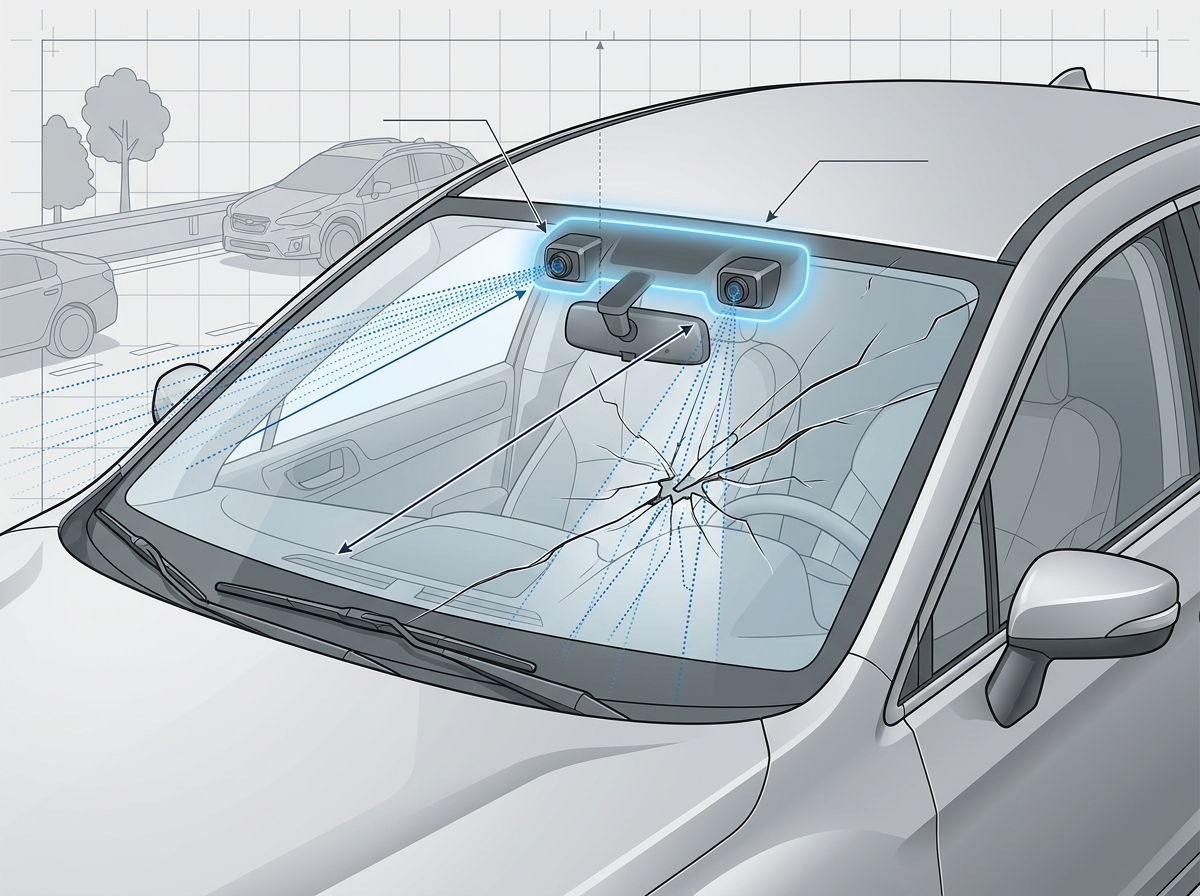
#How Windshield Damage Directly Impacts Your Subaru EyeSight System As a Service Advisor at Hanania Subaru with 6 years of experience, I spend my days helping drivers keep their vehicles in peak operating condition. One of the most frequent questions I receive in our service lane is whether a small crack or chip in the glass actually matters to the Subaru EyeSight driver-assist technology. The straightforward answer is yes; physical damage to your windshield directly compromises how this advanced safety system functions. The Subaru EyeSight system relies on dual color cameras mounted inside the cabin, positioned right against the upper edge of your windshield. These cameras act as your vehicle's eyes, constantly scanning the road ahead to manage features like Pre-Collision Braking, Adaptive Cruise Control, and Lane Keep Assist. When a stone chips or cracks the glass within the camera's viewing window, it acts like a smudge on a pair of eyeglasses. The physical crack bends and distorts light, which prevents the cameras from accurately calculating distances or recognizing lane markings. If you are currently driving with a damaged windshield, you might notice that the system behaves erratically or shuts down completely. When the cameras detect a physical obstruction or a distorted field of view, the system is designed to disable itself and display an error light on your dashboard. Trying to manually turn the system off to ignore the crack is not a safe long-term solution, as you lose crucial safety interventions. If you have noticed an error light on your dashboard, I highly recommend giving our service team a call at (904) 906-1235 so we can inspect the glass and ensure your safety systems are fully operational. For drivers who prioritize peak performance and precise handling on their daily drives, maintaining these safety systems is just as critical as maintaining the mechanical components of our new Subaru performance inventory. If you need to bring your vehicle in for a physical inspection, you can easily find our service center location and get expert help from our certified technicians. Table of Contents When a Simple Chip Repair Demands a Full Calibration The True Cost of Advanced Driver Assist Glass Replacement Why OEM Glass is Crucial for Camera System Accuracy The Risks of Improper Calibration and How to Verify Success Florida Insurance Policies and Safe Driving When a Simple Chip Repair Demands a Full Calibration I often hear from drivers who hope a quick resin fill at a local repair stand will solve their windshield issues without needing a full system recalibration. While minor chip repairs are highly effective for standard glass, the rules change when you have a camera system mounted behind the rearview mirror. Whether you need a full recalibration after a glass repair depends entirely on where the damage is located. Subaru defines a highly specific camera viewing area on the windshield where no repairs are permitted. This critical viewing area is the precise rectangular space directly in front of the dual lenses. If a stone chip or scratch falls inside this zone, a simple resin injection is not an option because the repair process leaves behind microscopic structural changes and slight optical distortions. Even if the repaired spot looks completely clear to your eyes, the camera lenses can still experience refraction errors, leading to delayed braking responses. For safety reasons, any damage within this viewing window requires a complete windshield replacement followed by a precise camera calibration. For minor chips that occur well outside this designated viewing area, a professional resin repair can be completed without requiring a system recalibration. However, if the glass must be removed and replaced, a calibration is mandatory. Our factory-trained technicians use specialized diagnostic tools and physical targets to perform this alignment. If you need to address a chip or want to ensure your glass is repaired to factory standards, you can easily book an appointment online at our dedicated service center. We always stock genuine Subaru parts, including the exact glass specifications required for models like the 2026 Subaru Forester to keep your active family safe on every school run. ​ The True Cost of Advanced Driver Assist Glass Replacement Many of our customers wonder why replacing a windshield on a modern vehicle is notably more expensive than it was on older cars. In the past, a windshield was simply a structural piece of safety glass designed to keep out wind and debris. Today, the windshield on your vehicle is a highly engineered optical component that serves as the primary lens for your driver-assist technology. The total cost of a modern windshield replacement is divided into two primary parts: the specialized glass itself and the technical calibration process. Standard aftermarket glass often lacks the strict manufacturing tolerances required for camera integration. This specialized glass must feature perfect curvature, consistent thickness, and zero optical distortion in the camera's line of sight. Additionally, the labor involved is highly technical. Our technicians must mount physical alignment targets at precise distances from the vehicle, connect specialized diagnostic computers, and perform both static and dynamic road calibrations to ensure the cameras read the road correctly. This calibration requirement is not unique to our brand. For example, similar driver-assist systems like Toyota Safety Sense also require a complete camera calibration anytime the front windshield is replaced. Because these systems are so closely tied to your safety, cutting corners with lower-cost glass or skipped alignments is never worth the risk. If you are driving a highly capable vehicle like the 2026 Subaru Crosstrek or maintaining one of the reliable models from our certified pre-owned inventory, investing in proper, certified glass care is the best way to protect your vehicle's long-term value and your family's safety. ​ Why OEM Glass is Crucial for Camera System Accuracy One of the first things I discuss with drivers facing a windshield replacement is the critical difference between original equipment manufacturer (OEM) glass and aftermarket alternatives. While independent glass shops may offer cheaper aftermarket options, using non-OEM glass on a vehicle equipped with Subaru EyeSight can lead to persistent system errors and safety hazards. Subaru OEM glass is manufactured to incredibly strict specifications, ensuring that the glass in front of the camera lenses is completely free of distortions, waves, or variations in thickness. Aftermarket glass manufacturers often use different cooling processes or glass compositions, which can introduce minor, invisible distortions. While these imperfections are imperceptible to human eyes, they can bend light in ways that cause the cameras to miscalculate the distance to the vehicle ahead. This can lead to unexpected, abrupt braking or a complete system shutdown. Furthermore, OEM glass features specialized acoustic and thermal properties that match the original design of your cabin. Using non-OEM glass can also interfere with how the windshield rain sensors and heating elements interact with the camera housing. To avoid these issues and ensure your driver-assist features work exactly as the engineers intended, it is always best to have your replacement handled by factory-certified professionals. You can easily schedule your service online with our team to have your glass replaced and calibrated using correct factory procedures. ​ The Risks of Improper Calibration and How to Verify Success Let's talk about what actually happens if a glass replacement is completed without a proper camera calibration. Skipping this step or relying on an uncertified shop can have serious consequences for how your vehicle behaves on the road. Without a successful calibration, the cameras may still "see" the road, but they will misinterpret the physical location of objects. An uncalibrated system can calculate distances incorrectly, which might cause your Pre-Collision Braking to engage too late in an emergency, or trigger unnecessary emergency braking when no hazard is present. In other cases, the vehicle may drift out of its lane because the cameras cannot accurately locate the painted lines on the asphalt. When our certified technicians perform a calibration, they verify success by running a complete system diagnostic that generates a digital certificate of completion. This certificate confirms that the cameras have successfully recognized the physical targets and that all sensor angles are aligned within fractions of a millimeter. We see the importance of this precision every day, especially for drivers navigating the busy coastal roads around Ponte Vedra Beach. Whether you are driving a spacious 2026 Subaru Outback or any other camera-equipped model, knowing that your safety features are aligned to factory specifications provides invaluable peace of mind. Our team always performs a thorough post-calibration road test to verify that the system tracks lanes and targets flawlessly before we hand the keys back to you. ​ Florida Insurance Policies and Safe Driving From my experience working with local drivers, navigating the insurance side of a windshield replacement is often much easier than people expect, especially here in Florida. The state has specific regulations designed to encourage drivers to fix damaged glass immediately rather than putting it off due to cost concerns. Under Florida law, if you carry comprehensive insurance coverage, your insurance provider is required by law to replace your damaged windshield with zero deductible. This means you can have your windshield replaced and fully calibrated without any out-of-pocket expenses. This zero-deductible law is incredibly beneficial because it ensures you do not have to choose between your budget and your safety. When you bring your vehicle to us, our service advisors can work directly with your insurance company to handle the paperwork, verify coverage for both the glass and the mandatory camera calibration, and get you back on the road quickly. Whether you are commuting daily along the busy corridors of Yulee or taking a weekend trip with the family, keeping your windshield clean and structurally sound is vital. If you are driving a larger family vehicle like the 2026 Subaru Ascent, maintaining a clear view for both you and your onboard cameras is essential for highway safety. If you have questions about how your insurance policy handles these high-tech glass replacements, please feel free to reach out to our team or stop by our service center at 6400 Blanding Blvd, Jacksonville, FL 32244 so we can help you coordinate your repair. © 2026 Hanania Subaru. All rights reserved.
The Real Truth About Subaru Parts From a Parts Manager's Perspective

The Real Cost of What Goes Under Your Subaru Hood There is a viral video floating around showing an aftermarket parts truck making a delivery to a dealership, and it usually sparks a lot of questions from my customers. I've spent 6 years as a Parts Manager, and I can tell you that what you're seeing in those videos is almost always related to used car reconditioning for other brands or a very specific customer request. When it comes to your actual Subaru maintenance, we don't cut corners with "universal" components because your vehicle wasn't built with universal logic. Every Genuine Subaru Part is an exact replica of what was installed on the assembly line, engineered to handle the specific stresses of your drivetrain. Choosing a cheaper alternative might save a few dollars at the counter, but the long-term math rarely works out in the driver's favor. For example, if you are driving a 2026 Subaru Outback with the 2.5L H4 engine, every component from the spark plugs to the serpentine belt is designed to meet a specific thermal and vibration threshold. Aftermarket manufacturers often use "consolidated" designs, meaning one part is made to fit ten different vehicle brands. That "close enough" fit is often why we see premature wear or mysterious rattles that weren't there before the repair. For families living in Ponte Vedra Beach, the salt air and coastal humidity add an extra layer of strain on your vehicle's exterior and mechanical bits. I always recommend staying ahead of corrosion with components designed to withstand those specific environmental factors. If you have questions about a specific repair or want to see the quality of our components for yourself, you can always find our Jacksonville showroom easily or give our team a quick call at (904) 906-1235. We also keep a great selection of the new Subaru performance inventory on hand for those who want to see how these high-spec parts perform in the real world. Table of Contents Why BOXER Engines and Symmetrical AWD Demand Exact Engineering The EyeSight Calibration Factor in Windshield and Sensor Repairs Navigating the Warranty and Insurance Realities of Aftermarket Parts Spotting the Difference: How to Identify Genuine Subaru Components Why Professional Installation Safeguards Your Subaru Investment Why BOXER Engines and Symmetrical AWD Demand Exact Engineering The horizontal layout of Subaru BOXER engines creates a specific set of physics that standard upright engines just don't have to deal with. Because the cylinders are laid flat, oil flow and pressure management are absolutely critical. I often point out to my team that a Subaru Genuine Oil Filter isn't just a canister with paper inside; it is built with a specific bypass valve pressure designed for the 2.5L H4 or 2.4L H4 engines. Many aftermarket filters have a much lower bypass pressure, which can lead to unfiltered oil circulating through your engine or, worse, restricted flow during a cold start. The same precision is required for your Symmetrical All-Wheel Drive system. Subaru is very strict about tire matching because the system relies on all four wheels having the exact same rolling circumference. If you replace just one tire with an aftermarket brand that has a slightly different tread depth or carcass shape, it can cause heat buildup in the center differential. This is a common issue we see when people try to save money on a single tire rather than maintaining a matched set. We see this often with high-mileage commuters coming from Yulee who put heavy miles on US Highway 17; that constant high-speed travel makes even a tiny difference in tire diameter a major mechanical risk. Whether you are looking at our new Crosstrek inventory or exploring our certified pre-owned inventory, you’ll notice that every vehicle we stand behind uses these exact-spec components. The goal is to maintain the original balance of the car. When you start swapping in parts that weren't validated by the factory, you're essentially redesigning the car's engineering on the fly, and that's rarely a good idea for reliability. The EyeSight Calibration Factor in Windshield and Sensor Repairs A customer came in recently because their cruise control and pre-collision braking stopped working after they had a "bargain" windshield installed by a mobile glass van. This is becoming one of the most frequent conversations I have because of EyeSight Driver Assist Technology. On models like the 2026 Subaru Forester, the EyeSight cameras are mounted behind the rearview mirror and "look" through the glass. Subaru specifies that only an OEM windshield should be used because the glass must have precise optical properties and specific mounting points for the cameras to calibrate correctly. Aftermarket glass often has slight distortions or different thicknesses that the cameras can't compensate for. If the cameras can't see perfectly, the system may shut down or, even worse, react incorrectly to an obstacle. It isn't just about the glass, either; it's about the sensors. Genuine Subaru brake pads and rotors are tested to work specifically with the ABS and Vehicle Dynamics Control systems. An aftermarket pad might have a different "bite" or friction coefficient, which can change how the safety systems intervene during an emergency maneuver. Our Subaru service center is equipped with the specialized diagnostic tools needed to recalibrate these systems after a repair, something most independent shops simply don't have access to. We always use genuine Subaru parts for these critical safety systems because there is no room for error when it comes to your family's protection. If you're curious about the latest safety tech, you can check out the features in our new Forester inventory to see how integrated these systems have become. Navigating the Warranty and Insurance Realities of Aftermarket Parts Does using a non-factory part automatically kill your protection? This is a question that gets asked every single day in the service drive. The short answer is no, thanks to the Magnuson-Moss Warranty Act, but there is a major catch that many people overlook. While a manufacturer cannot void your entire warranty just because you used an aftermarket air filter, they can absolutely deny a specific claim if that aftermarket part caused the failure. If a cheap aftermarket radiator hose bursts and causes your engine to overheat, the resulting engine damage won't be covered under your 5 years / 60,000 miles powertrain warranty. Insurance companies are another factor. They often push for the cheapest possible parts—sometimes even salvaged components—to keep their repair costs down after an accident. I always tell my customers to check their policy language. You have the right to request Genuine Subaru Parts for your repair. This is especially vital for structural components and crumple zones. An aftermarket bumper or hood might look the same on the outside, but it may not have the same crash-test performance as the parts that earned the 2026 Subaru Outback its IIHS Top Safety Pick+ rating. Using factory parts also helps maintain your vehicle's resale value. When it comes time to trade in your car, a history of dealership service with factory parts is a major selling point. It shows you didn't cut corners on maintenance. If you're nearing a service interval or need a repair estimate, you can schedule your service appointment online to have our experts take a look. We can provide a full breakdown of what your vehicle needs to stay within its warranty guidelines. Spotting the Difference: How to Identify Genuine Subaru Components I often see people trying to save money by ordering parts from unverified websites, only to bring them to us when they realize the part doesn't fit. Identifying a real component is usually pretty straightforward if you know what to look for. Genuine Subaru Parts will always come in branded packaging with a specific part number sticker that includes a barcode. Most of these components are stamped with the Subaru logo directly on the metal or plastic, and you'll often see "Made in Japan" or "Made in USA" labels depending on the specific item. Another hallmark of the real deal is the minimum 12 month manufacturer's warranty that comes with the part. If you buy a "universal" part online and it fails in three months, you're often stuck buying a second one. When we pull a part for a 2026 Subaru Crosstrek, we verify it against your VIN to ensure the fitment is guaranteed. This is critical for things like All-Weather Floor Liners or Splash Guards, which are custom-molded to the exact contours of the floorboards and wheel wells. If you are looking at the accessories in our new Outback inventory, you can see the difference in how these items integrate with the vehicle. From the Auto-Dimming Mirror with Compass and HomeLink to the LED Upgrade, factory accessories don't require "hacking" into the wiring harness. They use plug-and-play connectors designed for your specific model year, which prevents the electrical gremlins that often follow aftermarket installations. Why Professional Installation Safeguards Your Subaru Investment Subaru vehicles are known for having 96% of models sold in the last 10 years still on the road, and a big part of that longevity is how they are maintained. Our factory-trained technicians spend hundreds of hours learning the specific nuances of the CVT and the EyeSight systems. When we install a part, we aren't just bolting it on; we're ensuring it meets the factory torque specs and is properly calibrated to the vehicle's computer. This level of detail is what keeps your 3 years / 36,000 miles basic warranty and roadside assistance protections fully intact. We also offer benefits you won't find at a generic repair shop, like our 24-Month Tire Protection Plan. This comes free with any tire purchase and covers replacement or repair, plus it includes complimentary roadside assistance. Whether you're driving a 2026 Subaru Ascent with the 2.4L H4 engine or a smaller crossover, having that peace of mind on the road is invaluable. Using specialized tools and having a direct line to factory technical support allows us to get the job done right the first time. If you're ready to experience the difference that expert care makes, you can find our Jacksonville location for a visit. You can also reach our parts and service experts at (904) 906-1235 to discuss your maintenance needs. If you're looking for a vehicle with enough room for the whole family and the reliability to match, I highly recommend checking out our new Ascent inventory. We're here to help you keep your Subaru performing at its best for all the miles ahead. © 2026 Hanania Subaru. All rights reserved.