Hanania Subaru of Orange Park

Blog / Buying Guides

Hanania Subaru Reviews: How to Read Them Before You Visit

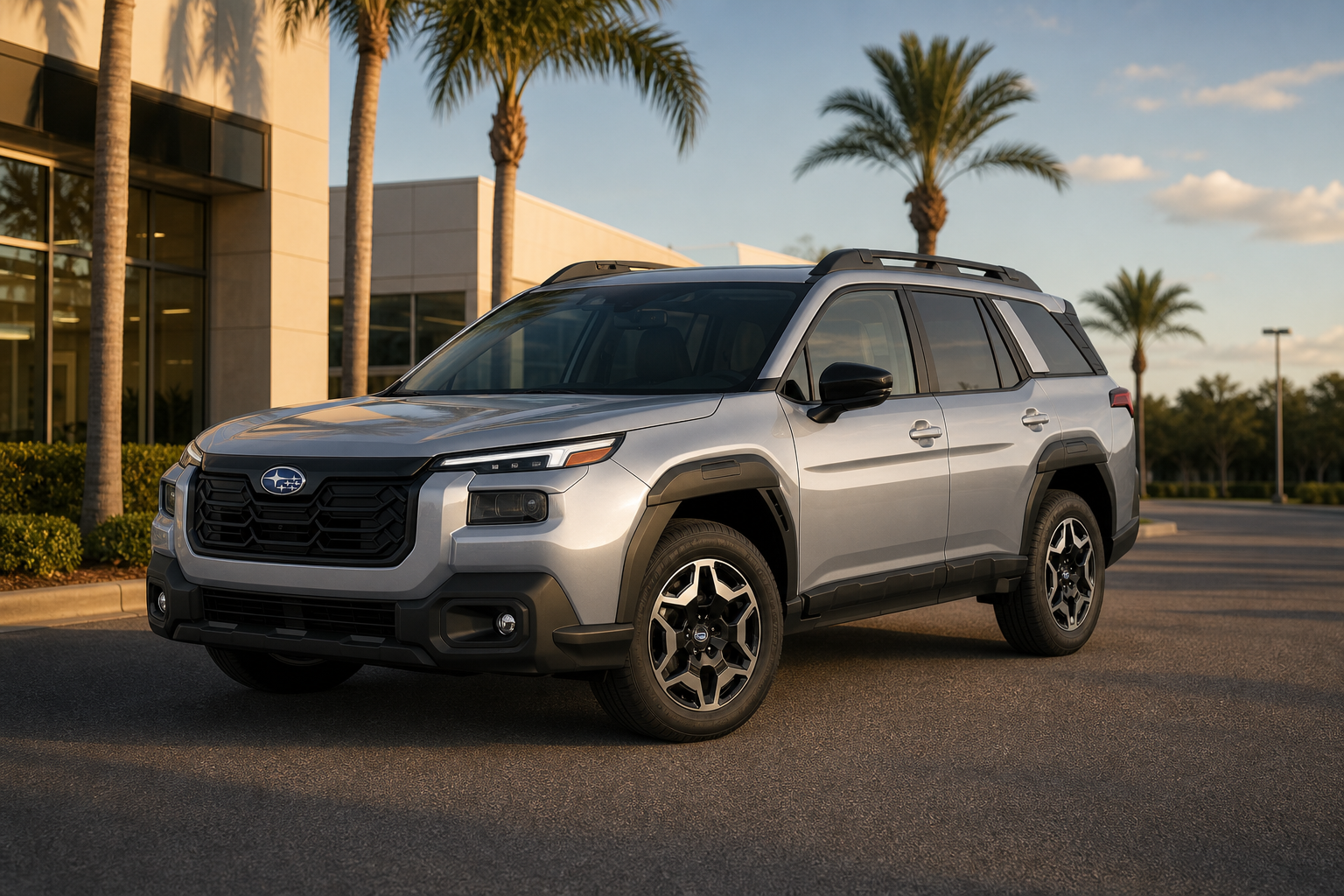
Lone unbadged SUV parked outside a sunlit Florida dealership lot with palm trees and open sky
Reviews are the closest thing to a test drive of a dealership before you ever walk in. We'd rather point you to the honest ones — good and bad — than pretend every visit goes perfectly. Here's how to read Hanania Subaru of Orange Park reviews in Jacksonville, where to find the verified ones, and how we deal with the days we fall short.

What do Hanania Subaru of Orange Park reviews actually tell you?

They tell you how a store behaves over time, not on one lucky day. Look for patterns across dozens of reviews: Are wait times honest? Are prices explained before the counter? Does service call before adding work? One angry review is noise; a repeated theme is a signal worth trusting.
When you read our reviews, focus on the recurring words. Shoppers tend to mention the sales conversation, the trade-in number, and how the service drive treats them at the 6,000-mile and 12,000-mile visits. Those repeated details are more useful than any star average by itself.

Where can you read verified Hanania Subaru reviews?

Stick to platforms that tie a review to a real transaction or a verified account. Google Business Profile, Cars.com, DealerRater, and Subaru's own owner surveys are the most reliable places to read Hanania Subaru of Orange Park reviews because they're harder to fake and easier to trace.
  • Google Business Profile — highest volume, quick to spot patterns and management replies.
  • DealerRater and Cars.com — reviews often name the salesperson and the specific vehicle.
  • Subaru owner surveys — sent after a purchase or service visit, tied to a real VIN.
  • Facebook — useful for local Jacksonville and Orange Park context.
According to a 2023 BrightLocal consumer survey, 76% of people read online reviews when researching local businesses, so you're far from alone in checking before you drive over.

How does Hanania Subaru handle negative reviews and complaints?

We read them, respond publicly, and try to fix the root cause. A negative review usually means a handoff broke down — a quote wasn't clear, a part was back-ordered, or a follow-up call never happened. We ask the customer to reach a manager directly so we can make it right and keep it from repeating.
Here's a simple way to judge any dealership by how it responds:
Response styleWhat it usually means
Replies with a name and a next stepReal accountability
Copy-paste apology, no contactDamage control only
Argues with the customerWalk carefully
No reply at allReviews aren't monitored

What should you look for in a Subaru dealership review?

Look for specifics you can verify: a named advisor, a model year and trim, a clear description of what was fixed or financed, and whether the final number matched the quote. Vague five-star or one-star reviews with no details help you the least, no matter which direction they point.
A few things worth noting as you compare:
  • Does the review mention a specific vehicle, like a 2026 Subaru Outback Premium, rather than just "a car"?
  • Does it describe the finance or service process step by step?
  • Is the timeline recent enough to reflect the current staff and today's inventory?
  • Does the store's reply add useful context or just say thanks?
Reviews won't replace your own visit, but they'll tell you what to ask about when you get here. Bring your questions to the Orange Park showroom and hold us to the standard the good reviews describe.
Written by Dana L., Finance Manager, Finance at Hanania Subaru of Orange Park
Posted in:

Related Posts

A single crossover parked on a sunny Jacksonville dealership lot lined with palm trees at golden hour

Subaru of Jacksonville vs Hanania Subaru: How to Compare Dealers

If you're typing "Subaru of Jacksonville vs Hanania Subaru" into a search bar, you're really asking one honest question: which dealership is going to treat you fairly on the car, the paperwork, and the years of service that follow? We'd rather help you compare the right things than pretend the choice is obvious. Here's how to weigh your options across the Jacksonville area, including us here at Hanania Subaru of Orange Park. What's the difference between Subaru dealerships in Jacksonville? Every authorized Subaru dealership sells the same new vehicles at the same manufacturer's suggested pricing and honors the same factory warranty. The real differences show up in inventory on the lot, documentation and dealer fees, service scheduling and wait times, loaner availability, and how transparent the team is about numbers before you sign. Because the cars and warranties are identical brand-wide, your decision usually comes down to logistics and trust. A dealer 25 minutes closer can save you real hours over a five-year ownership span of oil changes and inspections. A team that quotes out-the-door pricing in writing saves you the frustration of surprise line items at the desk. Location and drive time — factor in every future service trip, not just the purchase day. Inventory depth — trims, colors, and packages actually in stock versus "we can order it." Fees in writing — ask for the doc fee and any add-ons up front. Service capacity — appointment lead time, express lanes, and loaner cars. Certified pre-owned selection if you're open to a used Subaru. How do I choose the right Subaru dealer near me? Start by requesting an out-the-door price from each dealership on the exact model year and trim you want, then compare the full totals side by side. Add in drive time, service department reviews, and whether the staff answers questions directly. The dealer that's clearest about numbers and closest for service usually wins. Subaru is a strong seller in this market for a reason. Subaru of America reported 667,725 vehicles sold in the U.S. in 2024, according to the company's year-end sales release, which means parts, trained technicians, and resale demand are all healthy across Jacksonville. That's good news no matter which authorized store you pick. Compare on Why it matters What to ask Out-the-door price Reveals true cost after fees and taxes "Can I get the full total in writing?" Service hours Affects convenience for years "What's your next open appointment?" Loaner/shuttle Keeps you moving during repairs "Do you offer loaners for warranty work?" Inventory Determines how fast you drive home "Is this trim on the lot today?" What should I bring when comparing Subaru service departments? Bring your vehicle's maintenance history, your current mileage, and a short list of any concerns you want addressed. Ask each service department for a written estimate on the same job, their typical turnaround time, and whether they use Subaru genuine parts. Comparing identical requests is the only fair way to judge value. A dealership's service side is where you'll spend the most time over the life of the car, so it deserves as much scrutiny as the sticker price. At Hanania Subaru of Orange Park, we'd rather quote you the maintenance visit clearly than surprise you at the counter, and we're happy to walk you through what a scheduled service actually includes before you commit. Maintenance records or your last service receipt Current odometer reading A list of noises, warning lights, or questions Any extended warranty or service contract paperwork Whether you shop with us or another authorized Subaru dealer in the area, the smart move is the same: get the numbers in writing, weigh the drive time, and pick the team that answers plainly. If you'd like an honest, itemized quote on a new 2026 Outback or your next service visit, we're glad to put it in front of you. Written by Dana L., Finance Manager, Finance at Hanania Subaru of Orange Park

Compact SUV parked in a sunny Jacksonville driveway lined with palm trees under a clear sky

Subaru Lease Deals in Jacksonville: How They Actually Work

Leasing can be a smart way to drive a new Subaru without committing to a long loan, but the fine print matters. Here at Hanania Subaru of Orange Park, we'd rather walk you through the real numbers than hand you a flashy monthly figure and hope you don't ask questions. Below is how leasing works, what to watch for in Jacksonville, and how to compare offers side by side. How do Subaru lease deals work in Jacksonville? A lease lets you pay for the portion of the vehicle you use over a set term, usually 36 months, instead of buying it outright. You cover depreciation, taxes, and fees rather than the full sticker. At the end, you return the Subaru, buy it, or lease something new. Monthly payments are typically lower than a comparable loan. The payment depends on a few moving parts: the negotiated vehicle price, the residual value (what the Subaru is projected to be worth at lease-end), the money factor (basically the interest rate), and any money you put down up front. Lower the price or the money factor and the payment drops. Reduce the term or raise the residual and it shifts too. Capitalized cost: the agreed price of the vehicle you're leasing. Residual value: the projected worth at the end of the term. Money factor: the lease equivalent of an interest rate. Mileage allowance: the annual miles included, often 10,000 or 12,000. Due at signing: first payment, fees, and any down payment. What mileage limit makes sense for Jacksonville drivers? Most Subaru leases include 10,000 or 12,000 miles per year, and going over means paying a per-mile charge at return. If you commute across the river to downtown, drive to St. Augustine on weekends, or run kids around Orange Park, add up your real miles first. Buying a higher allowance up front is usually cheaper than paying overage later. The average American drives about 13,476 miles per year, according to Federal Highway Administration data. That's above the standard 12,000-mile lease cap, so plenty of Jacksonville drivers should size up their allowance rather than assume the base number fits. A quick look at your current odometer over the past year tells you more than any estimate. Annual driving style Suggested mileage tier Short local commute, mostly Orange Park errands 10,000 miles Mixed commuting plus weekend trips 12,000 miles Long commute or frequent I-95 travel 15,000 miles Is leasing or buying a Subaru better for me? Leasing fits drivers who like a new vehicle every few years, want lower monthly payments, and stay within their mileage. Buying makes more sense if you drive heavy miles, plan to keep the vehicle long term, or want to build equity. Neither is universally better; it comes down to your budget, mileage, and how long you keep a car. One honest way to decide: think about the last three cars you owned and how long you kept each. If you traded roughly every three years, leasing a 2026 Subaru Outback Premium or a 2026 Subaru Crosstrek Premium may line up with your habits. If you tend to drive a vehicle until it's paid off and then some, financing usually costs less over the long haul. We're happy to run both scenarios so you see the numbers, not just a payment. What should I bring to lease a Subaru? Bring a valid Florida driver's license, proof of insurance, and proof of income such as recent pay stubs. If you're trading a vehicle, bring the title or loan payoff details and your registration. Having these ready lets us structure an accurate lease and give you real figures instead of rough estimates the same day. Valid Florida driver's license Proof of insurance meeting lease requirements Recent pay stubs or income documentation Trade-in title, payoff amount, and registration Any co-signer information, if applicable Lease offers change with each model year and Subaru's regional programs, so the smartest move is to confirm current terms with our finance team before you sign. We'll disclose the model year, trim, mileage cap, and everything due at signing in writing so there are no counter-surprises. Written by Dana L., Finance Manager (Finance), Finance at Hanania Subaru of Orange Park

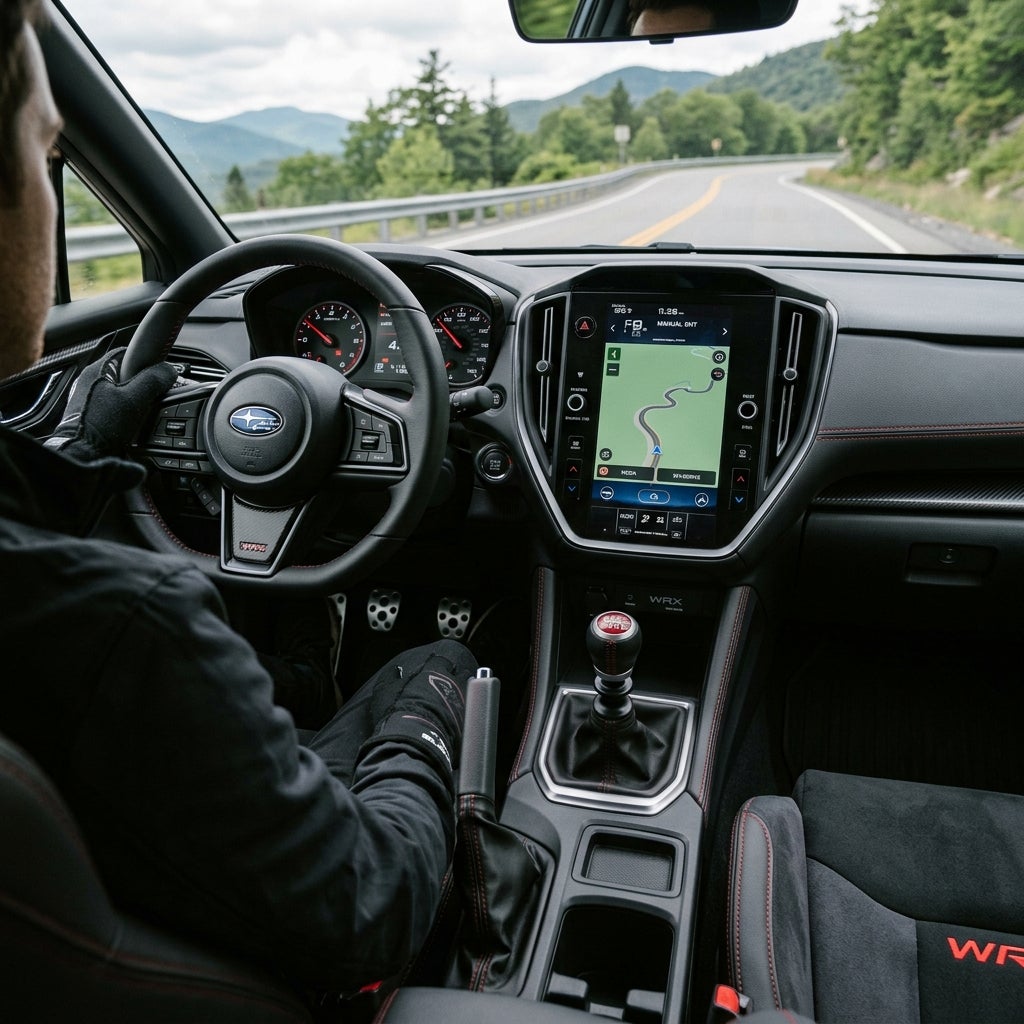
Interior view of a driver steering a Subaru WRX with manual transmission on a winding mountain road. (Representative image for illustration purposes only. Actual vehicle may vary based on trim and configuration.)

Analyzing the Evolution of Three-Pedal Performance in the Modern Subaru Lineup

The automotive landscape has shifted dramatically over the last decade, with automatic gearboxes and continuously variable transmissions replacing traditional manual setups in almost every vehicle segment. For drivers who value the mechanical connection of a third pedal, it often feels like options are disappearing entirely. We recognize this shifting tide at Hanania Subaru, where we help performance enthusiasts find vehicles that match their driving style. Subaru has consolidated its manual transmission strategy to focus purely on dedicated sports cars. While the brand discontinued the manual option in the Impreza after the 2023 model year, leaving the modern Sport and RS trims equipped exclusively with the Lineartronic CVT, the dedication to three-pedal performance remains alive in the brand's engineering division. To support this enthusiast community, the newly formed Sports Vehicle Planning Office in Japan is actively researching ways to expand performance offerings. This specialized team is exploring heavy-duty manual gearboxes, such as the legendary TY85 design, which is capable of managing over 440 lb-ft of torque and supporting higher horsepower outputs than standard automatic options. Drivers who want to explore these performance developments can browse our new Subaru inventory online or view our new Subaru performance inventory to see the latest arrivals. For those who want to discuss upcoming performance options with our knowledgeable team, please give us a quick call or visit our physical showroom at 6400 Blanding Blvd to experience our lineup firsthand. Table of Contents The Remaining Three-Pedal Champions: Demystifying the Manual Options in the WRX and BRZ Deciding Between the Turbocharged WRX and the Agile BRZ for Your Daily Commute Comparing the Performance Dynamics of Subaru and Mazda Manual Gearboxes Protecting Your Investment: Gear Oil Maintenance, Powertrain Warranties, and Resale Value Quick Answers to Common Manual Subaru Questions Taking the Next Step Toward Your Three-Pedal Subaru Adventure The Remaining Three-Pedal Champions: Demystifying the Manual Options in the WRX and BRZ For driving enthusiasts who still want to operate a clutch pedal, the current lineup features two dedicated performance models. The first is the rear-wheel-drive BRZ, which provides a classic sports car layout. Every manual-equipped BRZ features a 2.4L Subaru BOXER engine that delivers 228 hp and 184 lb-ft of torque. This powertrain is standard on the Limited trim, which starts at $35,860, the track-focused tS trim at $38,360 with its STI-tuned suspension and Brembo high-performance braking system, and the exclusive Series Yellow special edition at $39,360. For a weekend cruise past the scenic golf courses and coastal dunes of Ponte Vedra Beach, the lightweight, rear-wheel-drive BRZ offers pure sports car dynamics. The second option is the turbocharged WRX, which pairs engaging performance with everyday utility. The WRX utilizes standard Symmetrical All-Wheel Drive and a 2.4-liter turbocharged BOXER engine generating 271 hp and 258 lb-ft of torque. A 6-speed manual transmission is standard on the Base, Premium, Limited, and tS trims, as well as the limited-production Series Yellow trim. The high-end GT trim is configured exclusively with the Subaru Performance Transmission for drivers who prefer rapid automatic shifting. If you are looking for a high-quality used model, you can explore our used car inventory, or if you require a larger family vehicle, you can browse our new Outback inventory to find the perfect fit for your household. Engine & Performance Powertrain specs by trim Feature Limited Series Yellow tS Engine 2.4L 2.4L 2.4L Horsepower 228 hp 228 hp 228 hp Torque 184 lb-ft 184 lb-ft 184 lb-ft Transmission 6-speed manual 6-speed manual 6-speed manual Drivetrain Rear-wheel drive Rear-wheel drive Rear-wheel drive ​ Deciding Between the Turbocharged WRX and the Agile BRZ for Your Daily Commute Selecting the ideal daily driver requires balancing raw performance with everyday comfort and cargo space. The WRX serves as a highly versatile four-door sedan, offering comfortable seating for five passengers and a trunk with about 13 cubic feet of cargo space. This practical layout makes it easy to load groceries or sports gear while maintaining a spirited drive. Commuters driving from Yulee down US Highway 17 appreciate the WRX's secure traction and turbocharged acceleration during heavy rainstorms. The manual WRX is rated at 19 mpg city and 26 mpg highway, making it a viable commuter that handles wet pavement with ease. In contrast, the BRZ is designed for drivers who prioritize lightweight agility and cornering precision. This two-door coupe features a low center of gravity, highly bolstered front seats, and about 6 cubic feet of trunk space, which can be expanded by folding down the rear seatback. The manual BRZ achieves an EPA-estimated 20 mpg city and 27 mpg highway, offering efficient performance for spirited weekend drives. While the BRZ delivers an incredibly engaging driving experience, its compact dimensions and rear-wheel-drive setup make it a more specialized choice compared to the all-weather capability of the WRX. Drivers looking to customize their performance vehicles can order genuine Subaru parts through our department, while those who need maximum passenger capacity can look at our new Ascent inventory to accommodate up to eight passengers. Fuel Economy Fuel economy and range by trim Feature Limited Series.Yellow tS MPG 20 city / 27 hwy / 22 combined 20 city / 27 hwy / 22 combined 20 city / 27 hwy / 22 combined ​ Comparing the Performance Dynamics of Subaru and Mazda Manual Gearboxes Comparing manual performance cars often leads enthusiasts to contrast the engineering philosophies of different Japanese brands. The BRZ competes directly with the Mazda MX-5 Miata, but it offers a distinct set of advantages. While the manual Miata starts at $31,665 and produces 181 hp from its 2.0-liter engine, the manual BRZ Limited starts at $35,860 and delivers 228 hp from its 2.4L Subaru BOXER engine. Additionally, the BRZ features a standard rear seat and a more stable wheelbase, providing a level of daily usability that the strict two-seat Miata layout cannot match. When comparing the WRX to Mazda's current manual offerings, the contrast is even more pronounced. Mazda restricts its manual gearbox to the front-wheel-drive Mazda3 hatchback, which starts at $38,225 in its premium manual trim. The WRX provides a standard 6-speed manual transmission paired with standard Symmetrical All-Wheel Drive and a 2.4-liter turbocharged BOXER engine that produces 271 hp. This easily surpasses the Mazda3's naturally aspirated 2.5-liter engine, which generates 191 hp and lacks the all-weather grip of standard all-wheel drive. Enthusiasts who want to secure their next performance car can apply for financing online to streamline the process, or they can browse our certified pre-owned Subaru inventory to find factory-backed manual models. ​ Protecting Your Investment: Gear Oil Maintenance, Powertrain Warranties, and Resale Value Proper maintenance is the foundation of long-term sports car reliability, especially in hot climates. Subaru recommends inspecting the manual transmission gear oil every 30,000 miles or 30 months, with a complete fluid replacement typically suggested between 30,000 and 60,000 miles depending on driving habits and environmental conditions. Keeping fresh gear oil in the manual transmission prevents premature wear on the syncros and gears, ensuring smooth shifts during high-temperature summer drives. When performance enthusiasts visit our finance desk to custom-order a manual sports car, they often ask if a deposit is required to secure the build from the factory. At Hanania Subaru, please contact us for current custom factory order and deposit details. Protecting your investment also involves understanding your warranty coverage. The five-year or 60,000-mile powertrain warranty covers the internal mechanical components of the manual transmission, including the gears, shafts, and bearings. However, traditional wear items like the clutch disc, pressure plate, and throwout bearing are covered under the three-year or 36,000-mile Subaru Limited Warranty. Because manual-equipped sports cars are increasingly rare, well-maintained models tend to hold their resale value exceptionally well. To prepare for your upgrade, you can evaluate your trade-in value online, and then schedule an appointment with our authorized Subaru service center to keep your current vehicle in top condition. If you decide that a utility-focused vehicle is a better fit for your lifestyle, you can also explore our new Forester inventory to find a spacious, all-road crossover. Pricing Pricing by trim Feature Limited Series.Yellow tS Base MSRP $35,860 $39,360 $38,360 Destination charge $1,195 $1,195 $1,195 ​ Quick Answers to Common Manual Subaru Questions Navigating the options and maintenance requirements of a performance vehicle often brings up specific questions for prospective buyers. If you are also considering other versatile options in our lineup, you can browse our new Crosstrek inventory to compare different utility setups. Q: Does the Subaru WRX still offer a manual transmission? Yes, the WRX remains highly committed to three-pedal driving. The 6-speed manual transmission comes standard on the Base, Premium, Limited, and tS trims, as well as the limited-run Series.Yellow edition. Only the GT trim is restricted to an automatic transmission. Q: How does Subaru's EyeSight driver assist technology work with manual transmissions? The advanced safety suite has been carefully engineered to integrate with manual gearboxes. The system utilizes standard features like automated emergency braking, lane-keeping assist, and adaptive cruise control while allowing the driver to depress the clutch pedal during safety interventions without stalling the engine. Q: What is the 0-60 mph time of the manual Subaru WRX? The manual WRX accelerates from 0 to 60 mph in approximately 5.6 seconds. This sprint showcase highlights the immediate power delivery of the turbocharged flat-four engine when paired with a precise manual gearbox. Q: Is Subaru planning any new manual models beyond the current lineup? While mainstream models have transitioned to CVT-only configurations, Subaru continues to support performance-oriented vehicles for driving enthusiasts in the future. Q: What is the price difference between a manual and automatic Subaru BRZ? The manual transmission serves as the standard configuration for the BRZ, representing the purest driving setup. Opting for the six-speed automatic transmission may increase the vehicle's MSRP, depending on the chosen trim level. ​ Taking the Next Step Toward Your Three-Pedal Subaru Adventure Finding the perfect sports car comes down to experiencing the mechanical connection firsthand on the road. At Hanania Subaru, we are dedicated to helping you find a vehicle that brings excitement back to your daily driving. Every new vehicle purchase from our dealership is supported by our team, and current warranty and maintenance details are available upon request. Additionally, every new vehicle is backed by the comprehensive three-year or 36,000-mile Subaru Limited Warranty, which includes access to 24-hour emergency assistance. If you ever experience a flat tire, dead battery, or require emergency towing, you can call Subaru Roadside Assistance: 1-800-261-2155 for manufacturer-backed support utilizing brand-specific expertise and genuine OEM parts. Our team is ready to assist you with every phase of your automotive journey, from initial research to long-term care. You can schedule a service appointment online to keep your current vehicle running smoothly, or you can contact our sales team at (904) 906-1235 to discuss our current performance options. When you are ready to take a test drive, visit our physical showroom at 6400 Blanding Blvd to explore our inventory and meet our dedicated team of automotive experts. © 2026 Hanania Subaru. All rights reserved.