Hanania Subaru of Orange Park

Blog / Buying & Leasing

Subaru Forester Lease Guide for Jacksonville Drivers

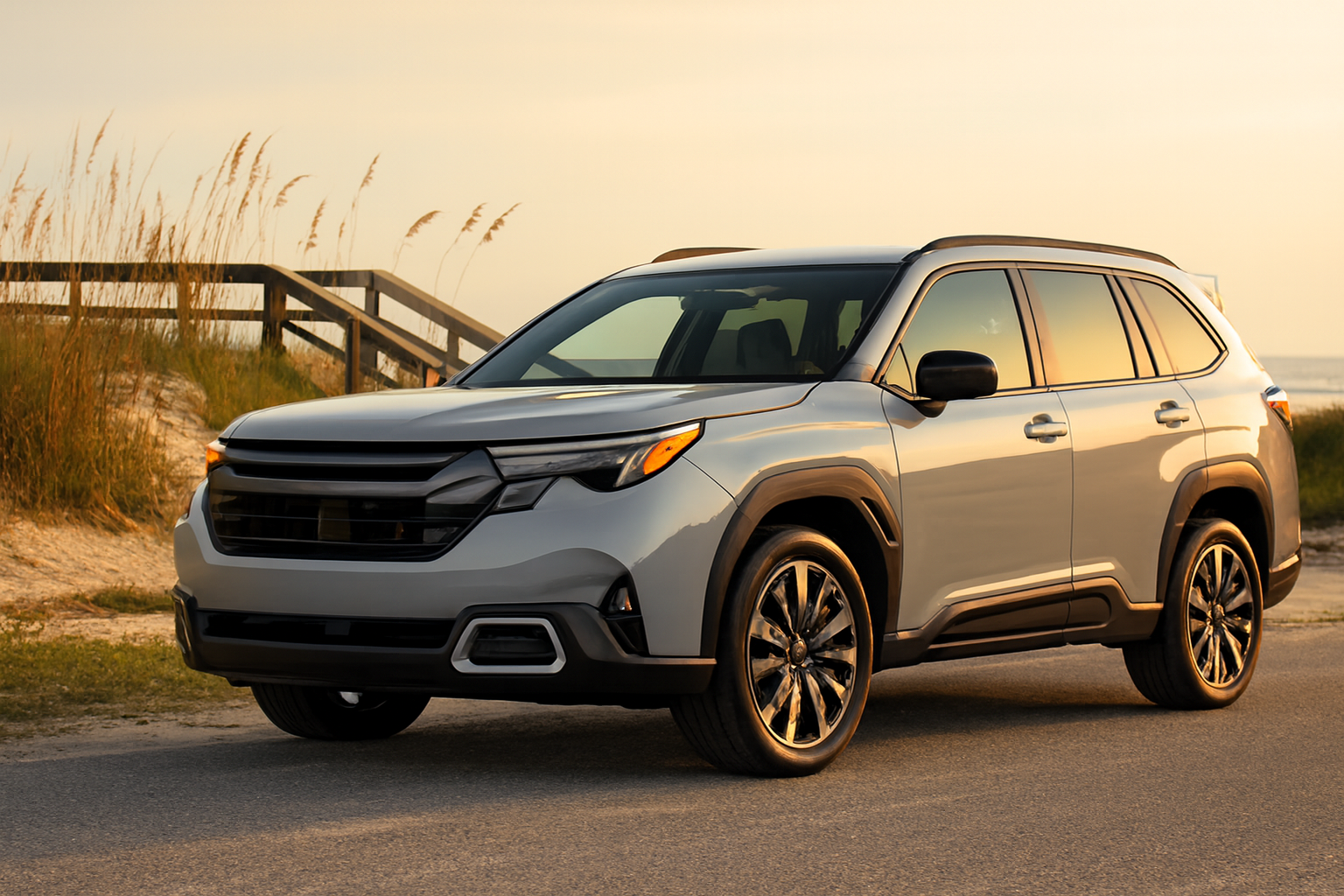
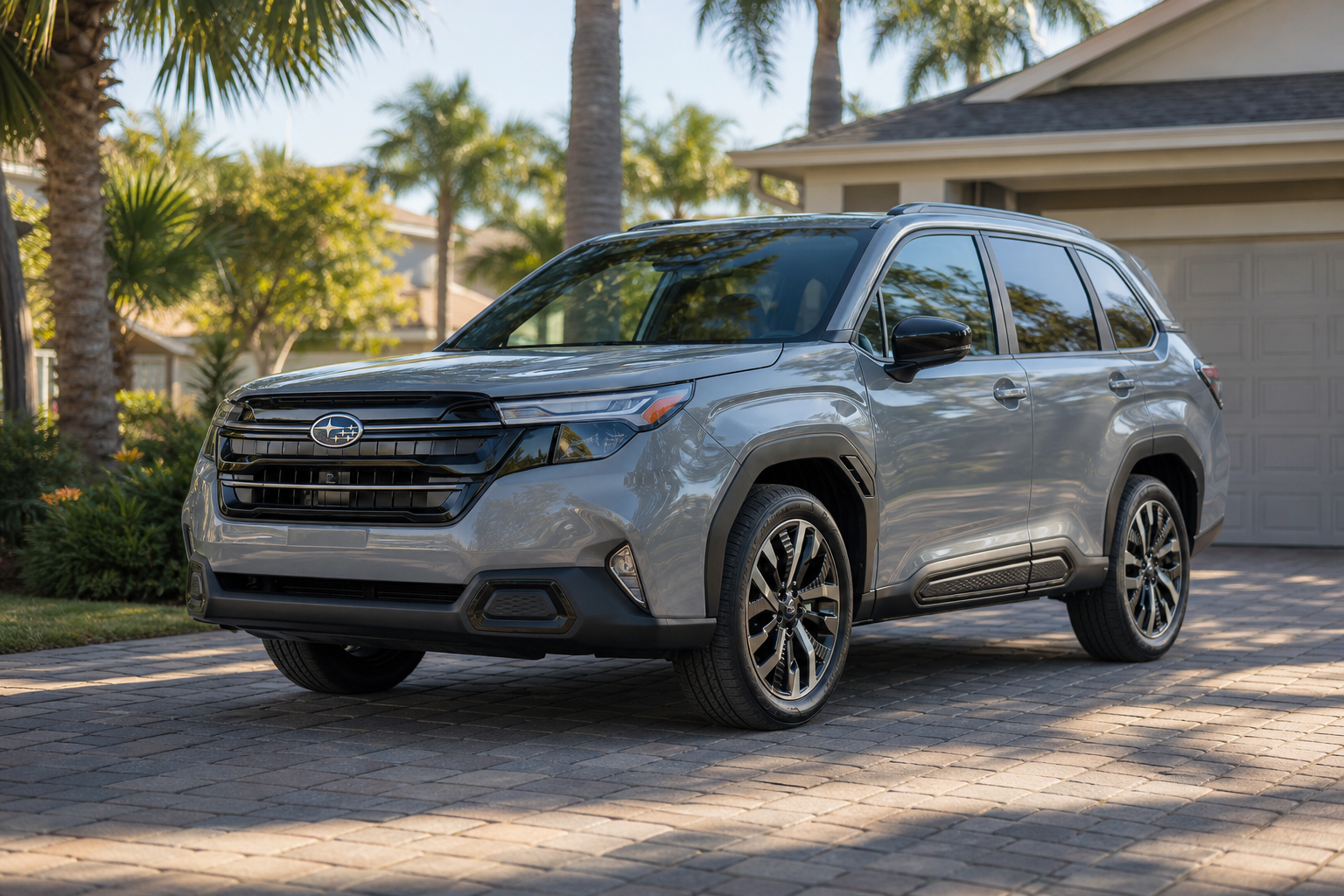
Compact SUV parked near a Florida beach access boardwalk on a bright, sunny day with sand dunes

Leasing a Subaru Forester can be a smart way to drive a new SUV every few years without a big commitment. But the fine print—mileage caps, wear charges, and what happens when the lease ends—trips up a lot of shoppers. Here's how a Forester lease actually works for drivers around Jacksonville, in plain terms.

How does a Subaru Forester lease payment work?

A lease payment covers the Forester's expected depreciation during your term plus rent charge (interest) and taxes. Instead of financing the whole vehicle, you pay for the portion you use—usually over 36 months. That's why lease payments are typically lower than loan payments on the same trim, though you don't own the SUV at the end.

Three numbers drive your monthly payment: the negotiated price (capitalized cost), the residual value (what Subaru estimates the Forester is worth at lease-end), and the money factor (the interest rate). A higher down payment lowers the monthly figure but raises what you'd lose if the vehicle were totaled early. Any advertised Forester lease we run is disclosed with the exact model year and trim—for example, a 2026 Subaru Forester Premium—so you always see what you're actually leasing.

What mileage cap should Jacksonville drivers choose?

Most Forester leases offer 10,000, 12,000, or 15,000 miles per year. Pick the tier that matches your real driving. Going over means per-mile overage fees at lease-end—often 15 to 25 cents each—so it's usually cheaper to buy the miles up front if you know you drive a lot.

Jacksonville is a spread-out city. If you commute from Orange Park to downtown, run kids around, and take the occasional beach or Gainesville trip, the miles add up fast. The average American drives about 13,476 miles per year, according to the Federal Highway Administration—already above a 12,000-mile allotment. Track your current odometer for a month and multiply by 12 to get an honest estimate before you sign.

  • 10,000 mi/yr: Best for short commutes or a second car that mostly runs errands.
  • 12,000 mi/yr: A common middle ground for most single-car households.
  • 15,000 mi/yr: Better for long commutes, frequent road trips, or rideshare-style driving.

What are your end-of-lease options on a Forester?

When your Forester lease ends, you generally have three choices: return it, buy it, or lease something new. Each path has different costs, so it helps to decide a few months out rather than at the counter. Your lease agreement lists the buyout price, which was set when you signed.

Here's how the three options compare so you can plan ahead:

OptionWhat it involvesBest if
ReturnTurn in the Forester, pay any excess-mileage and wear charges, plus a disposition fee.You want a new vehicle or a change.
Buy outPay the residual value (plus tax and fees) to keep the Forester for good.You're under the mileage cap or love the car.
Re-leaseStart a fresh lease on a newer Forester or another Subaru model.You like leasing and want the latest features.

A quick tip: if you're near or over your mileage cap, buying out the lease can be smarter than paying overage fees, since those charges disappear when you own the vehicle. Get a pre-return inspection so wear items—curb-rashed wheels, a cracked windshield, worn tires—don't surprise you.

Is leasing or buying a Forester better in Florida?

Neither is automatically better—it depends on your miles, how long you keep vehicles, and whether you want ownership. Leasing suits drivers who like a new Forester every three years and stay within mileage limits. Buying makes sense if you drive a lot, keep cars long, or want to build equity you can trade or sell later.

Florida's climate is a factor worth naming. Salt air near the coast, intense sun, and summer humidity are hard on paint and tires. A lease lets you hand those long-term wear worries back at term-end, while buying rewards you for taking good care of the vehicle over many years. Come talk it through with us—we'll run both numbers on the same Forester so you can see the real difference side by side.
Posted in:

Related Posts

Compact SUV parked in a sunny Jacksonville driveway lined with palm trees under a clear sky

Subaru Lease Deals in Jacksonville: How They Actually Work

Leasing can be a smart way to drive a new Subaru without committing to a long loan, but the fine print matters. Here at Hanania Subaru of Orange Park, we'd rather walk you through the real numbers than hand you a flashy monthly figure and hope you don't ask questions. Below is how leasing works, what to watch for in Jacksonville, and how to compare offers side by side. How do Subaru lease deals work in Jacksonville? A lease lets you pay for the portion of the vehicle you use over a set term, usually 36 months, instead of buying it outright. You cover depreciation, taxes, and fees rather than the full sticker. At the end, you return the Subaru, buy it, or lease something new. Monthly payments are typically lower than a comparable loan. The payment depends on a few moving parts: the negotiated vehicle price, the residual value (what the Subaru is projected to be worth at lease-end), the money factor (basically the interest rate), and any money you put down up front. Lower the price or the money factor and the payment drops. Reduce the term or raise the residual and it shifts too. Capitalized cost: the agreed price of the vehicle you're leasing. Residual value: the projected worth at the end of the term. Money factor: the lease equivalent of an interest rate. Mileage allowance: the annual miles included, often 10,000 or 12,000. Due at signing: first payment, fees, and any down payment. What mileage limit makes sense for Jacksonville drivers? Most Subaru leases include 10,000 or 12,000 miles per year, and going over means paying a per-mile charge at return. If you commute across the river to downtown, drive to St. Augustine on weekends, or run kids around Orange Park, add up your real miles first. Buying a higher allowance up front is usually cheaper than paying overage later. The average American drives about 13,476 miles per year, according to Federal Highway Administration data. That's above the standard 12,000-mile lease cap, so plenty of Jacksonville drivers should size up their allowance rather than assume the base number fits. A quick look at your current odometer over the past year tells you more than any estimate. Annual driving style Suggested mileage tier Short local commute, mostly Orange Park errands 10,000 miles Mixed commuting plus weekend trips 12,000 miles Long commute or frequent I-95 travel 15,000 miles Is leasing or buying a Subaru better for me? Leasing fits drivers who like a new vehicle every few years, want lower monthly payments, and stay within their mileage. Buying makes more sense if you drive heavy miles, plan to keep the vehicle long term, or want to build equity. Neither is universally better; it comes down to your budget, mileage, and how long you keep a car. One honest way to decide: think about the last three cars you owned and how long you kept each. If you traded roughly every three years, leasing a 2026 Subaru Outback Premium or a 2026 Subaru Crosstrek Premium may line up with your habits. If you tend to drive a vehicle until it's paid off and then some, financing usually costs less over the long haul. We're happy to run both scenarios so you see the numbers, not just a payment. What should I bring to lease a Subaru? Bring a valid Florida driver's license, proof of insurance, and proof of income such as recent pay stubs. If you're trading a vehicle, bring the title or loan payoff details and your registration. Having these ready lets us structure an accurate lease and give you real figures instead of rough estimates the same day. Valid Florida driver's license Proof of insurance meeting lease requirements Recent pay stubs or income documentation Trade-in title, payoff amount, and registration Any co-signer information, if applicable Lease offers change with each model year and Subaru's regional programs, so the smartest move is to confirm current terms with our finance team before you sign. We'll disclose the model year, trim, mileage cap, and everything due at signing in writing so there are no counter-surprises. Written by Dana L., Finance Manager (Finance), Finance at Hanania Subaru of Orange Park

Unbadged compact SUV parked in a palm-lined Jacksonville driveway in warm morning light

2026 Subaru Forester Lease in Jacksonville: What to Know

Leasing gets confusing fast, so we'll keep this plain. Below is how a 2026 Subaru Forester lease in Jacksonville actually works, what drives the monthly payment, and the questions worth asking before you sign. No jargon, no surprises at the counter. What does it cost to lease a 2026 Subaru Forester in Jacksonville? Your monthly payment is built from four things: the negotiated price, the residual value at lease end, the money factor (interest), and Florida taxes and fees. Because published lease specials change often, the current 2026 Forester Base and Premium trim offers live on our specials page rather than a fixed number here that could go stale. A few local specifics matter. Florida sales tax applies to each monthly payment, and Duval County adds a discretionary surtax on the first portion of the price. Dealer and state fees, plus your down payment or any trade equity, all shift the number. When you ask for a quote, ask for the drive-off amount and the monthly payment together so nothing hides. Negotiated price: the selling price you agree to, before taxes and fees. Residual value: what Subaru estimates the vehicle is worth at lease end. Money factor: the lease version of an interest rate. Term and mileage: usually 36 months and 10,000 or 12,000 miles a year. How does leasing a 2026 Subaru Forester compare to buying? Leasing usually means a lower monthly payment and a new vehicle every three years, but you don't build ownership and mileage is capped. Buying costs more per month yet ends with a vehicle you own free and clear. The right choice comes down to your annual mileage and how long you like to keep a car. Here's a side-by-side to make the trade-offs easy to scan. Factor Leasing Buying Monthly payment Typically lower Typically higher Mileage Capped (10k–15k/yr) Unlimited End of term Return, buy, or re-lease You own it Customization Limited (return in stock condition) Do as you like Best for Predictable, lower miles High miles, long-term keep If you drive from Orange Park to downtown Jacksonville daily and rack up highway miles, buying often pencils out better. If you prefer a fresh Forester and warranty coverage the whole time you drive it, leasing fits neatly. Why does the Subaru Forester hold its value well on a lease? Strong resale value directly helps lease math, because a higher residual value lowers your monthly payment. The Forester has a solid track record here. An iSeeCars study of five-year depreciation found the Subaru Forester retained roughly 60% of its value, well above the average vehicle, which loses closer to half over the same span. That retention shows up in third-party recognition too. Kelley Blue Book has named the Subaru Forester to its Best Resale Value Awards list in the compact SUV segment across multiple recent model years. For a lease, a car that depreciates slowly means Subaru can set a higher residual, and that keeps your payment leaner without you doing anything extra. What lease terms and mileage limits should I ask about? Ask about term length, annual mileage allowance, the per-mile overage charge, and the disposition fee due at return. Most 2026 Forester leases run 36 months with a 10,000- or 12,000-mile yearly allowance. Picking the right mileage tier up front is almost always cheaper than paying overage fees at the end. Before you sign, walk through this quick checklist: What is the total drive-off (first payment, fees, any down payment)? What annual mileage is included, and what's the per-mile charge over it? Is there a disposition fee at lease end, and how much? What counts as normal wear versus a chargeable ding or scratch? Can I buy the Forester at lease end, and at what price? Wear-and-tear expectations catch people off guard, so get them in writing. And if your commute grows mid-lease, ask early about mileage options rather than waiting for a bill at turn-in. Ready to run the numbers? The cleanest way to size up a 2026 Subaru Forester lease in Jacksonville is to check the live specials for the trim you want, then ask us to build a full quote with drive-off and monthly payment side by side. Bring your annual mileage estimate and any trade details, and we'll show you exactly how the payment comes together. Written by Dana L., Finance Manager, Finance at Hanania Subaru of Orange Park

Unbadged crossover parked in a sunlit Florida dealership lot with palm trees and clear blue sky

Is Hanania Subaru of Orange Park a Good Dealership?

It's a fair question to ask before you spend an afternoon on a lot or hand over a deposit. Instead of a sales pitch, here's a plain look at how we operate, where we sit in the Jacksonville area, and how to judge us for yourself. What makes Hanania Subaru of Orange Park a good dealership? A good dealership is one that's clear about pricing, keeps your car healthy after the sale, and treats a return visit the same as a first one. At Hanania Subaru of Orange Park we lean on transparent service estimates, a factory-trained Subaru team, and a location that's easy for west-side Jacksonville and Clay County drivers to reach. The honest truth is that no dealership is perfect for every shopper. What we can promise is that you'll get the numbers before the paperwork, not after. If a repair can wait or a scheduled item doesn't apply to your driving habits, we'll say so rather than pad the ticket. Factory-trained technicians who work on Subaru vehicles every day Genuine Subaru parts for repairs and maintenance Written estimates before work begins A full Jacksonville-area service department for oil changes, brakes, and warranty work According to J.D. Power's 2024 U.S. Sales Satisfaction Index Study, satisfaction scores climb sharply when dealers explain paperwork clearly and avoid surprises at signing, source: J.D. Power. That's the bar we try to hit on every deal. How does Hanania Subaru handle service and repairs? Our service department handles routine maintenance and warranty work using genuine Subaru parts and factory-trained technicians. You get a written estimate before we start, a heads-up if something can safely wait, and a clear explanation of what each visit covers so you're never guessing at the counter. Subaru all-wheel-drive systems and boxer engines have specific maintenance needs, and Florida's heat and humidity add their own wear on batteries, cooling systems, and cabin air filters. Here's a general guide to common intervals so you can plan ahead: Service Typical interval Why it matters in Jacksonville Oil & filter change Every 6,000 miles Stop-and-go heat is hard on oil Tire rotation Every 6,000 miles Keeps all-wheel drive wearing evenly Battery check Twice a year Florida heat shortens battery life Cabin air filter ~12,000–15,000 miles Pollen and humidity clog it faster If you're not sure whether a service applies to you, ask. We'd rather explain why you can skip something than charge you for it. What should I expect when buying a car at Hanania Subaru? Expect the price and financing terms in writing before you sign, plus a walkthrough of any add-ons so you can accept or decline each one. We disclose model year and trim on every quote, and we'll go over Subaru warranty coverage and current factory programs that apply to the vehicle you're actually considering. Test drives, trade-in appraisals, and financing conversations don't require a commitment. If you're comparing a 2026 Subaru Outback trim against a 2026 Forester, for example, we'll break down the differences in cargo space, ground clearance, and features so you're choosing on facts, not pressure. Where is Hanania Subaru of Orange Park located? Hanania Subaru of Orange Park serves the Jacksonville, Florida area from the Orange Park side of the metro, making it convenient for drivers in Clay County, Argyle, Oakleaf, and southwest Jacksonville. Call or check our website for current hours and directions before you head over, especially for the service department. Because we're on the west side, many shoppers find the drive shorter and the parking easier than heading toward the beaches or downtown. If you're coming from farther out, scheduling a service appointment ahead of time keeps your wait short. How can I decide if it's the right dealership for me? Judge us the way you'd judge any dealership: read recent reviews, call with a specific question and see how clearly it's answered, and ask for an out-the-door number in writing. A good dealership welcomes those requests. If the answers are straight and the estimate is in writing, you have what you need to decide. Read a mix of recent Google and third-party reviews Ask for a written, itemized quote with model year and trim listed Test-drive before you talk numbers Confirm service hours and appointment options for your schedule Written by Dana L., Finance Manager (Finance) at Hanania Subaru of Orange Park