Hanania Subaru of Orange Park

Blog / Hanania Subaru of Orange Park Service

The Real Truth About Subaru Parts From a Parts Manager's Perspective

The Real Cost of What Goes Under Your Subaru Hood

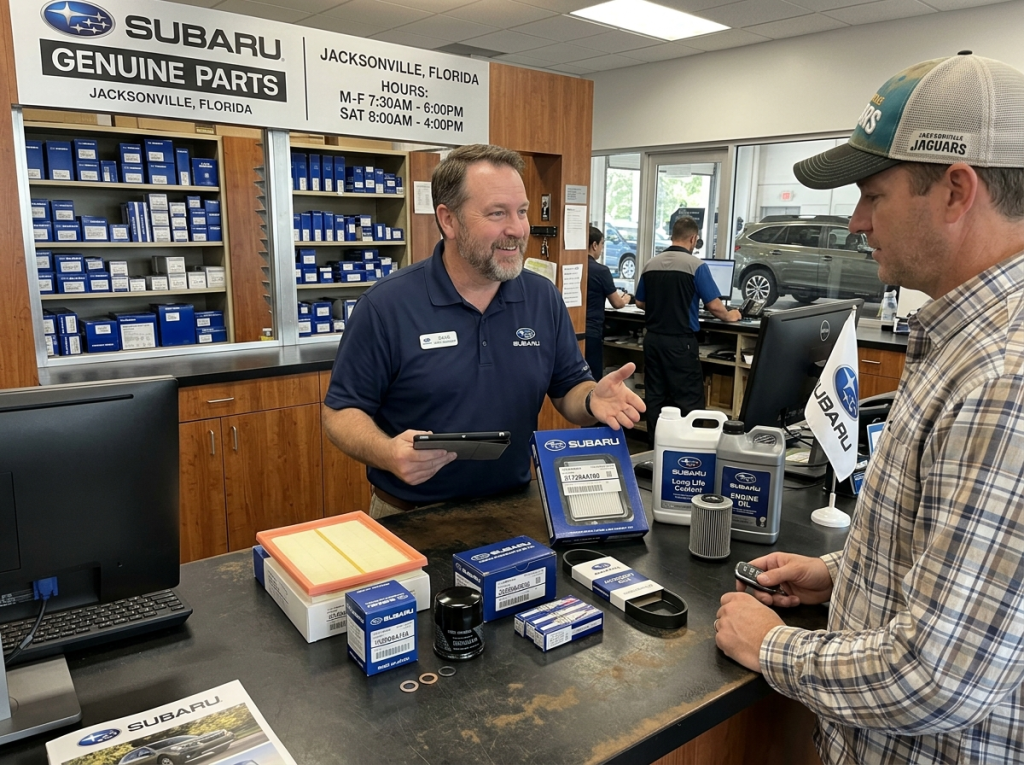
There is a viral video floating around showing an aftermarket parts truck making a delivery to a dealership, and it usually sparks a lot of questions from my customers. I've spent 6 years as a Parts Manager, and I can tell you that what you're seeing in those videos is almost always related to used car reconditioning for other brands or a very specific customer request. When it comes to your actual Subaru maintenance, we don't cut corners with "universal" components because your vehicle wasn't built with universal logic. Every Genuine Subaru Part is an exact replica of what was installed on the assembly line, engineered to handle the specific stresses of your drivetrain.

Choosing a cheaper alternative might save a few dollars at the counter, but the long-term math rarely works out in the driver's favor. For example, if you are driving a 2026 Subaru Outback with the 2.5L H4 engine, every component from the spark plugs to the serpentine belt is designed to meet a specific thermal and vibration threshold. Aftermarket manufacturers often use "consolidated" designs, meaning one part is made to fit ten different vehicle brands. That "close enough" fit is often why we see premature wear or mysterious rattles that weren't there before the repair.

For families living in Ponte Vedra Beach, the salt air and coastal humidity add an extra layer of strain on your vehicle's exterior and mechanical bits. I always recommend staying ahead of corrosion with components designed to withstand those specific environmental factors. If you have questions about a specific repair or want to see the quality of our components for yourself, you can always find our Jacksonville showroom easily or give our team a quick call at (904) 906-1235. We also keep a great selection of the new Subaru performance inventory on hand for those who want to see how these high-spec parts perform in the real world.

Table of Contents

Why BOXER Engines and Symmetrical AWD Demand Exact Engineering

The horizontal layout of Subaru BOXER engines creates a specific set of physics that standard upright engines just don't have to deal with. Because the cylinders are laid flat, oil flow and pressure management are absolutely critical. I often point out to my team that a Subaru Genuine Oil Filter isn't just a canister with paper inside; it is built with a specific bypass valve pressure designed for the 2.5L H4 or 2.4L H4 engines. Many aftermarket filters have a much lower bypass pressure, which can lead to unfiltered oil circulating through your engine or, worse, restricted flow during a cold start.

The same precision is required for your Symmetrical All-Wheel Drive system. Subaru is very strict about tire matching because the system relies on all four wheels having the exact same rolling circumference. If you replace just one tire with an aftermarket brand that has a slightly different tread depth or carcass shape, it can cause heat buildup in the center differential. This is a common issue we see when people try to save money on a single tire rather than maintaining a matched set. We see this often with high-mileage commuters coming from Yulee who put heavy miles on US Highway 17; that constant high-speed travel makes even a tiny difference in tire diameter a major mechanical risk.

Whether you are looking at our new Crosstrek inventory or exploring our certified pre-owned inventory, you’ll notice that every vehicle we stand behind uses these exact-spec components. The goal is to maintain the original balance of the car. When you start swapping in parts that weren't validated by the factory, you're essentially redesigning the car's engineering on the fly, and that's rarely a good idea for reliability.

The EyeSight Calibration Factor in Windshield and Sensor Repairs

A customer came in recently because their cruise control and pre-collision braking stopped working after they had a "bargain" windshield installed by a mobile glass van. This is becoming one of the most frequent conversations I have because of EyeSight Driver Assist Technology. On models like the 2026 Subaru Forester, the EyeSight cameras are mounted behind the rearview mirror and "look" through the glass. Subaru specifies that only an OEM windshield should be used because the glass must have precise optical properties and specific mounting points for the cameras to calibrate correctly.

Aftermarket glass often has slight distortions or different thicknesses that the cameras can't compensate for. If the cameras can't see perfectly, the system may shut down or, even worse, react incorrectly to an obstacle. It isn't just about the glass, either; it's about the sensors. Genuine Subaru brake pads and rotors are tested to work specifically with the ABS and Vehicle Dynamics Control systems. An aftermarket pad might have a different "bite" or friction coefficient, which can change how the safety systems intervene during an emergency maneuver.

Our Subaru service center is equipped with the specialized diagnostic tools needed to recalibrate these systems after a repair, something most independent shops simply don't have access to. We always use genuine Subaru parts for these critical safety systems because there is no room for error when it comes to your family's protection. If you're curious about the latest safety tech, you can check out the features in our new Forester inventory to see how integrated these systems have become.

Navigating the Warranty and Insurance Realities of Aftermarket Parts

Does using a non-factory part automatically kill your protection? This is a question that gets asked every single day in the service drive. The short answer is no, thanks to the Magnuson-Moss Warranty Act, but there is a major catch that many people overlook. While a manufacturer cannot void your entire warranty just because you used an aftermarket air filter, they can absolutely deny a specific claim if that aftermarket part caused the failure. If a cheap aftermarket radiator hose bursts and causes your engine to overheat, the resulting engine damage won't be covered under your 5 years / 60,000 miles powertrain warranty.

Insurance companies are another factor. They often push for the cheapest possible parts—sometimes even salvaged components—to keep their repair costs down after an accident. I always tell my customers to check their policy language. You have the right to request Genuine Subaru Parts for your repair. This is especially vital for structural components and crumple zones. An aftermarket bumper or hood might look the same on the outside, but it may not have the same crash-test performance as the parts that earned the 2026 Subaru Outback its IIHS Top Safety Pick+ rating.

Using factory parts also helps maintain your vehicle's resale value. When it comes time to trade in your car, a history of dealership service with factory parts is a major selling point. It shows you didn't cut corners on maintenance. If you're nearing a service interval or need a repair estimate, you can schedule your service appointment online to have our experts take a look. We can provide a full breakdown of what your vehicle needs to stay within its warranty guidelines.

Spotting the Difference: How to Identify Genuine Subaru Components

I often see people trying to save money by ordering parts from unverified websites, only to bring them to us when they realize the part doesn't fit. Identifying a real component is usually pretty straightforward if you know what to look for. Genuine Subaru Parts will always come in branded packaging with a specific part number sticker that includes a barcode. Most of these components are stamped with the Subaru logo directly on the metal or plastic, and you'll often see "Made in Japan" or "Made in USA" labels depending on the specific item.

Another hallmark of the real deal is the minimum 12 month manufacturer's warranty that comes with the part. If you buy a "universal" part online and it fails in three months, you're often stuck buying a second one. When we pull a part for a 2026 Subaru Crosstrek, we verify it against your VIN to ensure the fitment is guaranteed. This is critical for things like All-Weather Floor Liners or Splash Guards, which are custom-molded to the exact contours of the floorboards and wheel wells.

If you are looking at the accessories in our new Outback inventory, you can see the difference in how these items integrate with the vehicle. From the Auto-Dimming Mirror with Compass and HomeLink to the LED Upgrade, factory accessories don't require "hacking" into the wiring harness. They use plug-and-play connectors designed for your specific model year, which prevents the electrical gremlins that often follow aftermarket installations.

Why Professional Installation Safeguards Your Subaru Investment

Subaru vehicles are known for having 96% of models sold in the last 10 years still on the road, and a big part of that longevity is how they are maintained. Our factory-trained technicians spend hundreds of hours learning the specific nuances of the CVT and the EyeSight systems. When we install a part, we aren't just bolting it on; we're ensuring it meets the factory torque specs and is properly calibrated to the vehicle's computer. This level of detail is what keeps your 3 years / 36,000 miles basic warranty and roadside assistance protections fully intact.

We also offer benefits you won't find at a generic repair shop, like our 24-Month Tire Protection Plan. This comes free with any tire purchase and covers replacement or repair, plus it includes complimentary roadside assistance. Whether you're driving a 2026 Subaru Ascent with the 2.4L H4 engine or a smaller crossover, having that peace of mind on the road is invaluable. Using specialized tools and having a direct line to factory technical support allows us to get the job done right the first time.

If you're ready to experience the difference that expert care makes, you can find our Jacksonville location for a visit. You can also reach our parts and service experts at (904) 906-1235 to discuss your maintenance needs. If you're looking for a vehicle with enough room for the whole family and the reliability to match, I highly recommend checking out our new Ascent inventory. We're here to help you keep your Subaru performing at its best for all the miles ahead.


© 2026 Hanania Subaru. All rights reserved.
Posted in:

Related Posts

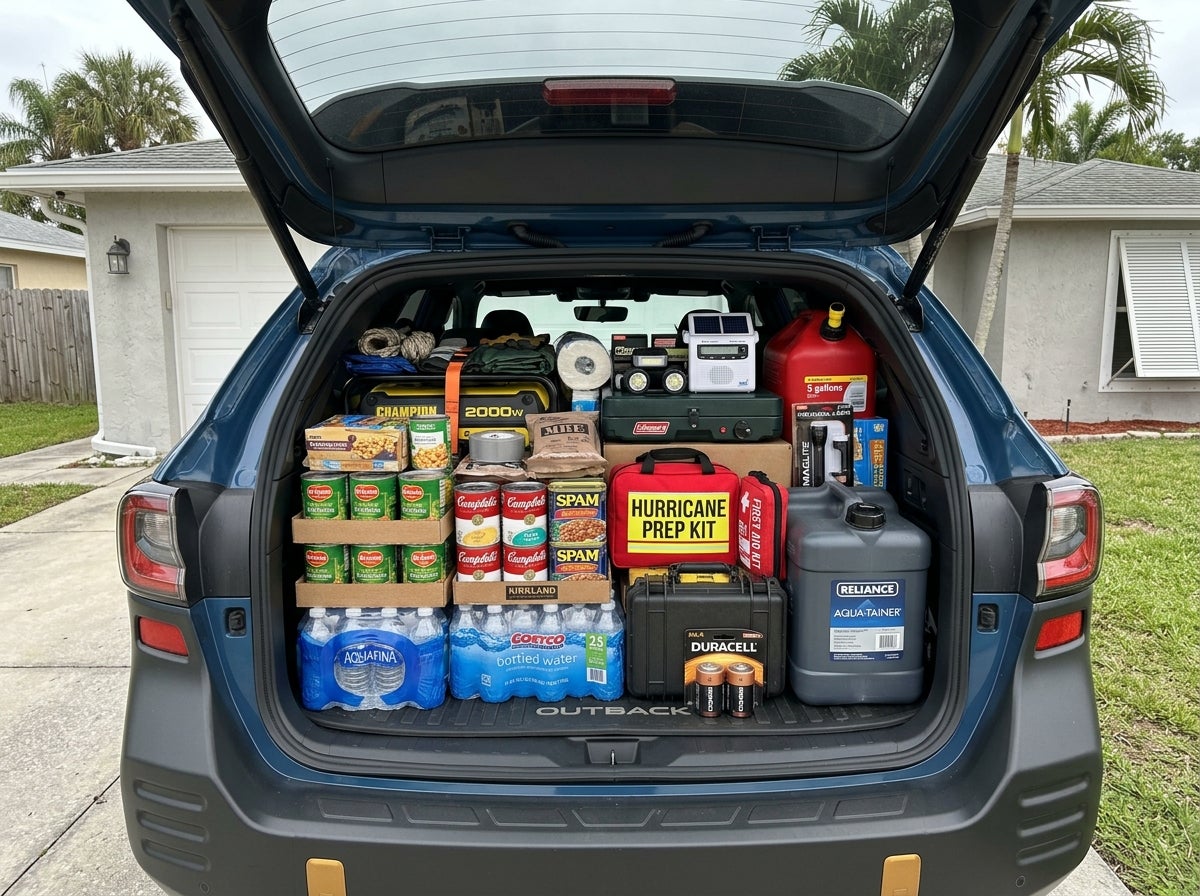
An SUV trunk packed neatly with emergency hurricane supplies, including water, canned food, and a generator. (Representative image for illustration purposes only. Actual vehicle may vary based on trim and configuration.)

Essential Subaru Maintenance for Florida Hurricane Season

The official Atlantic hurricane season spans from June 1 through November 30, bringing severe weather patterns that demand proactive vehicle maintenance. Operating a vehicle during a tropical downpour or an emergency evacuation requires every mechanical system to perform flawlessly under extreme stress. Florida’s intense summer heat accelerates the degradation of critical components, making early inspection your best defense against unexpected breakdowns. Battery health is one of the most common failure points during severe weather events. High ambient temperatures degrade battery chemistry over time, often leaving the unit with insufficient cranking power to handle the increased electrical load of maximum air conditioning, windshield wipers, and headlights running simultaneously. A professional load test is the only reliable way to determine if a battery is nearing the end of its life cycle before a storm makes landfall. Cooling systems are also subjected to intense strain during slow-moving evacuation traffic. When vehicles crawl at low speeds in high heat, there is minimal natural airflow through the radiator, forcing the electric cooling fans and the coolant itself to do all the work. Inspecting the radiator, hoses, and coolant levels prevents overheating that can lead to catastrophic engine damage. For residents in Ponte Vedra Beach, where coastal winds and salt-heavy air can accelerate the corrosion of battery terminals and the dry-rotting of windshield wiper blades, this seasonal check is particularly vital. Ensuring your wiper blades are replaced at least once a year prevents dangerous streaking that can completely obscure your vision during a tropical storm. Our certified technicians at the Subaru Service Center can perform a comprehensive multi-point inspection to ensure your vehicle is fully prepared. Even high-performance sports cars in our new Subaru performance inventory require the same rigorous cooling system and battery maintenance to handle extreme weather conditions safely. Table of Contents Inspecting Your Subaru Tires for Wet-Road Grip and Hydroplaning Defense How Subaru Symmetrical All-Wheel Drive Navigates Heavy Rain and Standing Water Assembling a Complete Emergency Roadside Kit for Florida Evacuations Identifying and Preventing Water Intrusion in Your Subaru Engine Protecting Your Subaru Investment: Insurance Coverage and Professional Service Prep Quick Answers Before You Visit Ensure Peace of Mind on the Road with Professional Subaru Care Inspecting Your Subaru Tires for Wet-Road Grip and Hydroplaning Defense Many drivers believe that all-wheel-drive traction is a substitute for tire maintenance, but even the most advanced drivetrain cannot overcome worn rubber. Tires are the sole point of contact between your vehicle and the wet pavement, and their ability to channel water determines whether you stay in control or hydroplane. Tread depth is your primary defense against hydroplaning on rain-slicked roads. While the legal minimum tread depth is 2/32 inch, safety organizations strongly recommend maintaining at least 4/32 inch of tread depth for driving in heavy rain. When tread depth drops below this level, the tire's grooves cannot evacuate water quickly enough, causing the vehicle to rise up on a thin sheet of water and lose steering and braking control. Maintaining the proper cold tire inflation pressure is equally critical. Underinflated tires flex excessively, run hotter, and have a compromised contact patch, which significantly increases the risk of hydroplaning and tire failure. All 2026 Subaru models feature a standard Tire Pressure Monitoring System that alerts the driver to significant pressure drops, but manual checks with a reliable gauge should still be performed monthly. When heavy tropical downpours hit the flat coastal plains and low-lying wetland routes around Yulee, standing water can accumulate rapidly, making proper tire tread depth your primary defense. Larger family vehicles, such as those found in our new Ascent inventory, place a significant load on their tires, making regular tread inspections even more critical before storm season. If your tires show signs of dry rot, uneven wear, or shallow tread, you can source correct replacements through our department for Genuine Subaru Parts. ​ How Subaru Symmetrical All-Wheel Drive Navigates Heavy Rain and Standing Water While front-wheel-drive vehicles often lose traction and spin their wheels when hitting deep puddles, Subaru Symmetrical All-Wheel Drive distributes power continuously to all four wheels. This standard system features a balanced, linear layout that optimizes weight distribution and power delivery, helping to maintain traction and directional stability on exceptionally wet surfaces. The system continuously monitors wheel speed and throttle input to actively shift power to the wheels with the best grip. If one tire encounters a patch of standing water and begins to slip, the system instantly reduces power to that wheel and redirects torque to the remaining wheels with secure traction. This rapid response helps prevent the vehicle from pulling to one side when traversing uneven puddles on the highway. It is important to understand that while all-wheel drive improves acceleration and directional stability on wet surfaces, it does not assist with braking. Stopping distance is entirely dependent on your braking system and the friction coefficient of your tires. Therefore, Symmetrical All-Wheel Drive should never be used as an excuse to drive at excessive speeds during heavy rain. If you drive a model from our new Forester inventory, you benefit from this standard drivetrain, which continuously monitors road conditions to optimize grip. The standard 2.5-liter engine and Lineartronic CVT work in harmony with the all-wheel-drive system to provide smooth, predictable power delivery when navigating rain-slicked roads. ​ Assembling a Complete Emergency Roadside Kit for Florida Evacuations According to state emergency management guidelines, a properly equipped vehicle is a cornerstone of storm evacuation planning. Having a dedicated, well-stocked emergency kit in your vehicle ensures that you are prepared for extended delays, road closures, or minor roadside emergencies when local services are unavailable. A comprehensive vehicle emergency kit should be stored in a durable, waterproof container in your cargo area. Your kit should include the following essential items: Heavy-duty jumper cables to address battery failures A reliable flashlight with extra batteries or a hand-crank light A first-aid kit containing bandages, antiseptics, and personal medications Bottled water (at least one gallon per person per day) and non-perishable food A portable phone charger and a fully charged backup battery pack A tire pressure gauge and basic hand tools A reflective warning triangle or flares to alert other drivers In the event of a severe breakdown or emergency situation on the road, relying on manufacturer-backed support is the safest option. Owners have access to Subaru Roadside Assistance: 1-800-261-2155, which provides comprehensive coverage, authorized towing to certified service centers, and brand-specific expertise. This service is included with your vehicle's warranty, ensuring you receive genuine parts and expert care when you need it most. Whether packing the rear cargo area of a model from our new CrossTrek Inventory or preparing a larger SUV, having these items secured in a single, accessible container is essential. Our service team can assist you in coordinating any necessary emergency parts or accessories to keep your roadside kit complete. ​ Identifying and Preventing Water Intrusion in Your Subaru Engine Driving through standing water is one of the most common ways a vehicle's engine can sustain catastrophic, irreversible damage. When water is drawn into the engine's air intake, it enters the combustion chambers; because water cannot be compressed like air, the pistons bend or break, resulting in a destroyed engine known as hydrolock. To prevent water intrusion, you must understand the limitations of your vehicle. Even models with generous ground clearance, such as those in our New Outback Inventory which feature 9.5 inches of ground clearance, are not designed to wade through deep standing water. Safety organizations warn that just six inches of water can reach the bottom of many passenger cars, causing loss of control or stalling, while a foot of water will float many vehicles. If your vehicle has been exposed to high water or minor flooding, do not attempt to start the engine. Starting a flooded engine can instantly cause severe mechanical damage. Instead, check the engine oil dipstick; if the oil appears milky, cloudy, or has a frothy texture, water has breached the crankcase. Additionally, inspect the engine's air filter; a damp or water-soaked filter indicates that water has entered the intake tract. When our service team performs inspections after a heavy storm, we often show owners how a damp air filter or a milky texture on the oil dipstick indicates that water has breached the intake system. For drivers considering a vehicle from our Certified Pre-Owned Inventory, every model undergoes a rigorous multi-point inspection to ensure there is no hidden water damage or electrical corrosion. Minor water exposure that does not cause immediate hydrolock can still lead to gradual, long-term corrosion in wiring harnesses, sensors, and electronic control modules. ​ Protecting Your Subaru Investment: Insurance Coverage and Professional Service Prep Before the peak of storm season arrives, reviewing your auto insurance policy is just as important as scheduling a mechanical inspection. Standard liability-only policies do not cover physical damage to your vehicle caused by weather events, meaning any repairs resulting from floodwaters, falling tree limbs, or wind-blown debris must be paid out of pocket. To protect your vehicle against storm damage, you must carry comprehensive coverage in advance of a storm's arrival. It is important to review your policy's declarations page to understand your specific deductibles. Many policies in coastal and storm-prone areas utilize a percentage-based deductible, such as 3% to 5% of the vehicle's insured value, for windstorm or hurricane damage, rather than a flat dollar amount. Insurers also typically restrict the purchase of new policies or coverage modifications once a named storm enters the forecast area. A professional pre-season inspection at our dealership is the most effective way to ensure your vehicle's vital systems are resilient. Our technicians will pressure-test the cooling system, perform a battery load test, inspect all belts and hoses for signs of wear, and verify that your braking system is fully functional. You can easily Schedule your service appointment online to have our team inspect your vehicle's vital systems. For drivers located in the greater Jacksonville area, you can find Get Directions to Hanania Subaru to visit our facility on Blanding Boulevard. If you have immediate questions about scheduling or parts availability, feel free to give our service team a quick call at (904) 906-1235. ​ Quick Answers Before You Visit Q: What tires come standard on Subaru Wilderness models? Subaru Wilderness models come equipped with Yokohama GEOLANDAR all-terrain tires. These tires feature a deeper, more aggressive tread pattern that provides enhanced grip on mud, gravel, and wet surfaces during severe weather. Q: What tire tread depth is recommended for wet roads in Florida? While the legal minimum tread depth is 2/32 inch, safety experts recommend a minimum of 4/32 inch for driving on wet Florida roads. This extra depth is critical for channeling water away from the tire and preventing hydroplaning. Q: How do I check if my Subaru is insured for hurricane storm and flood damage? You should review your auto insurance policy's declarations page to confirm you carry comprehensive coverage. Standard liability-only policies do not cover flood, storm surge, or falling debris damage caused by a hurricane. Q: Should you keep your Subaru’s gas tank full during hurricane season? Yes, keeping your fuel tank at least half full throughout the season is highly recommended by emergency management officials. This ensures you have enough fuel to evacuate immediately without waiting in long lines at gas stations that may run out of fuel. Q: Can minor flood exposure still cause long-term issues in my Subaru’s engine or electronics? Yes, even brief exposure to water can lead to gradual corrosion in electrical connectors, wiring harnesses, and sensors. This corrosion may not cause immediate failure but can lead to intermittent electrical issues or component failure weeks or months after the storm. ​ Ensure Peace of Mind on the Road with Professional Subaru Care Maintaining your vehicle’s mechanical integrity is the most important step you can take to protect your family and your investment before severe weather strikes. From verifying battery strength to inspecting tire tread depth and flushing vital fluids, proactive care ensures your vehicle is prepared for any situation. Our factory-trained technicians use only genuine parts to keep your vehicle performing to its original factory standards. When you purchase a new vehicle from us, you receive available warranty coverage and maintenance options. This comprehensive coverage ensures your vehicle remains in peak condition year-round without requiring you to choose between warranty protection and maintenance benefits. To have our team prepare your vehicle for the upcoming season, visit our service department at 6400 Blanding Blvd, Jacksonville, FL 32244. You can also contact our team directly at (904) 906-1235 to speak with a service advisor or schedule an inspection. © 2026 Hanania Subaru. All rights reserved.

What I've Learned About the Services Customers Decline Most Often

The Reality Behind the Service Recommendations Customers Decline Most Often My name is Emil Becirevic, and as a Service Advisor here at Hanania Subaru, I spend my days talking to drivers about how to keep their vehicles running safely. Over five years on the service drive, a clear pattern has emerged in the maintenance recommendations that customers choose to decline most frequently. Often, these deferred items are out-of-sight wear parts or preventative fluid flushes that do not have an immediate, obvious symptom. According to automotive industry research, brake work is one of the most commonly deferred safety repairs on a service drive. In fact, studies show that 32% to 37% of customers wait until actual brake failure occurs before they will authorize a repair. This is a concerning trend because delaying these critical safety components puts both the driver and the vehicle at significant risk. Our main goal is keeping drivers safe on daily commutes. Our team is available at (904) 906-1235 to discuss any recent recommendations in detail. Scheduling a service appointment online through our Subaru service center is the fastest way to address a pending maintenance item. For an in-person conversation, dropping by our Jacksonville service lane is always an option, and you can easily schedule your service appointment before you arrive. Table of Contents Why Cabin and Engine Air Filters are Frequently Deferred by Drivers The Hidden Risks of Saying No to Fluid Flushes and Exchanges How Deferred Maintenance Multiplies Long-Term Subaru Ownership Costs Understanding Dealership Service Value and the Power of Digital Inspections Recognizing the Signs of Wheel Alignment and Symmetrical AWD Tire Wear Why Cabin and Engine Air Filters are Frequently Deferred by Drivers The cabin air filter and the engine air filter are the two physical parts that drivers say no to more than almost anything else. Because these filters are tucked away under the glovebox or inside the engine bay, they are completely out of sight. This makes it easy to assume that a replacement recommendation is just an unnecessary upsell rather than a functional necessity. For drivers living near Ponte Vedra Beach, the coastal air brings a unique mix of fine sand, salt, and pollen from maritime forests that can clog a cabin filter much faster than normal. A clogged cabin filter forces your air conditioning system to work harder, reducing airflow and letting allergens circulate inside the cabin. Meanwhile, a dirty engine air filter starves your engine of clean air, which gradually degrades your fuel economy and acceleration. While replacing these filters is a straightforward task that some owners choose to handle themselves, using genuine Subaru parts ensures a perfect seal and correct filtration media density. Keeping a clean cabin filter is especially important for maintaining the cabin comfort of our certified pre-owned Subaru inventory, where preserving the original vehicle smell and interior quality is a top priority. The Hidden Risks of Saying No to Fluid Flushes and Exchanges Fluid exchanges are another category where we frequently hear a polite "not today" from our customers. The primary reason for this hesitation is that dirty fluid rarely causes a noticeable drivability issue until the damage is already done. Without a flashing warning light or a strange noise, spending money on a transmission fluid or differential fluid exchange can feel optional. Modern drivetrains are highly engineered systems that rely on clean, chemically stable lubricants to manage heat and friction. For instance, the continuously variable transmission in our new Forester inventory operates under high pressure and requires specific fluid properties to prevent belt slippage and wear. Over time, heat breaks down these protective additives, allowing microscopic metal shavings to circulate through the system. Skipping these fluid services puts major mechanical components at risk of premature failure. Replacing a transmission or a front differential is exponentially more expensive than performing a scheduled fluid exchange. Keeping up with these services protects the vehicle's long-term health and ensures that your drivetrain performs reliably for years. How Deferred Maintenance Multiplies Long-Term Subaru Ownership Costs Postponing a recommended repair does not make the problem disappear; it simply delays the bill while allowing the underlying damage to grow. Industry data reveals that approximately 60% to 70% of customers who decline service work at a dealership end up completing that exact same repair at an independent shop within three to twelve months. Unfortunately, this delay often means they pay more because the issue has worsened and damaged adjacent parts in the meantime. Consider a performance vehicle like those in our new Subaru performance inventory, where tight tolerances mean a minor suspension wobble can rapidly turn into uneven tire wear and worn wheel bearings. The same logic applies to a daily commuter driving a model from our new Crosstrek inventory. A simple recommendation for a minor leak or a worn bushing can quickly escalate into a major mechanical repair if left unaddressed. Furthermore, a documented, clean service history directly protects your vehicle's resale and trade-in value. When it comes time to upgrade, a buyer or appraiser will look closely at your maintenance records. Evidence of deferred maintenance or a patchy service history will almost always result in a lower trade-in valuation, proving that skipping basic services actually costs more in the long run. Understanding Dealership Service Value and the Power of Digital Inspections It is no secret that cost-related concerns are the primary reason drivers decline recommended services. Dealership service prices are sometimes higher than independent shops because we utilize factory-trained technicians, specialized diagnostic equipment, and genuine OEM parts. These elements ensure that repairs are done correctly the first time, protecting your vehicle's factory warranty and long-term reliability. To help bridge this trust gap, our team utilizes digital vehicle inspections that include clear photos and videos of your vehicle's components. Seeing a photo of a torn CV boot or a measurement gauge showing a worn brake pad on a model from our new Outback inventory makes the recommendation concrete. It removes the guesswork and allows you to see exactly what our technicians see on the lift. These digital reports also give you a clear record of your vehicle's health over time. Instead of relying on a verbal explanation, you have visual proof of which items are urgent and which ones can wait for a future visit. This transparency helps you make informed decisions about your vehicle's maintenance budget without feeling pressured. Recognizing the Signs of Wheel Alignment and Symmetrical AWD Tire Wear A misaligned suspension is another frequently declined service that has serious consequences, especially for vehicles equipped with standard Symmetrical All-Wheel Drive. When your wheels are out of alignment, your tires do not track straight, which causes the vehicle to pull to one side or create a vibration in the steering wheel. Over time, this misalignment produces distinct tire wear patterns, such as feathering or heavy wear on the inner or outer edges of the tread. For commuters driving daily from Yulee toward the city, maintaining a precise alignment is critical for safety on wet highways and for maximizing the lifespan of your tires. Because the all-wheel-drive system constantly monitors traction and distributes power to all four wheels, uneven tire wear can put extra strain on your center differential. If one tire wears down significantly faster than the others due to a bad alignment, you may end up needing to replace all four tires prematurely to protect the drivetrain. Whether you are driving a family SUV from our new Ascent inventory or a compact commuter, keeping your suspension aligned is a simple way to protect your tire investment. If you notice your steering wheel off-center or feel a drift on the highway, we recommend contacting our team at (904) 906-1235 to set up an inspection. You can also get turn-by-turn directions to our Jacksonville service lane to have our technicians check your alignment today. © 2026 Hanania Subaru. All rights reserved.

A family of four packs up their SUV with camping gear in front of a rustic cabin in the woods, accompanied by their golden retriever. (Representative image for illustration purposes only. Actual vehicle may vary based on trim and configuration.)

Why Families Trust Subaru for the Long Haul

The decision to purchase a new family vehicle often comes down to a single question: how will this investment hold up over years of daily school runs, unpredictable weather, and long highway commutes? For households seeking lasting value, the choice frequently leads to the engineering philosophy that defines the Subaru brand. Built on a foundation of durable construction and active safety, these vehicles are designed to perform reliably long after the odometer passes the six-figure mark. A primary reason for this enduring reliability is the brand's unique powertrain configuration. Unlike most conventional crossovers that rely on front-wheel-drive platforms and only engage the rear wheels when slippage occurs, Subaru vehicles feature standard Symmetrical All-Wheel Drive. This system continuously distributes power to all four wheels, optimizing traction and stability before traction is lost. Additionally, the horizontal layout of the Subaru BOXER engine places the pistons in a flat, side-to-side motion. This configuration lowers the vehicle's center of gravity, reducing body roll during cornering and minimizing cabin vibrations for a smoother ride. At Hanania Subaru, we see firsthand how these engineering choices translate into long-term owner satisfaction. For drivers who want to experience this balanced performance in a highly engaging package, we invite you to explore our new Subaru performance inventory. Every engineering detail, from the reinforced frame structures to the durable cabin materials, is selected to withstand the wear and tear of active family life. We are committed to helping you find a vehicle that serves your family for years to come. To speak with our sales or service experts, feel free to give us (904) 906-1235. If you prefer to browse our selection in person and discuss your driving needs with our team, you can easily get directions to Hanania Subaru and visit our showroom at 6400 Blanding Blvd, Jacksonville, FL 32244. Table of Contents Unpacking the Starting Price and Value of the 2026 Subaru Outback How the 2026 Subaru Outback Achieves Its 5-Star Safety Rating Evaluating Cargo Room: Subaru Outback vs Honda CR-V Navigating Coastal Sand: Can You Drive a Subaru Outback on the Beach? The High Mileage Club and Transferable Warranty Protections Common Questions About Subaru Longevity and Ownership Finding Your Perfect Family Match at Hanania Subaru Unpacking the Starting Price and Value of the 2026 Subaru Outback When shopping for a midsize crossover, understanding the entry point and the value packed into each trim tier helps clarify your overall budget. The redesigned 2026 Subaru Outback represents a substantial evolution for this iconic model, introducing a taller, more spacious body style that maximizes utility. For the 2026 model year, the 2026 Subaru Outback starts at an MSRP of $34,995 for the entry-level Premium trim, which comes equipped with a 2.5-liter four-cylinder engine producing 180 hp and 178 lb-ft of torque. As you move up the trim lineup, the vehicle adds premium amenities and performance upgrades designed to enhance comfort and capability. The Limited trim starts at an MSRP of $41,715, while the turbocharged Limited XT is priced at $44,365 and delivers a more robust 260 hp and 277 lb-ft of torque. For those seeking the pinnacle of comfort and standard features, the Touring trim carries an MSRP of $45,395, and the top-tier Touring XT reaches $47,995. Each of these models routes power through a refined Lineartronic CVT to ensure smooth, continuous acceleration. To help you find the exact configuration that matches your daily routine, you can browse our online new Outback inventory to compare available packages. If you are open to exploring other versatile models in the lineup, we also maintain a comprehensive new Subaru inventory featuring the latest crossovers and SUVs. To make your transition into a new vehicle even more seamless, our team can help you value your trade-in online to establish a clear picture of your buying power before you visit our showroom. Pricing Pricing by trim Feature Limited Limited Bronze Edition Onyx Edition-Touring Premium Touring Base MSRP $41,995 $43,495 $46,995 $34,995 $43,995 Destination charge $1,450 $1,450 $1,450 $1,450 $1,450 ​ How the 2026 Subaru Outback Achieves Its 5-Star Safety Rating Safety is rarely a secondary consideration for families, and the 2026 Subaru Outback addresses this priority through exhaustive crash-test performance and advanced driver-assist technologies. The National Highway Traffic Safety Administration (NHTSA) awards its 5-Star Overall Vehicle Score based on rigorous evaluations, including frontal, side barrier, and side pole crash tests. The 2026 Subaru Outback earns this top rating by combining a high-strength ring-shaped reinforcement frame with an array of smart safety sensors designed to protect occupants from every angle. The cornerstone of the vehicle's active safety suite is the standard EyeSight Driver Assist Technology. This system utilizes dual color cameras mounted near the rearview mirror to scan the road ahead for potential hazards. It acts as an extra set of eyes, providing features such as pre-collision braking, adaptive cruise control, and lane-keep assist to prevent accidents before they occur. In the event of an unavoidable impact, the vehicle's advanced airbag system and crumple zones are engineered to divert crash energy away from the passenger cabin. For families seeking this level of protection across different budget levels, we offer several excellent pathways. You can explore our used vehicle inventory to find reliable, safety-tested models from previous model years. Additionally, for those who prefer a slightly more compact footprint without sacrificing standard all-wheel-drive security, we encourage you to view our new Crosstrek inventory. Both models exemplify the brand's unwavering commitment to keeping your passengers secure on every journey. Engine & Performance Powertrain specs by trim Feature Limited Limited Bronze Edition Onyx Edition-Touring Premium Touring Engine 2.4L 2.4L 2.4L 2.4L 2.4L Horsepower 260 hp 260 hp 260 hp 260 hp 260 hp Torque 277 lb-ft 277 lb-ft 277 lb-ft 277 lb-ft 277 lb-ft Transmission Lineartronic CVT Lineartronic CVT Lineartronic CVT Lineartronic CVT Lineartronic CVT Drivetrain All-wheel drive All-wheel drive All-wheel drive All-wheel drive All-wheel drive ​ Evaluating Cargo Room: Subaru Outback vs Honda CR-V For active households, cargo capacity is a critical metric that dictates how easily a vehicle can transition from the weekday commute to a weekend getaway. When comparing the 2026 Subaru Outback to the Honda CR-V, the dimensions reveal distinct advantages depending on how you plan to load your gear. The Honda CR-V offers up to 39 cubic feet of cargo space behind its second row. While this is slightly higher on paper than the Outback's about 35 cubic feet of rear cargo volume, the Outback excels in real-world loading dynamics due to its longer, wagon-style cargo floor. The lower roofline and extended cargo length of the Outback make it significantly easier to slide in long, bulky items like strollers, bicycles, or camping bins. Furthermore, the Outback features a lower liftover height compared to many traditional compact SUVs, which reduces physical strain when lifting heavy coolers or suitcases into the back. When you need to maximize your carrying capacity, the rear seats of the Outback fold completely flat to unlock a massive cargo area, allowing you to transport larger items with ease. Maintaining this utility over the lifespan of your vehicle requires using components engineered specifically for your model's dimensions. If you want to protect your cargo area or expand your hauling capabilities with roof racks, you can order genuine Subaru parts directly through our department. To keep your vehicle running in peak condition for all your hauling needs, we make it simple to schedule a service appointment online with our factory-trained technicians. Dimensions & Capacity Capacity and dimensions by trim Feature Limited Limited Bronze Edition Onyx Edition-Touring Premium Touring Seating 8 7 7 8 7 Cargo 17.6 cu ft 17.6 cu ft 17.6 cu ft 17.8 cu ft 17.6 cu ft Curb weight 4,603 lbs 4,587 lbs 4,595 lbs 4,466 lbs 4,596 lbs Towing 5,000 lbs 5,000 lbs 5,000 lbs 5,000 lbs 5,000 lbs ​ Navigating Coastal Sand: Can You Drive a Subaru Outback on the Beach? The desire for outdoor adventure often leads Florida drivers to the state's iconic drivable coastlines, such as the hard-packed sands of Ponte Vedra Beach. Navigating these coastal environments requires a vehicle capable of handling shifting surfaces without getting bogged down. Thanks to its standard Symmetrical All-Wheel Drive and a generous ground clearance of 8.7 inches, the 2026 Subaru Outback is well-equipped to handle the transition from asphalt to coastal sand lanes. To optimize traction on loose surfaces, the Outback features X-MODE, an electronically controlled system that alters engine response, transmission gearing, and the all-wheel-drive power distribution. When activated, X-MODE minimizes wheel spin and maximizes grip on slippery or uneven terrain. This capability allows families to confidently access designated beach driving areas, provided they stay on the established, hard-packed paths and avoid the soft, protected dunes where even specialized off-road vehicles can struggle. For larger families who need maximum seating capacity alongside this rugged capability, the 3-row 2026 Subaru Ascent offers an excellent alternative. Equipped with a 2.4L turbocharged engine generating 260 hp and a towing capacity of 5,000 lbs, it provides the space and power required for larger excursions. You can browse our new Ascent inventory to find a model that fits your seating needs. To ensure your vehicle is fully prepared for coastal driving, our Subaru service center can inspect your tire pressures, fluid levels, and undercarriage to keep you exploring safely. ​ The High Mileage Club and Transferable Warranty Protections One of the most telling indicators of a vehicle's longevity is its representation in high-mileage communities. The Subaru High Mileage Club is an informal but highly celebrated group of owners whose vehicles have surpassed significant milestones, starting at 100,000 miles and often extending well past 300,000 miles. To honor this loyalty, the brand offers a Badge of Ownership program, allowing long-term drivers to display custom mileage and lifestyle badges on the rear of their vehicles. This long-term durability is backed by strong warranty protections that offer peace of mind to both first and subsequent owners. The standard factory warranty includes a 3-year or 36,000-mile bumper-to-bumper limited warranty and a 5-year or 60,000-mile powertrain warranty. Crucially, these warranties are fully transferable to a second owner at no additional cost, which helps preserve the vehicle's resale value and protects your investment if you choose to sell or trade the vehicle down the road. If you are looking for a vehicle that has already proven its reliability, we encourage you to browse our certified pre-owned inventory. These vehicles undergo a rigorous multi-point inspection and come with extended factory-backed powertrain coverage. When you find the right model for your household, you can easily apply for financing through our secure online portal to secure competitive rates and streamline your purchase process. Fuel Economy Fuel economy and range by trim Feature Limited Limited Bronze Edition Onyx Edition-Touring Premium Touring MPG 19 city / 25 hwy / 21 combined 19 city / 25 hwy / 21 combined 19 city / 25 hwy / 21 combined 19 city / 26 hwy / 22 combined 19 city / 25 hwy / 21 combined ​ Common Questions About Subaru Longevity and Ownership As families research their next vehicle purchase, several practical questions consistently arise regarding maintenance, mechanical specifications, and long-term care. Addressing these queries upfront helps buyers make informed decisions and maintain their vehicles properly over time. Q: Does the 2026 Subaru Outback use a timing belt or a timing chain? The 2026 Subaru Outback is equipped with a timing chain rather than a timing belt. Unlike rubber timing belts that require scheduled replacement intervals to prevent engine damage, modern timing chains are constructed from durable metal and are engineered to last the entire lifespan of the engine under normal operating conditions. Q: What are the routine maintenance intervals for a new Subaru? Subaru recommends scheduling routine maintenance every 6 months or 6,000 miles, whichever comes first. Regular service visits typically include an engine oil and filter change, tire rotation, and a comprehensive multi-point inspection to identify and address minor wear before it becomes a larger issue. Q: Is the CVT transmission fluid considered a lifetime fluid? Subaru designates its Lineartronic CVT fluid as a lifetime fluid under normal driving conditions, meaning it does not require regular replacement. However, if you frequently use your vehicle for towing or operate in severe driving conditions, our technicians recommend periodic inspections and fluid replacements to maintain optimal transmission performance. Q: How does the fuel economy of the Outback compare across its engine options? The standard 2.5-liter engine in the Outback delivers an EPA-estimated 25 city / 31 hwy MPG, making it highly efficient for daily commuting. Choosing the more powerful 2.4-liter turbocharged engine in the XT trims adjusts the efficiency slightly to an EPA-estimated 22 city / 29 hwy MPG, offering a balance of performance and utility. If you are ready to explore our lineup in person, you can view our new Forester inventory to compare another highly versatile family option. For personalized assistance, you can always call our team to speak with a product specialist. When you are ready to visit our showroom, simply get directions to our dealership on Blanding Blvd to experience our welcoming shopping environment firsthand. ​ Finding Your Perfect Family Match at Hanania Subaru Choosing a vehicle that will stand by your family through years of daily adventures is a significant decision. At Hanania Subaru, we are dedicated to providing a transparent, supportive, and personalized shopping experience that helps you navigate your options with absolute confidence. From comparing the cargo dimensions of our versatile crossovers to exploring the advanced safety features of our latest models, our team is here to guide you every step of the way. We invite you to take the next step in your automotive journey by visiting our showroom on Blanding Blvd. Whether you want to experience the confident handling of Symmetrical All-Wheel Drive on a personalized test drive, value your current vehicle, or discuss customized financing plans, we are ready to assist. Explore our online inventory today, and let us help you find the reliable, long-lasting Subaru that your family deserves. © 2026 Hanania Subaru. All rights reserved.