
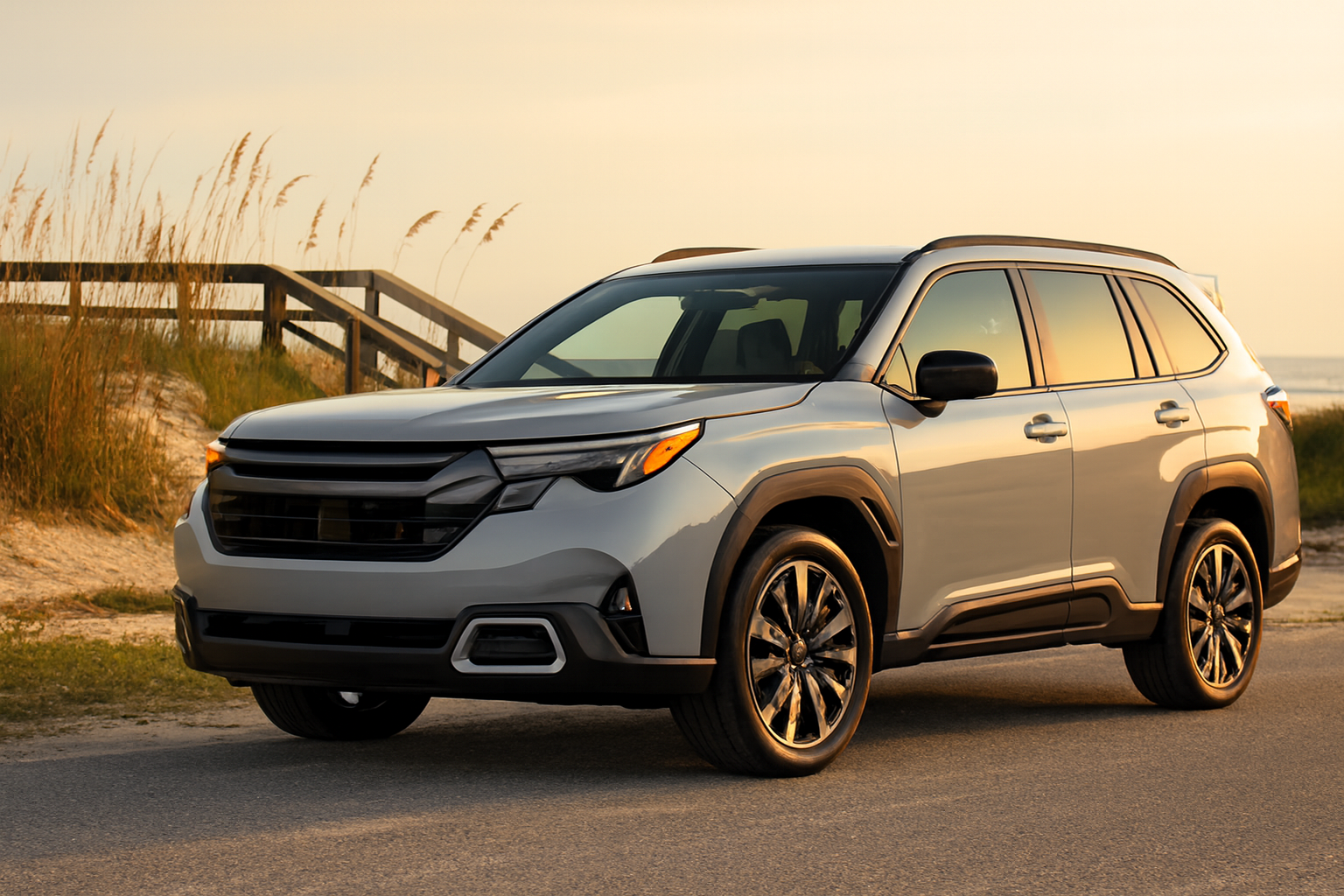
Leasing a Subaru Forester can be a smart way to drive a new SUV every few years without a big commitment. But the fine print—mileage caps, wear charges, and what happens when the lease ends—trips up a lot of shoppers. Here’s how a Forester lease actually works for drivers around Jacksonville, in plain terms.
How does a Subaru Forester lease payment work?
A lease payment covers the Forester’s expected depreciation during your term plus rent charge (interest) and taxes. Instead of financing the whole vehicle, you pay for the portion you use—usually over 36 months. That’s why lease payments are typically lower than loan payments on the same trim, though you don’t own the SUV at the end.
Three numbers drive your monthly payment: the negotiated price (capitalized cost), the residual value (what Subaru estimates the Forester is worth at lease-end), and the money factor (the interest rate). A higher down payment lowers the monthly figure but raises what you’d lose if the vehicle were totaled early. Any advertised Forester lease we run is disclosed with the exact model year and trim—for example, a 2026 Subaru Forester Premium—so you always see what you’re actually leasing.
What mileage cap should Jacksonville drivers choose?
Most Forester leases offer 10,000, 12,000, or 15,000 miles per year. Pick the tier that matches your real driving. Going over means per-mile overage fees at lease-end—often 15 to 25 cents each—so it’s usually cheaper to buy the miles up front if you know you drive a lot.
Jacksonville is a spread-out city. If you commute from Orange Park to downtown, run kids around, and take the occasional beach or Gainesville trip, the miles add up fast. The average American drives about 13,476 miles per year, according to the Federal Highway Administration—already above a 12,000-mile allotment. Track your current odometer for a month and multiply by 12 to get an honest estimate before you sign.
- 10,000 mi/yr: Best for short commutes or a second car that mostly runs errands.
- 12,000 mi/yr: A common middle ground for most single-car households.
- 15,000 mi/yr: Better for long commutes, frequent road trips, or rideshare-style driving.
What are your end-of-lease options on a Forester?
When your Forester lease ends, you generally have three choices: return it, buy it, or lease something new. Each path has different costs, so it helps to decide a few months out rather than at the counter. Your lease agreement lists the buyout price, which was set when you signed.
Here’s how the three options compare so you can plan ahead:
| Option | What it involves | Best if |
|---|---|---|
| Return | Turn in the Forester, pay any excess-mileage and wear charges, plus a disposition fee. | You want a new vehicle or a change. |
| Buy out | Pay the residual value (plus tax and fees) to keep the Forester for good. | You’re under the mileage cap or love the car. |
| Re-lease | Start a fresh lease on a newer Forester or another Subaru model. | You like leasing and want the latest features. |
A quick tip: if you’re near or over your mileage cap, buying out the lease can be smarter than paying overage fees, since those charges disappear when you own the vehicle. Get a pre-return inspection so wear items—curb-rashed wheels, a cracked windshield, worn tires—don’t surprise you.
Is leasing or buying a Forester better in Florida?
Neither is automatically better—it depends on your miles, how long you keep vehicles, and whether you want ownership. Leasing suits drivers who like a new Forester every three years and stay within mileage limits. Buying makes sense if you drive a lot, keep cars long, or want to build equity you can trade or sell later.
Florida’s climate is a factor worth naming. Salt air near the coast, intense sun, and summer humidity are hard on paint and tires. A lease lets you hand those long-term wear worries back at term-end, while buying rewards you for taking good care of the vehicle over many years. Come talk it through with us—we’ll run both numbers on the same Forester so you can see the real difference side by side.
Connect with us


- Automotive Partnerships & Collaborations
- Buying & Leasing
- Buying & Trade-In
- Buying Guide
- Buying Guides
- Community & Outreach Initiatives
- Electric Vehicles
- Event Highlights & Celebrations
- Family Vehicles
- Hanania Subaru of Orange Park Service
- Hybrid & Electric
- Jacksonville Subaru Dealer
- Jacksonville Subaru Service
- Lifestyle
- Local Dealership News & Activities
- Local Living
- Local Ownership Tips
- Maintenance & Service
- Model Comparisons
- Model Research
- New Inventory
- New Vehicle Reviews
- New Vehicles
- Off-Road Adventures
- Outdoor Lifestyle
- Ownership
- Ownership & Service
- Pet-Friendly Vehicle Features
- Safety Features
- Safety Recall
- Service & Maintenance
- Subaru Care & Maintenance
- Subaru Lineup
- Subaru Models
- Subaru Ownership
- Subaru Technology
- Technology & Innovation
- Trade in
- Uncategorized
- Used Vehicles
- Vehicle Comparisons
- Vehicle Features
- Vehicle Guides
- Vehicle Research
- Vehicle Safety
Categories