
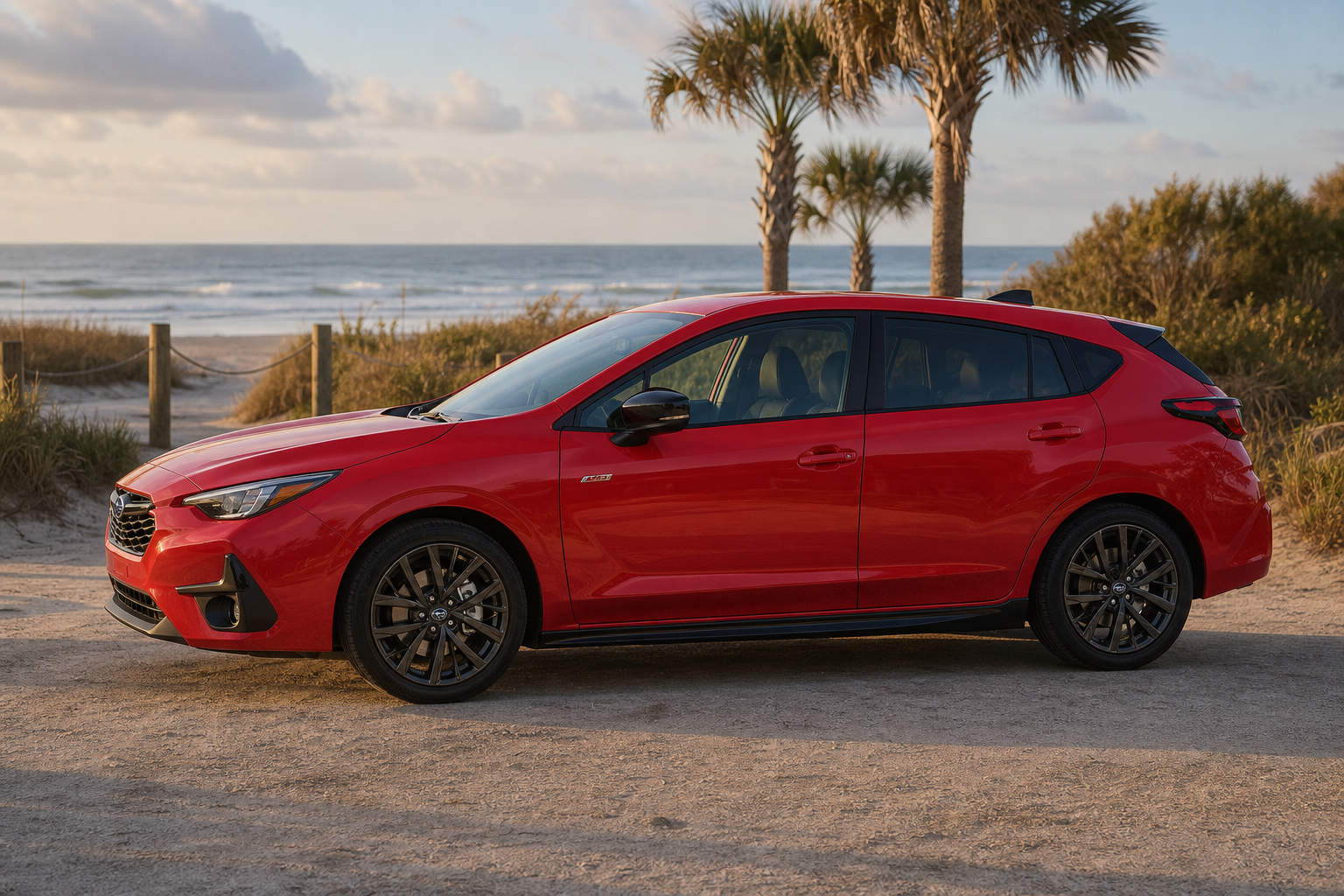
If you live anywhere near the water in Jacksonville, you already know the ocean breeze isn’t free. That salty mist rides inland for miles, settles on your paint, and works its way into every seam and bolt on your vehicle. Guarding your Subaru against coastal salt air isn’t complicated, but it does take a little routine. Here’s exactly what we tell owners who bring their vehicles to our service drive at Hanania Subaru of Orange Park, which serves the whole Jacksonville area, just across the river from the beaches.
Why does Florida salt air threaten your Subaru?
Salt in the air is hygroscopic, meaning it pulls moisture out of the humid coastal atmosphere and holds it against metal. That constant damp-salt contact speeds up oxidation, so bare metal, brake lines, and fastener heads corrode far faster near the coast than they would inland. Left alone, surface rust turns into structural rust.
According to a 2017 AAA study, corrosion damage cost U.S. drivers an estimated 15.4 billion dollars in repairs over a five-year period. Coastal and salted-road regions carry the heaviest load. Jacksonville doesn’t salt its roads for snow, but the ocean does the salting for us all year, which is why owners here see it differently than folks in central Florida.
How often should you wash your Subaru in a coastal climate?
Rinse it every one to two weeks if you park within a few miles of the water, and after any beach trip the same day. A quick freshwater rinse is more important than a full detail, because the goal is removing salt film before it sits and bonds to paint, glass, and metal. Frequency beats intensity here.
A practical washing routine for Jacksonville-area Subaru owners looks like this:
- Every 1–2 weeks: Full wash with pH-neutral soap, including wheel wells.
- After every beach or boat-ramp visit: Same-day freshwater rinse, top to bottom.
- Every wash: Blast the undercarriage and behind the wheels where salt hides.
- Every 3–4 months: Fresh coat of wax or sealant for a sacrificial barrier.
- Twice a year: Have the undercarriage inspected for early corrosion.
What undercarriage protection actually works against salt?
The undercarriage takes the worst of it because salt collects on horizontal surfaces and traps moisture out of sight. A regular undercarriage rinse plus a professional-grade corrosion-inhibiting treatment gives the best defense. Modern Subaru vehicles already ship with factory anti-corrosion coatings, but supplemental treatments and periodic inspections extend that protection in a salt-heavy environment.
| Protection method | What it does | How often |
|---|---|---|
| Undercarriage freshwater rinse | Removes salt before it bonds to metal | Every wash |
| Corrosion-inhibiting treatment | Coats bolts, lines, and seams with a barrier | Annually |
| Paint sealant or ceramic coat | Protects body panels from salt film | Every 3–6 months / yearly |
| Professional inspection | Catches early rust before it spreads | Twice a year |
Can you undo salt damage that has already started?
Yes, if you catch it early. Light surface rust on suspension parts or fastener heads can often be cleaned, treated, and sealed before it eats into structural metal. Deeper corrosion in brake lines or frame sections is more serious and may require part replacement. The sooner it’s inspected, the cheaper and simpler the fix stays.
Our technicians see plenty of coastal corrosion, and the pattern is consistent: owners who rinse regularly and get inspections have easy fixes, while those who wait end up replacing hardware. If you’re shopping rather than repairing, a well-maintained recent model like a 2026 Subaru Outback Premium trim still carries its factory corrosion coverage, which is worth confirming with our team before you buy.
Where can Jacksonville owners get salt-air service done?
Bring your Subaru to Hanania Subaru of Orange Park, on the west side of the river and an easy drive from the Jacksonville beaches and downtown. Our Subaru-certified technicians handle undercarriage rinses, corrosion treatments, and inspections, and we’ll tell you plainly what your vehicle needs and what it doesn’t.
You don’t have to fear the coast to enjoy it. A steady rinse routine, a yearly undercarriage treatment, and a couple of inspections keep a Subaru solid for a long time, even a few miles from the Atlantic.
Connect with us


- Automotive Partnerships & Collaborations
- Buying & Leasing
- Buying Guides
- Community & Outreach Initiatives
- Event Highlights & Celebrations
- Family Vehicles
- Hanania Subaru of Orange Park Service
- Jacksonville Subaru Dealer
- Jacksonville Subaru Service
- Local Dealership News & Activities
- Local Ownership Tips
- Maintenance & Service
- Model Comparisons
- Model Research
- New Vehicle Reviews
- Off-Road Adventures
- Outdoor Lifestyle
- Ownership
- Ownership & Service
- Pet-Friendly Vehicle Features
- Safety Features
- Safety Recall
- Service & Maintenance
- Subaru Care & Maintenance
- Subaru Models
- Subaru Ownership
- Subaru Technology
- Technology & Innovation
- Uncategorized
- Vehicle Comparisons
- Vehicle Guides
- Vehicle Research
- Vehicle Safety
Categories