
Gas mileage is one of the first questions we hear at the counter, and it deserves a straight answer instead of a shrug. Below we break down what the Subaru Crosstrek is rated to do, why the two engines behave differently, and what those numbers actually look like on I-295 and around Orange Park.
What is the Subaru Crosstrek’s gas mileage?
The 2026 Subaru Crosstrek with the 2.0-liter engine (Base and Premium trims) is EPA-rated at roughly 27 mpg city, 34 highway, and 29 combined. Trims with the 2.5-liter engine (Sport and Limited) land near 25 city, 29 highway, and 27 combined. The Wilderness trim comes in a touch lower.
Every Crosstrek uses all-wheel drive and a continuously variable transmission, which helps the small SUV squeeze usable efficiency out of both engines without the driver thinking about it.
| 2026 Crosstrek Trim | Engine | City / Hwy / Combined (MPG) |
|---|---|---|
| Base / Premium | 2.0L | 27 / 34 / 29 |
| Sport / Limited | 2.5L | 25 / 29 / 27 |
| Wilderness | 2.5L | 25 / 29 / 26 |
According to fueleconomy.gov, the EPA combined figure is based on a blended test cycle, so your real number moves with traffic, terrain, and how heavy your right foot gets in the Buckman Bridge on-ramp.
Why does the 2.0-liter get better mileage than the 2.5-liter?
The 2.0-liter engine is smaller and asks for less fuel to keep the Crosstrek moving in everyday driving, so it posts higher EPA numbers. The 2.5-liter trades a few miles per gallon for noticeably more pulling power, which matters for merging, passing, and loaded trips to the coast.
Here is how we usually frame the choice for shoppers:
- Mostly commuting and errands? The 2.0-liter’s extra highway mpg adds up over a Jacksonville work week.
- Regular highway hauls, gear, or a full car? The 2.5-liter feels calmer and less strained, and the mpg gap shrinks under load.
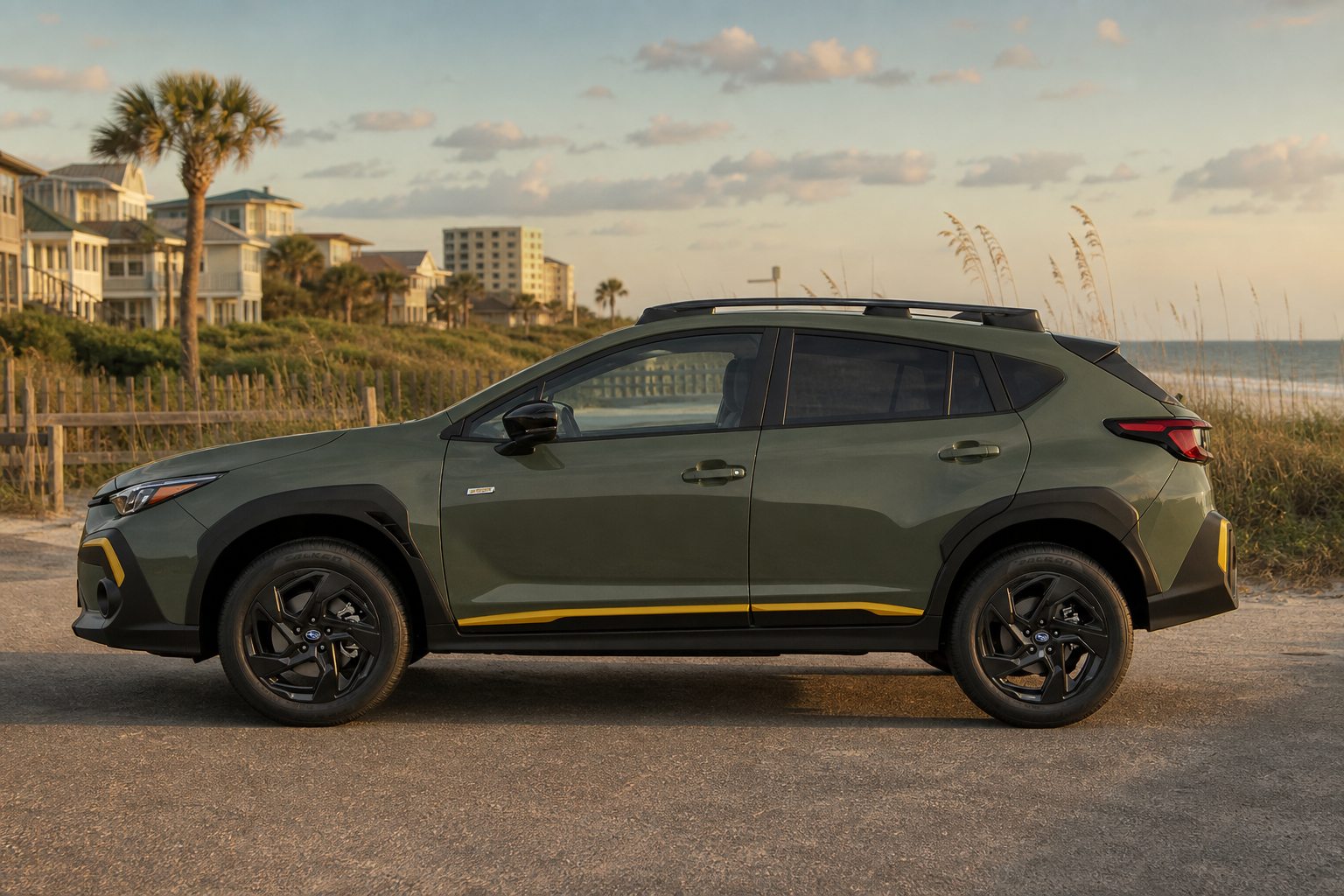
- Light off-pavement or beach-access trips? The Wilderness leans toward capability over efficiency, and that tradeoff is intentional.
How can I get closer to the Crosstrek’s rated mileage in Jacksonville?
You get closer to the ratings by managing the things the EPA test can’t see: tire pressure, smooth acceleration, and steady highway speeds. Our humid heat and stop-and-go stretches on Blanding Boulevard both work against you, so small habits and on-time maintenance make a measurable difference over a tank.
A few practical moves that pay off:
- Check tire pressure monthly; underinflated tires drag mileage down and wear unevenly in Florida heat.
- Ease off idling with the A/C blasting in long drive-thru lines.
- Keep up with oil changes and air filter service so the engine breathes clean.
- Skip the roof-mounted cargo boxes when you don’t need them, since they add wind resistance on the highway.
- Combine errands so the engine spends more time warm and efficient.
If your mileage suddenly drops without a change in how you drive, that’s worth a look. A tired oxygen sensor, a dragging brake, or low tire pressure can quietly cost you several miles per gallon, and our service team on Wells Road can pin down the cause before it gets expensive.
Does all-wheel drive hurt the Crosstrek’s gas mileage?
All-wheel drive adds a small amount of weight and drivetrain drag, which is part of why a Crosstrek won’t match a front-wheel-drive econobox on paper. In exchange you get year-round traction on wet Jacksonville roads and soft beach approaches, and Subaru’s system is tuned to keep that mpg penalty modest.
For most Northeast Florida drivers, the everyday confidence in summer downpours is worth the handful of miles per gallon. If you want the leanest possible fuel number, choose a 2.0-liter trim and keep up with maintenance; if you want more grunt, the 2.5-liter is the pick and the difference at the pump is smaller than people expect.
Have a specific trim in mind? Come drive both engines back to back at Hanania Subaru of Orange Park and see which one fits your commute before you commit.
Connect with us


- Automotive Partnerships & Collaborations
- Buying & Leasing
- Buying Guides
- Community & Outreach Initiatives
- Event Highlights & Celebrations
- Family Vehicles
- Hanania Subaru of Orange Park Service
- Jacksonville Subaru Dealer
- Jacksonville Subaru Service
- Local Dealership News & Activities
- Local Living
- Local Ownership Tips
- Maintenance & Service
- Model Comparisons
- Model Research
- New Vehicle Reviews
- Off-Road Adventures
- Outdoor Lifestyle
- Ownership
- Ownership & Service
- Pet-Friendly Vehicle Features
- Safety Features
- Safety Recall
- Service & Maintenance
- Subaru Care & Maintenance
- Subaru Models
- Subaru Ownership
- Subaru Technology
- Technology & Innovation
- Uncategorized
- Vehicle Comparisons
- Vehicle Guides
- Vehicle Research
- Vehicle Safety
Categories