Hanania Subaru of Orange Park

Blog / Service & Maintenance

Subaru Brake Maintenance Schedule: What Jacksonville Drivers Need to Know

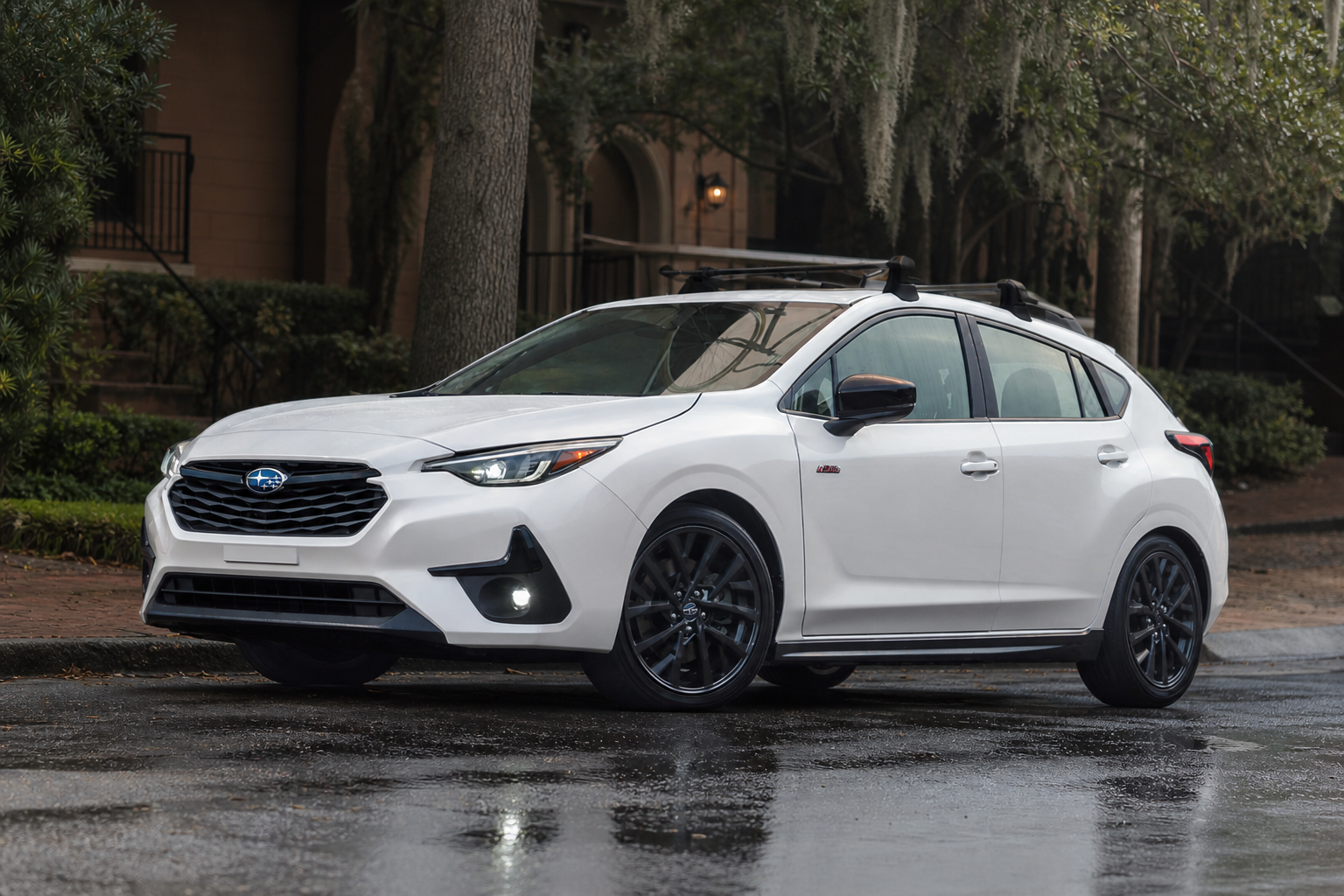
Unbadged SUV parked on a wet Jacksonville street after a summer rain, illustrating brake care in Florida

Brakes wear a little every time you drive, and Jacksonville traffic on I-295 and stop-and-go stretches of Blanding Boulevard is harder on them than most people think. Here is a straight answer on when to check your brakes, what wears out first, and what the work actually costs at our shop.

How often should you follow a Subaru brake maintenance schedule?

Follow a Subaru brake maintenance schedule that inspects the pads, rotors, and fluid at least every 6 months or 6,000 miles, whichever comes first. Front pads typically last 30,000 to 70,000 miles depending on driving style, while brake fluid should be replaced roughly every 30,000 miles or 3 years to stay effective.

The 2025 Subaru Outback Owner's Manual lists brake inspections on the 6-month/6,000-mile interval and calls for brake fluid replacement at 30,000 miles. Intervals are similar across the 2025 Subaru Forester, Crosstrek, and Ascent, but the exact numbers live in your specific model-year manual, so it is worth confirming against yours.

ComponentInspectTypical replacement
Front brake padsEvery 6,000 miles30,000–70,000 miles
Rear brake padsEvery 6,000 miles40,000–80,000 miles
RotorsEvery 6,000 milesAs needed (often with second pad set)
Brake fluidEvery 6 monthsEvery 30,000 miles or 3 years

What are the signs your Subaru brakes need service?

Watch and listen for a high-pitched squeal when stopping, a grinding sound, a soft or spongy pedal, vibration through the pedal, or the vehicle pulling to one side. A dashboard brake warning light or noticeably longer stopping distances also means it is time to have the system inspected right away.

  • Squealing: the wear indicator is telling you pads are getting thin.
  • Grinding: metal-on-metal contact that can damage rotors quickly.
  • Spongy pedal: possible air or moisture in the brake fluid.
  • Vibration: often warped or unevenly worn rotors.
  • Pulling: a sticking caliper or uneven pad wear.

According to NHTSA's National Motor Vehicle Crash Causation Survey (report DOT HS 811 059, 2008), brake-related problems were the critical reason in roughly 22 percent of crashes traced to a vehicle failure. That is a strong argument for not ignoring a squeal or a soft pedal.

How much does Subaru brake service cost in Jacksonville?

At Hanania Subaru of Orange Park in Jacksonville, a brake inspection is straightforward and often included with routine maintenance visits. A front or rear pad replacement using genuine Subaru parts commonly runs a few hundred dollars per axle, and rotor replacement adds to that. We give you the exact figure in writing before any work begins.

Florida heat and humidity also play a role. Frequent short trips and stop-and-go driving in the summer keep brakes hot, and coastal moisture can accelerate corrosion on rotors and hardware. A twice-a-year inspection catches surface rust and thinning pads before they turn into a bigger repair.

Can you make your Subaru brakes last longer in Florida?

Yes. Leave more following distance so you coast to stops instead of braking hard, take weight out of the vehicle when you can, and avoid riding the brake pedal on long downgrades. Keeping up with the 6-month fluid and pad inspections at a Subaru shop is the single most effective habit for extending brake life.

Two more Jacksonville-specific tips: after driving through standing water during summer storms, gently apply the brakes a few times to dry them, and rinse road salt or beach-area grit off the underside of the vehicle so it does not sit on the calipers and rotors.

If your brakes are due for a look or something feels off, the service team at Hanania Subaru of Orange Park can inspect the full system, show you the measurements, and tell you plainly what needs attention now versus what can wait.

Posted in:

Related Posts

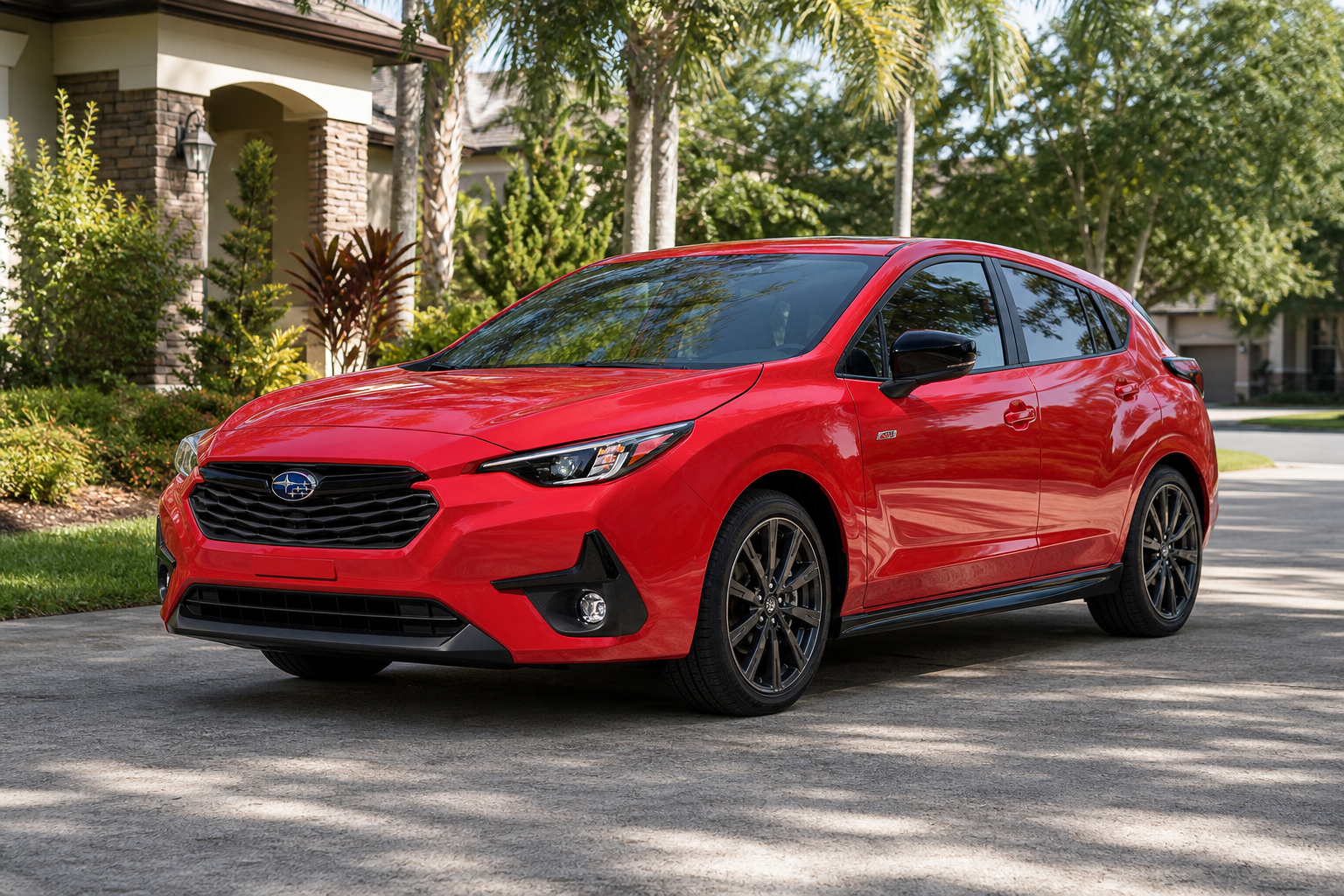
Compact SUV parked in a shaded Jacksonville driveway on a sunny, humid morning near palm trees

Subaru 60,000-Mile Service: What It Includes in Jacksonville

The 60,000-mile mark is one of the bigger maintenance visits your Subaru will see, and it tends to bundle several items that individually come due around the same time. We'd rather lay out exactly what's on the list than have you guess at the counter. Here's what the visit covers, why it matters in Jacksonville's climate, and how to plan for it. What does the Subaru 60,000-mile service include? The Subaru 60,000-mile service is a major interval that typically covers an oil and filter change, tire rotation, brake inspection, cabin and engine air filter replacement, fluid checks, and a multi-point inspection. Depending on your model and driving, it may also include a transmission fluid check and spark plug review. Here is a general breakdown of what a technician works through at this interval: Engine oil and filter change Tire rotation and pressure adjustment Engine air filter and cabin air filter replacement Brake pad, rotor, and line inspection Coolant, brake fluid, and power steering fluid checks Continuously variable transmission (CVT) fluid inspection Spark plug inspection (replacement varies by model and age) Drive belt and hose inspection Full multi-point safety inspection Your specific list depends on the model year, engine, and how the car has been driven. A daily commuter that sees stop-and-go I-295 traffic in summer heat may need closer attention to fluids than one that mostly cruises the highway. Why does the 60,000-mile service matter for Jacksonville drivers? It matters because Jacksonville's heat, humidity, and stop-and-go traffic are hard on fluids, filters, and brakes. Oil breaks down faster, cabin filters clog with pollen and salt air, and rubber components age quicker. Staying on schedule at 60,000 miles helps catch wear before it turns into a roadside problem. Owning a car costs more than the pump price, and skipping maintenance rarely saves money in the long run. According to AAA's 2024 "Your Driving Costs" study, routine maintenance, repair, and tires average about 9.55 cents per mile. At Hanania Subaru of Orange Park in Jacksonville, FL, we point to that figure to make one thing clear: planned service at the 60,000-mile interval is almost always cheaper than the unplanned repair that follows a skipped one. Florida's climate adds a few specifics worth watching. Salt air near the coast can accelerate corrosion, and constant air-conditioning use loads the cabin filter faster than in milder regions. That's why we treat the cabin filter and cooling system checks as real priorities at this interval rather than afterthoughts. How much does the Subaru 60,000-mile service cost? Cost depends on your model, engine, and which items are actually due. As an example, a 2023 Subaru Outback Premium usually needs the standard oil change, tire rotation, filter replacements, and inspections at this interval, which lands it in a mid-range service bracket. We give you a written estimate for your exact vehicle before any work begins. Here's how the pricing generally shifts based on your car: Factor Effect on the visit Model and engine Turbocharged or six-cylinder engines can add fluid and plug work Vehicle age and mileage Older cars may need spark plugs or belts that a newer one doesn't Driving conditions Heavy heat and traffic can move some fluid changes up sooner Optional items Wiper blades, alignment, or new tires are quoted separately To keep the pricing honest: any figure we quote is tied to a specific model year and trim, such as the 2023 Subaru Outback Premium noted here. A 2019 Subaru Forester Premium or a 2021 Subaru Crosstrek Sport at the same mileage can carry a different total because their due items differ. We confirm your VIN and mileage first, then build the estimate around what your car genuinely needs. Can I skip or delay any part of the 60,000-mile service? Some items are flexible and some aren't. Oil changes, brake inspections, and fluid checks should stay on schedule for safety and reliability. Cosmetic or convenience add-ons can wait if your budget is tight. The honest approach is to prioritize the items that protect your engine, brakes, and transmission first. If money is a factor, tell your advisor. We can walk through the list, separate the items that keep the car safe and dependable from the ones that can be spaced out, and build a plan that fits. Here's how we usually sort it: Do now: oil and filter, brake safety inspection, critical fluid checks Do soon: cabin and engine air filters, tire rotation, CVT fluid if due Can plan ahead: wiper blades, alignment, tire replacement, detailing add-ons Following the maintenance schedule in your owner's manual also helps protect your factory warranty coverage, so keeping records of what was done and when is worth the effort. If you're near the 60,000-mile mark, our service team at Hanania Subaru of Orange Park can review your history, confirm what's actually due, and give you a clear estimate before we touch anything.

Unbadged SUV parked at a Florida boat ramp on a bright morning, ready for towing near the water

How Much Can a Subaru Ascent Tow? A Jacksonville Owner's Guide

Whether you're hauling a boat to the St. Johns River or towing a camper up to the mountains, the Subaru Ascent gives you real pulling power for a three-row SUV. We'd rather lay out the exact numbers and the fine print than let you guess at the ramp. Here's what the Ascent can actually tow, what eats into that number, and how to set it up right. How much can a Subaru Ascent tow? A properly equipped Subaru Ascent tows up to 5,000 pounds across every trim from the 2019 model year through the current 2026 model. That figure applies when the Ascent has the factory or dealer-installed trailer hitch and wiring, plus proper weight distribution. It's one of the higher ratings among midsize three-row SUVs. Every Ascent uses the same 2.4-liter turbocharged flat-four engine and standard Symmetrical All-Wheel Drive, so towing capacity doesn't change between the base trim and the top Touring trim. That 5,000-pound number covers a lot of common loads Jacksonville families deal with. Small to midsize boat and trailer: often 2,500–4,000 lbs combined Pop-up or small travel camper: typically 1,500–3,500 lbs Enclosed utility or car trailer: varies widely, so weigh it loaded Jet skis on a double trailer: usually well under 3,000 lbs According to Subaru's published specifications, the 5,000-lb maximum requires a weight-distributing hitch for trailers over a certain tongue weight, so check the owner's manual for the exact threshold before your first haul. What affects the Ascent's real-world towing capacity? The 5,000-pound rating is a maximum, not a target you'll always hit. Passengers, cargo, gear, and even a full fuel tank all count against your available towing weight. Florida heat and stop-and-go traffic also add strain, so leaving a margin below the max keeps your drivetrain and brakes happier over time. Two numbers matter most when you're loading up: Term What it means GVWR The most the SUV itself can weigh, loaded with people and cargo GCWR The most the SUV and trailer can weigh combined Tongue weight Downward force the trailer puts on the hitch, usually 10–15% of trailer weight Payload Total weight of passengers and cargo you can add inside Here's the practical version: if you load five people and a weekend's worth of coolers into the Ascent, you've used up payload that would otherwise be available at the hitch. Weigh your trailer loaded, not empty, and stay comfortably under 5,000 pounds for the smoothest tow on I-295 or heading north on I-95. What towing equipment does a Subaru Ascent need? To tow safely, an Ascent needs a properly rated trailer hitch, wiring for the trailer's lights and brakes, and often a weight-distributing hitch for heavier loads. Many Ascent trims include factory hitch prep, but you'll still want a technician to confirm the receiver, wiring harness, and brake controller compatibility before you hook anything up. A quick checklist we walk owners through in our Orange Park service drive: Hitch receiver rated for your trailer weight Trailer wiring harness so brake lights and turn signals work Weight-distributing hitch for larger trailers and higher tongue weights Trailer brake controller if your trailer has electric brakes Correct tire pressure and a recent brake inspection The Ascent's standard Symmetrical All-Wheel Drive helps with traction at boat ramps and on wet Jacksonville roads, but it doesn't raise the tow rating. Good equipment and honest weight math do the heavy lifting. Is the Subaru Ascent a good tow vehicle for Jacksonville? Yes, for most local towing the Ascent is a strong fit. Its 5,000-pound capacity handles typical boats, small campers, and utility trailers, and the all-wheel-drive system earns its keep at slick launches along the St. Johns River. For very large travel trailers or big offshore boats, you'll want a full-size truck instead. Think about how you'll actually use it. Weekend fishing trips, a jet-ski trailer, or a lightweight camper for a Georgia mountain getaway all sit well within the Ascent's range. If you're eyeing a 30-foot travel trailer, that's beyond what any midsize SUV should pull. Before you buy or before your first big tow of the season, stop by Hanania Subaru of Orange Park and let our service team confirm your setup. We can check the hitch, wiring, and brakes so your first trip out of Jacksonville is a smooth one.

Technician rinsing salt from a Subaru undercarriage to prevent coastal corrosion in Jacksonville

Protecting Your Subaru from Salt Air and Coastal Corrosion in Jacksonville

If you live in Jacksonville Beach, Ponte Vedra, near the Mayport ferry, or you just commute along A1A, salt is part of your daily drive whether you notice it or not. You don't have to park on the sand to deal with rust. Managing salt air corrosion Subaru Jacksonville owners face is really about a simple routine, and this guide from the service team at Hanania Subaru of Orange Park walks you through it, step by step, with no pricing and no upsell. Does salt air really rust cars in Florida even if I never drive on the beach? Yes. Salt air rusts cars across the First Coast even if your tires never touch sand. Airborne salt settles on your undercarriage, brake lines, and paint edges, then pulls moisture from our humid climate. That constant salt-plus-moisture cycle speeds oxidation, so both parked and beach-bound Subarus face real corrosion risk over time. Salt spray can drift up to 50 miles inland, according to NOAA coastal air-quality research, which means neighborhoods well west of the beaches still collect a fine salty film on cars. Corrosion isn't cheap to reverse, either —related repairs cost U.S. drivers roughly three billion dollars over a recent multi-year span, per AAA's reporting on vehicle maintenance costs. The good news: prevention is straightforward. These are the components that tend to corrode first on coastal Subarus: Undercarriage and subframe: where salt spray collects and lingers out of sight. Brake and fuel lines: exposed steel lines are prime rust targets and a safety concern. Exhaust system: heat plus salt accelerates pitting and thinning. Battery terminals: salty, humid air encourages white or greenish corrosion buildup. Paint edges and rock chips: door bottoms, wheel arches, and hood edges where bare metal is exposed. How often should I wash my car if I live near the beach? If you live near or commute past the beaches, rinse your Subaru every one to two weeks, and after any windy coastal day. Always include a thorough undercarriage rinse, since that's where salt hides. Drivers farther inland can stretch to every two to three weeks, but shouldn't skip the underbody flush. A plain-water rinse is better than nothing, but a proper wash with car soap lifts salt more effectively. Here's a practical cadence for coastal Jacksonville drivers: Task How often Why it matters Full wash + undercarriage rinse Every 1–2 weeks (beach-close) Removes salt before it sets and draws moisture Quick water rinse After windy or salty-air days Keeps salt film from baking onto paint Wax or paint sealant Every 3–4 months Adds a barrier over paint and edges Battery terminal check Monthly Catches corrosion buildup early A few extra habits go a long way: park in a garage when you can, use a breathable car cover rather than a plastic tarp that traps moisture, and don't let mud or road grime sit in the wheel wells. If you can reach it with a hose, spray the underbody, inner fenders, and behind the wheels. What are the warning signs of salt air corrosion Subaru Jacksonville drivers should watch for? Watch for bubbling or flaking paint, orange or brown staining near seams and door bottoms, white crust on battery terminals, squeaky or grinding brakes, and any flaking metal under the car. A rough or louder exhaust note can also signal rust thinning the system. Any of these deserves a professional inspection soon. Some corrosion is cosmetic, but some is a safety issue — especially rusted brake lines, which can fail without much warning. Use this quick self-check between service visits: Peek under the car for flaking rust, especially along brake and fuel lines. Run a hand along door bottoms and wheel arches for rough, bubbling paint. Pop the hood and look for powdery buildup on battery terminals. Listen for new squeaks, grinding, or a raspier exhaust. Note any brake pedal that feels soft or spongy — get that checked right away. How can Hanania Subaru of Orange Park help protect my Subaru from corrosion? The service team at Hanania Subaru of Orange Park can perform a corrosion-focused inspection of your undercarriage, brake and fuel lines, exhaust, and battery terminals, then recommend protective treatments and undercoating options suited to coastal driving. Hanania Subaru of Orange Park uses Subaru-specified parts and procedures, so any repairs match how your vehicle was built. If you commute along A1A or live near the water, ask Hanania Subaru of Orange Park to add a corrosion check to your regular maintenance visit. Catching surface rust or a corroding brake line early is far simpler than replacing a component after it fails. Bring any warning signs you've noticed to the appointment so the technician knows where to look first.