Hanania Subaru of Orange Park

Blog / Service & Maintenance

Blog

All Service & Maintenance Buying Guides Jacksonville Subaru Dealer Hanania Subaru of Orange Park Service Subaru Models Vehicle Guides Safety Features Automotive Partnerships & Collaborations Jacksonville Subaru Service Maintenance & Service Model Comparisons Outdoor Lifestyle Model Research Vehicle Comparisons Off-Road Adventures Subaru Ownership Technology & Innovation Buying Guide Community & Outreach Initiatives Event Highlights & Celebrations New Vehicle Reviews Vehicle Safety Family Vehicles Ownership Vehicle Features Vehicle Research Buying & Leasing Local Dealership News & Activities Ownership & Service Pet-Friendly Vehicle Features Subaru Care & Maintenance Buying & Trade-In Local Living New Vehicles Safety Recall Trade in Dealership Electric Vehicles Hybrid & Electric Jacksonville Used Cars Lifestyle Local Ownership Tips New Inventory Subaru Lineup Subaru Technology Used Vehicles
Compact SUV parked in a shaded Jacksonville driveway on a sunny, humid morning near palm trees

Subaru 60,000-Mile Service: What It Includes in Jacksonville

The 60,000-mile mark is one of the bigger maintenance visits your Subaru will see, and it tends to bundle several items that individually come due around the same time. We'd rather lay out exactly what's on the list than have you guess at the counter. Here's what the visit covers, why it matters in Jacksonville's climate, and how to plan for it. What does the Subaru 60,000-mile service include? There is no single 60,000-mile package that applies to every Subaru. The work due depends on model year, powertrain, elapsed time, prior maintenance, and driving conditions. Confirm the maintenance schedule for your exact vehicle before choosing a package; an electric Subaru has different needs from a gasoline model. For a gasoline Subaru, ask your advisor to check the following against the factory schedule and inspection results. This is a discussion checklist, not a model-specific maintenance schedule: Engine oil and filter change Tire rotation and pressure adjustment Engine air filter and cabin air filter replacement Brake pad, rotor, and line inspection Applicable fluid inspections and replacements required by the vehicle’s schedule Continuously variable transmission (CVT) fluid inspection Spark plug replacement when required by the model-specific schedule Drive belt and hose inspection Full multi-point safety inspection Your specific list depends on the model year, engine, and how the car has been driven. A daily commuter that sees stop-and-go I-295 traffic in summer heat may need closer attention to fluids than one that mostly cruises the highway. Why does the 60,000-mile service matter for Jacksonville drivers? It matters because Jacksonville's heat, humidity, and stop-and-go traffic are hard on fluids, filters, and brakes. Oil breaks down faster, cabin filters clog with pollen and salt air, and rubber components age quicker. Staying on schedule at 60,000 miles helps catch wear before it turns into a roadside problem. Owning a car costs more than the pump price, and skipping maintenance rarely saves money in the long run. According to AAA's 2024 "Your Driving Costs" study, routine maintenance, repair, and tires average about 9.55 cents per mile. At Hanania Subaru of Orange Park in Jacksonville, FL, we point to that figure to make one thing clear: planned service at the 60,000-mile interval is almost always cheaper than the unplanned repair that follows a skipped one. Florida's climate adds a few specifics worth watching. Salt air near the coast can accelerate corrosion, and constant air-conditioning use loads the cabin filter faster than in milder regions. That's why we treat the cabin filter and cooling system checks as real priorities at this interval rather than afterthoughts. How much does the Subaru 60,000-mile service cost? Cost depends on your model, engine, and which items are actually due. We give you a written estimate for your exact vehicle before any work begins. Here's how the pricing generally shifts based on your car: Factor Effect on the visit Model and engine Turbocharged or six-cylinder engines can add fluid and plug work Vehicle age and mileage Older cars may need spark plugs or belts that a newer one doesn't Driving conditions Heavy heat and traffic can move some fluid changes up sooner Condition-based repairs Wiper blades, alignment, or new tires are quoted separately Any estimate should be tied to your exact vehicle and the maintenance actually due. A 2019 Subaru Forester Premium or a 2021 Subaru Crosstrek Sport at the same mileage can carry a different total because their due items differ. We confirm your VIN and mileage first, then build the estimate around what your car genuinely needs. Can I skip or delay any part of the 60,000-mile service? Some items are flexible and some aren't. Oil changes, brake inspections, and fluid checks should stay on schedule for safety and reliability. Cosmetic or convenience add-ons can wait if your budget is tight. The honest approach is to prioritize the items that protect your engine, brakes, and transmission first. If money is a factor, tell your advisor. We can walk through the list, separate the items that keep the car safe and dependable from the ones that can be spaced out, and build a plan that fits. Here's how we usually sort it: Address promptly: safety concerns identified during inspection, including unsafe tires, brake problems, or impaired visibility. Follow the schedule: complete maintenance due for your vehicle by mileage or time, as specified by Subaru. Discuss separately: cosmetic detailing and other optional services. Tire, alignment, and wiper needs depend on condition and must not automatically be deferred. Following the maintenance schedule available through Subaru’s vehicle resources also helps protect your factory warranty coverage, so keeping records of what was done and when is worth the effort. For additional tire-care guidance, see NHTSA’s tire safety resource. If you're near the 60,000-mile mark, our service team at Hanania Subaru of Orange Park can review your history, confirm what's actually due, and give you a clear estimate before we touch anything.
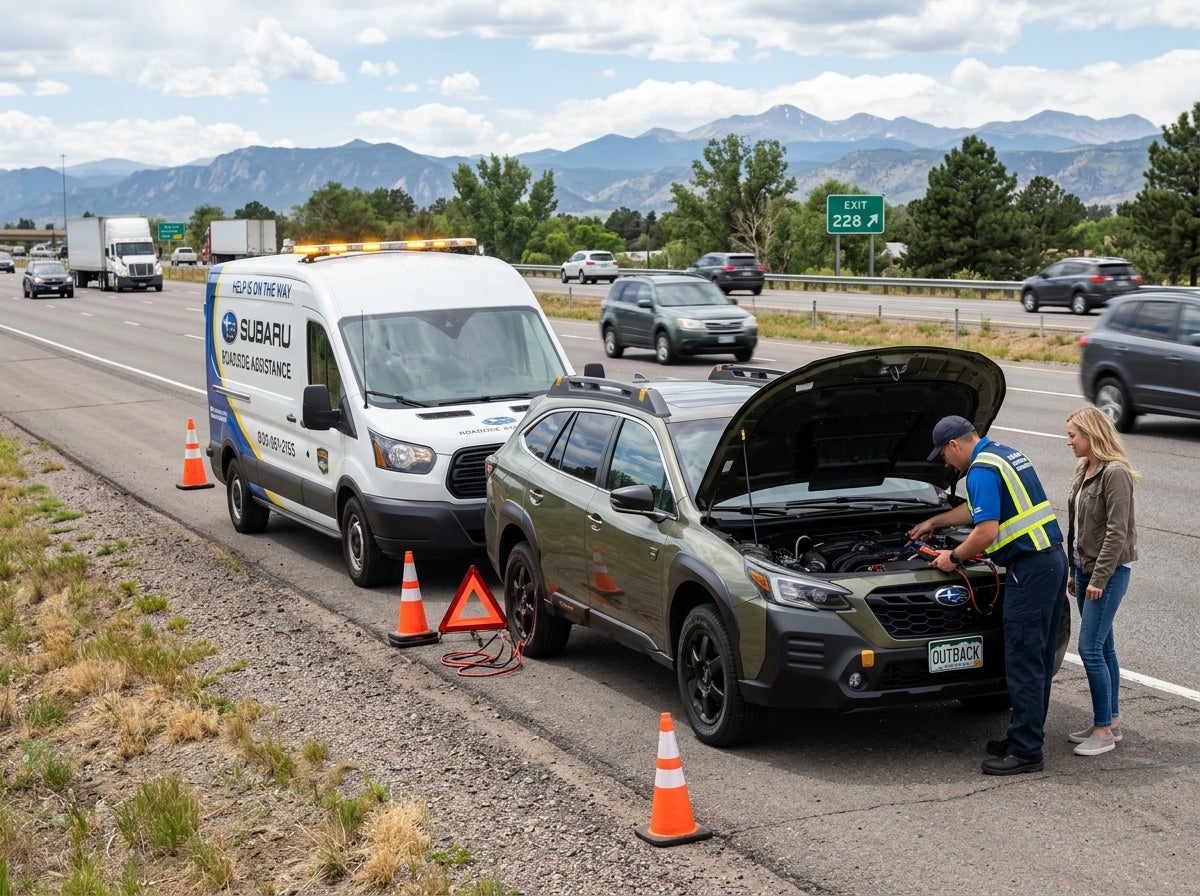
Roadside assistance worker servicing a green Subaru Outback on a highway shoulder next to a service van. (Representative image for illustration purposes only. Actual vehicle may vary based on trim and configuration.)

How Subaru Roadside Assistance Protects Your Commute

Daily driving presents unexpected challenges, from sudden tire punctures to battery drains. For professionals commuting from Ponte Vedra Beach, a sudden flat tire or dead battery on the highway can disrupt a busy schedule, especially when navigating coastal access roads where sandy terrain or high summer heat can accelerate vehicle wear. To address these unexpected situations, every new vehicle from model year 2000 onward includes comprehensive emergency support at no extra cost. This coverage is automatically activated with the New Vehicle Limited Warranty, which remains active for up to 3 years or 36,000 miles, whichever comes first. Our team at Hanania Subaru understands that vehicle reliability is about more than just regular maintenance; it is about having a dependable safety net when you are on the road. If a mechanical issue prevents you from safely operating your vehicle, this program ensures that your vehicle is transported directly to an authorized facility where certified technicians can diagnose and address the issue. If you drive a model from our Subaru performance lineup, keeping your high-performance engine and tires maintained is crucial for daily driving, and knowing that professional help is available provides significant peace of mind. If you ever experience an emergency on the road, you can contact the dedicated hotline at Subaru Roadside Assistance: 1-800-261-2155 for immediate, trusted support. For routine maintenance or to have your vehicle inspected before a long trip, you can visit our service center at 6400 Blanding Blvd or get in touch with our service advisors by calling (904) 906-1235. Table of Contents What Services Are Included with Subaru Roadside Assistance Certified Pre-Owned Protection and Extending Your Roadside Coverage How MySubaru and STARLINK Connected Services Assist in Emergencies Comparing Subaru Roadside Assistance with Generic Membership Benefits Common Questions About Subaru Emergency Roadside Care Keep Your Vehicle Road Ready with Hanania Subaru Service What Services Are Included with Subaru Roadside Assistance Knowing exactly what happens when you request assistance can ease the stress of an unexpected roadside event. The standard emergency program provides a comprehensive suite of services designed to address the most common mechanical and operational issues that drivers face. These services are available 24 hours a day, 365 days a year, ensuring that help is always accessible. The core services included in the program are: Emergency Towing: If your vehicle cannot be safely driven, it will be towed to the nearest authorized retailer. Battery Jump-Starts: If your battery is dead, a responder will arrive to jump-start your vehicle. Fuel Delivery: If you run out of gas, emergency fuel delivery will be provided to help you reach the nearest station. Flat Tire Changes: A responder will install your spare tire if you experience a flat. Emergency Lockout Service: Assistance is provided if you are locked out of your vehicle. National Retailer Locator: Access to phone numbers and locations of authorized retailers across the country. When drivers come into our service center, they often ask what happens if their vehicle doesn't have a physical spare tire but has an inflation kit instead. If your vehicle came equipped with an inflation kit instead of a spare, the roadside responder can assist with using the kit or arrange to tow the vehicle to our Subaru service center if the tire is unrepairable. To ensure your vehicle remains in optimal condition after a roadside event, our certified technicians only install genuine Subaru parts that are engineered specifically for your model. If you need to have your tires, battery, or other critical components inspected after an emergency, you can easily schedule a service appointment online to have our team perform a thorough multi-point inspection. ​ Certified Pre-Owned Protection and Extending Your Roadside Coverage While new vehicle coverage provides excellent initial protection, many drivers wonder how roadside benefits apply to pre-owned models or older vehicles. When maintaining a vehicle from our certified pre-owned Subaru selection, you enjoy extended emergency protection that matches the duration of the powertrain warranty. This factory-backed coverage typically lasts for up to 7 years or 100,000 miles from the vehicle's original in-service date, providing long-term reassurance for owners of pre-owned models. Commuters driving from Yulee often rely on these extended service agreements to ensure their daily highway trips remain completely covered, especially when navigating rural corridors or wetland areas where quick access to service centers is limited. For vehicles that are past their initial warranty period, owners can purchase Subaru Added Security extended service agreements to continue these vital roadside benefits. These extended agreements are available in different levels to suit your specific ownership needs: Classic Plan: Covers major component areas, including the engine, transmission, and suspension, while providing towing and rental car reimbursement for covered repairs. Gold Plus Plan: Offers comprehensive, bumper-to-bumper coverage that closely mirrors the basic factory warranty, including lodging and meal reimbursement if a breakdown occurs far from home. Whether you are keeping up with routine care on a Subaru Forester or another model, keeping your warranty and service agreements active ensures that you are never left without professional support during a mechanical emergency. ​ How MySubaru and STARLINK Connected Services Assist in Emergencies Can modern digital technology make requesting roadside assistance faster and more accurate? The integration of connected services allows drivers to request help with the touch of a button, streamlining the dispatch process during stressful situations. By utilizing the MySubaru mobile application or the in-vehicle buttons, owners can connect directly to response specialists who can coordinate emergency services. For models equipped with active connected services, the system can automatically share your vehicle's approximate GPS coordinates with the roadside assistance dispatcher. This digital location sharing is particularly helpful when you are in an unfamiliar area and cannot provide precise cross-streets or landmarks. Depending on the model year of your vehicle, these connected features are managed through specific digital plans: MySubaru Companion Plans (2026 and newer models): Available on select properly equipped models, providing SOS Emergency Assistance, Enhanced Roadside Assistance, and vehicle location services. MySubaru Safety & Security Plans (2016–2025 models): Includes STARLINK® Safety Plus features such as Automatic Collision Notification and Diagnostic Alerts to keep you informed of your vehicle's health. Owners of a versatile Subaru Crosstrek can use these digital tools to monitor maintenance schedules and request emergency help seamlessly. If a warning light appears on your instrument panel, the diagnostic alert system can notify you of the specific issue, allowing you to contact our service team or request roadside assistance before a minor issue becomes a major breakdown. ​ Comparing Subaru Roadside Assistance with Generic Membership Benefits Relying on a manufacturer-backed roadside program offers distinct advantages over generic, non-manufacturer emergency services. While generic roadside memberships are tied to the individual subscriber rather than the vehicle, they often lack the brand-specific expertise and specialized equipment required to handle advanced automotive technologies. The primary differences between manufacturer-backed support and generic programs include: Specialized Towing Equipment: Vehicles equipped with Symmetrical All-Wheel Drive require flatbed towing to prevent severe damage to the center differential and drivetrain components. Generic tow operators may not be fully aware of these specific mechanical requirements. Certified Retailer Destination: Subaru Roadside Assistance always tows your vehicle to the nearest authorized retailer, ensuring that repairs are completed by factory-trained technicians. Warranty-Approved Repairs: Having your vehicle serviced at an authorized facility preserves your warranty protection and ensures the use of original equipment components. For example, if a Subaru Outback requires towing due to a mechanical issue, transporting it to an authorized facility guarantees that the complex Lineartronic CVT and active safety systems, such as EyeSight® Driver Assist Technology, are handled by technicians who specialize in these specific systems. This brand-specific focus protects your investment and ensures that your vehicle is repaired to original manufacturing standards. ​ Common Questions About Subaru Emergency Roadside Care Answering critical questions about emergency coverage helps owners understand their benefits and plan for unexpected situations. Before you schedule your next maintenance visit, review these common questions regarding roadside support. Q: Does the Certified Pre-Owned Subaru warranty include Roadside Assistance? Yes, Certified Pre-Owned models include complimentary 24-hour roadside assistance for the duration of their 7-year or 100,000-mile powertrain warranty, which begins from the original in-service date. Q: Can I buy a standalone roadside assistance plan from Subaru? No, standalone roadside plans are not sold directly by the manufacturer. Instead, these emergency benefits are included with the initial new vehicle warranty or can be continued through a Subaru Added Security vehicle service contract. Q: Do I need an active STARLINK subscription to use Subaru Roadside Assistance? No, an active subscription is not required to access emergency roadside services. You can contact the toll-free hotline directly at any time during your coverage window to request help. Q: What information do I need when calling Subaru Roadside Assistance? When calling for help, you should have your Vehicle Identification Number (VIN), your exact physical location, your license plate number, and a brief description of the issue ready for the dispatcher. Q: What if my Subaru doesn't come with a physical spare tire? If your vehicle is equipped with a tire inflation kit instead of a spare, the roadside responder can assist with using the kit or arrange a tow to the nearest authorized retailer if the tire damage is too severe for temporary repair. For families driving a spacious Subaru Ascent, keeping these details in mind ensures that you are fully prepared for any travel disruptions during family trips. ​ Keep Your Vehicle Road Ready with Hanania Subaru Service Maintaining your vehicle according to the manufacturer's recommended intervals is the most effective way to prevent roadside emergencies. Regular multi-point inspections, battery health checks, and tire rotations ensure that potential issues are identified and resolved before they lead to a breakdown on the road. Our factory-trained technicians are committed to keeping your vehicle safe, reliable, and performing at its best. Whether you need a routine oil change, a battery replacement, or a comprehensive safety system calibration, our team is ready to provide expert care using original equipment components. To keep your vehicle performing reliably for all your daily commutes and weekend getaways, visit our Jacksonville service department at 6400 Blanding Blvd or give our service advisors a call at (904) 906-1235 to discuss your maintenance needs. © 2026 Hanania Subaru. All rights reserved.

What I've Learned About the Services Customers Decline Most Often

The Reality Behind the Service Recommendations Customers Decline Most Often My name is Emil Becirevic, and as a Service Advisor here at Hanania Subaru, I spend my days talking to drivers about how to keep their vehicles running safely. Over five years on the service drive, a clear pattern has emerged in the maintenance recommendations that customers choose to decline most frequently. Often, these deferred items are out-of-sight wear parts or preventative fluid flushes that do not have an immediate, obvious symptom. According to automotive industry research, brake work is one of the most commonly deferred safety repairs on a service drive. In fact, studies show that 32% to 37% of customers wait until actual brake failure occurs before they will authorize a repair. This is a concerning trend because delaying these critical safety components puts both the driver and the vehicle at significant risk. Our main goal is keeping drivers safe on daily commutes. Our team is available at (904) 906-1235 to discuss any recent recommendations in detail. Scheduling a service appointment online through our Subaru service center is the fastest way to address a pending maintenance item. For an in-person conversation, dropping by our Jacksonville service lane is always an option, and you can easily schedule your service appointment before you arrive. Table of Contents Why Cabin and Engine Air Filters are Frequently Deferred by Drivers The Hidden Risks of Saying No to Fluid Flushes and Exchanges How Deferred Maintenance Multiplies Long-Term Subaru Ownership Costs Understanding Dealership Service Value and the Power of Digital Inspections Recognizing the Signs of Wheel Alignment and Symmetrical AWD Tire Wear Why Cabin and Engine Air Filters are Frequently Deferred by Drivers The cabin air filter and the engine air filter are the two physical parts that drivers say no to more than almost anything else. Because these filters are tucked away under the glovebox or inside the engine bay, they are completely out of sight. This makes it easy to assume that a replacement recommendation is just an unnecessary upsell rather than a functional necessity. For drivers living near Ponte Vedra Beach, the coastal air brings a unique mix of fine sand, salt, and pollen from maritime forests that can clog a cabin filter much faster than normal. A clogged cabin filter forces your air conditioning system to work harder, reducing airflow and letting allergens circulate inside the cabin. Meanwhile, a dirty engine air filter starves your engine of clean air, which gradually degrades your fuel economy and acceleration. While replacing these filters is a straightforward task that some owners choose to handle themselves, using genuine Subaru parts ensures a perfect seal and correct filtration media density. Keeping a clean cabin filter is especially important for maintaining the cabin comfort of our certified pre-owned Subaru inventory, where preserving the original vehicle smell and interior quality is a top priority. The Hidden Risks of Saying No to Fluid Flushes and Exchanges Fluid exchanges are another category where we frequently hear a polite "not today" from our customers. The primary reason for this hesitation is that dirty fluid rarely causes a noticeable drivability issue until the damage is already done. Without a flashing warning light or a strange noise, spending money on a transmission fluid or differential fluid exchange can feel optional. Modern drivetrains are highly engineered systems that rely on clean, chemically stable lubricants to manage heat and friction. For instance, the continuously variable transmission in our new Forester inventory operates under high pressure and requires specific fluid properties to prevent belt slippage and wear. Over time, heat breaks down these protective additives, allowing microscopic metal shavings to circulate through the system. Skipping these fluid services puts major mechanical components at risk of premature failure. Replacing a transmission or a front differential is exponentially more expensive than performing a scheduled fluid exchange. Keeping up with these services protects the vehicle's long-term health and ensures that your drivetrain performs reliably for years. How Deferred Maintenance Multiplies Long-Term Subaru Ownership Costs Postponing a recommended repair does not make the problem disappear; it simply delays the bill while allowing the underlying damage to grow. Industry data reveals that approximately 60% to 70% of customers who decline service work at a dealership end up completing that exact same repair at an independent shop within three to twelve months. Unfortunately, this delay often means they pay more because the issue has worsened and damaged adjacent parts in the meantime. Consider a performance vehicle like those in our new Subaru performance inventory, where tight tolerances mean a minor suspension wobble can rapidly turn into uneven tire wear and worn wheel bearings. The same logic applies to a daily commuter driving a model from our new Crosstrek inventory. A simple recommendation for a minor leak or a worn bushing can quickly escalate into a major mechanical repair if left unaddressed. Furthermore, a documented, clean service history directly protects your vehicle's resale and trade-in value. When it comes time to upgrade, a buyer or appraiser will look closely at your maintenance records. Evidence of deferred maintenance or a patchy service history will almost always result in a lower trade-in valuation, proving that skipping basic services actually costs more in the long run. Understanding Dealership Service Value and the Power of Digital Inspections It is no secret that cost-related concerns are the primary reason drivers decline recommended services. Dealership service prices are sometimes higher than independent shops because we utilize factory-trained technicians, specialized diagnostic equipment, and genuine OEM parts. These elements ensure that repairs are done correctly the first time, protecting your vehicle's factory warranty and long-term reliability. To help bridge this trust gap, our team utilizes digital vehicle inspections that include clear photos and videos of your vehicle's components. Seeing a photo of a torn CV boot or a measurement gauge showing a worn brake pad on a model from our new Outback inventory makes the recommendation concrete. It removes the guesswork and allows you to see exactly what our technicians see on the lift. These digital reports also give you a clear record of your vehicle's health over time. Instead of relying on a verbal explanation, you have visual proof of which items are urgent and which ones can wait for a future visit. This transparency helps you make informed decisions about your vehicle's maintenance budget without feeling pressured. Recognizing the Signs of Wheel Alignment and Symmetrical AWD Tire Wear A misaligned suspension is another frequently declined service that has serious consequences, especially for vehicles equipped with standard Symmetrical All-Wheel Drive. When your wheels are out of alignment, your tires do not track straight, which causes the vehicle to pull to one side or create a vibration in the steering wheel. Over time, this misalignment produces distinct tire wear patterns, such as feathering or heavy wear on the inner or outer edges of the tread. For commuters driving daily from Yulee toward the city, maintaining a precise alignment is critical for safety on wet highways and for maximizing the lifespan of your tires. Because the all-wheel-drive system constantly monitors traction and distributes power to all four wheels, uneven tire wear can put extra strain on your center differential. If one tire wears down significantly faster than the others due to a bad alignment, you may end up needing to replace all four tires prematurely to protect the drivetrain. Whether you are driving a family SUV from our new Ascent inventory or a compact commuter, keeping your suspension aligned is a simple way to protect your tire investment. If you notice your steering wheel off-center or feel a drift on the highway, we recommend contacting our team at (904) 906-1235 to set up an inspection. You can also get turn-by-turn directions to our Jacksonville service lane to have our technicians check your alignment today. © 2026 Hanania Subaru. All rights reserved.

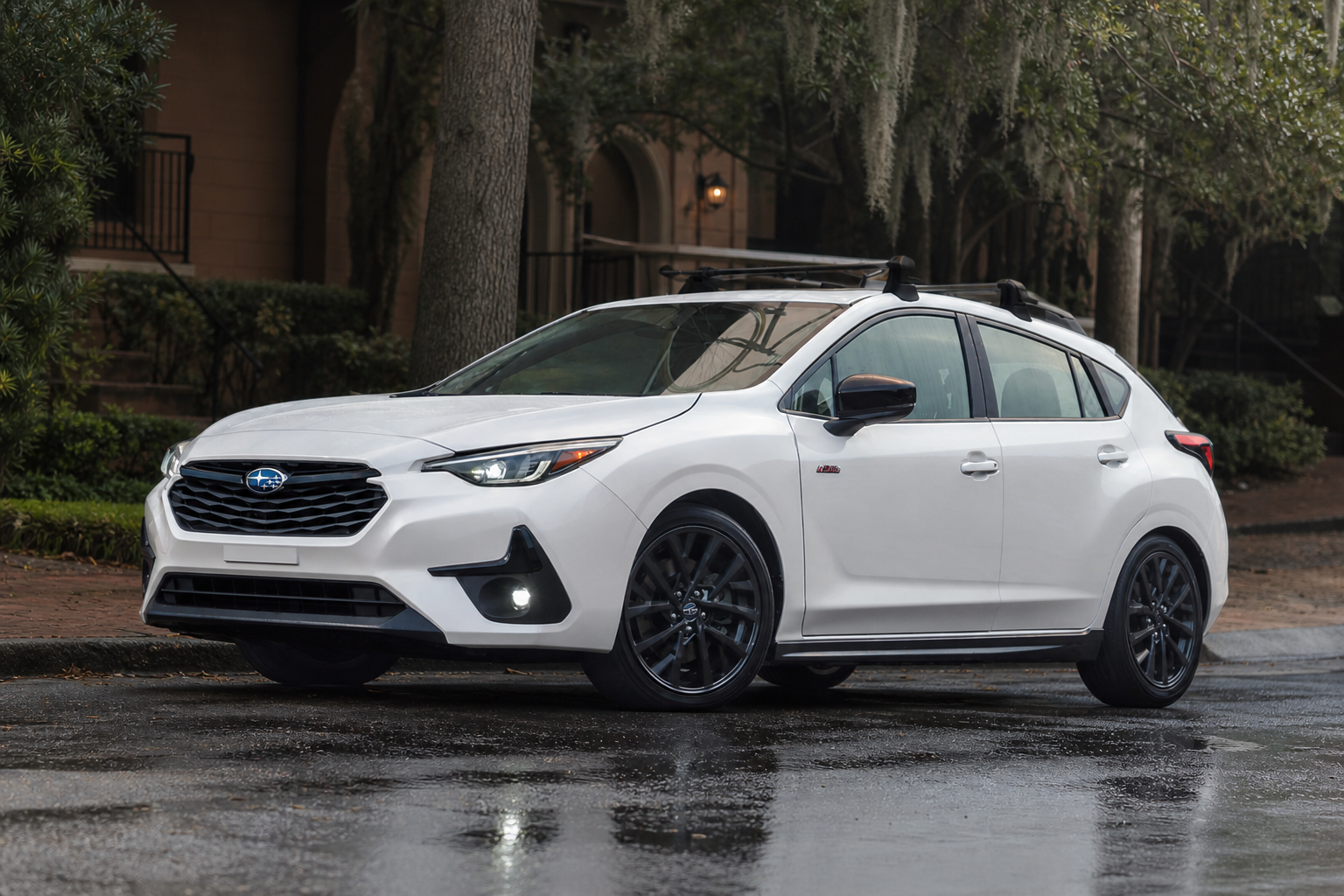
Unbadged SUV parked on a wet Jacksonville street after a summer rain, illustrating brake care in Florida

Subaru Brake Maintenance Schedule: What Jacksonville Drivers Need to Know

Brakes wear a little every time you drive, and Jacksonville traffic on I-295 and stop-and-go stretches of Blanding Boulevard is harder on them than most people think. Here is a straight answer on when to check your brakes, what wears out first, and what the work actually costs at our shop. How often should you follow a Subaru brake maintenance schedule? Follow a Subaru brake maintenance schedule that inspects the pads, rotors, and fluid at least every 6 months or 6,000 miles, whichever comes first. Front pads typically last 30,000 to 70,000 miles depending on driving style, while brake fluid should be replaced roughly every 30,000 miles or 3 years to stay effective. The 2025 Subaru Outback Owner's Manual lists brake inspections on the 6-month/6,000-mile interval and calls for brake fluid replacement at 30,000 miles. Intervals are similar across the 2025 Subaru Forester, Crosstrek, and Ascent, but the exact numbers live in your specific model-year manual, so it is worth confirming against yours. Component Inspect Typical replacement Front brake pads Every 6,000 miles 30,000–70,000 miles Rear brake pads Every 6,000 miles 40,000–80,000 miles Rotors Every 6,000 miles As needed (often with second pad set) Brake fluid Every 6 months Every 30,000 miles or 3 years What are the signs your Subaru brakes need service? Watch and listen for a high-pitched squeal when stopping, a grinding sound, a soft or spongy pedal, vibration through the pedal, or the vehicle pulling to one side. A dashboard brake warning light or noticeably longer stopping distances also means it is time to have the system inspected right away. Squealing: the wear indicator is telling you pads are getting thin. Grinding: metal-on-metal contact that can damage rotors quickly. Spongy pedal: possible air or moisture in the brake fluid. Vibration: often warped or unevenly worn rotors. Pulling: a sticking caliper or uneven pad wear. According to NHTSA's National Motor Vehicle Crash Causation Survey (report DOT HS 811 059, 2008), brake-related problems were the critical reason in roughly 22 percent of crashes traced to a vehicle failure. That is a strong argument for not ignoring a squeal or a soft pedal. How much does Subaru brake service cost in Jacksonville? At Hanania Subaru of Orange Park in Jacksonville, a brake inspection is straightforward and often included with routine maintenance visits. A front or rear pad replacement using genuine Subaru parts commonly runs a few hundred dollars per axle, and rotor replacement adds to that. We give you the exact figure in writing before any work begins. Florida heat and humidity also play a role. Frequent short trips and stop-and-go driving in the summer keep brakes hot, and coastal moisture can accelerate corrosion on rotors and hardware. A twice-a-year inspection catches surface rust and thinning pads before they turn into a bigger repair. Can you make your Subaru brakes last longer in Florida? Yes. Leave more following distance so you coast to stops instead of braking hard, take weight out of the vehicle when you can, and avoid riding the brake pedal on long downgrades. Keeping up with the 6-month fluid and pad inspections at a Subaru shop is the single most effective habit for extending brake life. Two more Jacksonville-specific tips: after driving through standing water during summer storms, gently apply the brakes a few times to dry them, and rinse road salt or beach-area grit off the underside of the vehicle so it does not sit on the calipers and rotors. If your brakes are due for a look or something feels off, the service team at Hanania Subaru of Orange Park can inspect the full system, show you the measurements, and tell you plainly what needs attention now versus what can wait.

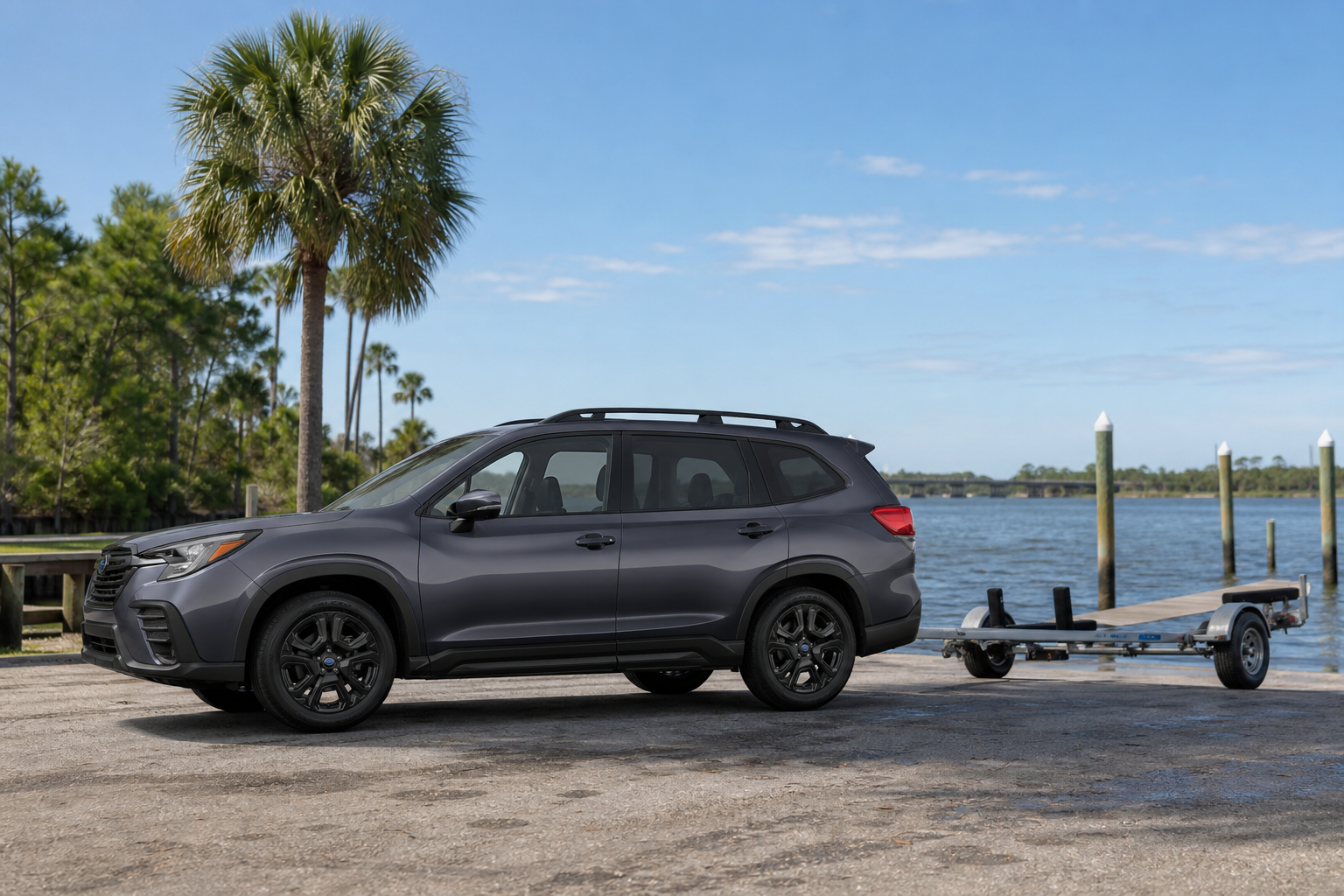
Unbadged SUV parked at a Florida boat ramp on a bright morning, ready for towing near the water

How Much Can a Subaru Ascent Tow? A Jacksonville Owner's Guide

Whether you're hauling a boat to the St. Johns River or towing a camper up to the mountains, the Subaru Ascent gives you real pulling power for a three-row SUV. We'd rather lay out the exact numbers and the fine print than let you guess at the ramp. Here's what the Ascent can actually tow, what eats into that number, and how to set it up right. How much can a Subaru Ascent tow? A properly equipped Subaru Ascent tows up to 5,000 pounds across every trim from the 2019 model year through the current 2026 model. That figure applies when the Ascent has the factory or dealer-installed trailer hitch and wiring, plus proper weight distribution. It's one of the higher ratings among midsize three-row SUVs. Every Ascent uses the same 2.4-liter turbocharged flat-four engine and standard Symmetrical All-Wheel Drive, so towing capacity doesn't change between the base trim and the top Touring trim. That 5,000-pound number covers a lot of common loads Jacksonville families deal with. Small to midsize boat and trailer: often 2,500–4,000 lbs combined Pop-up or small travel camper: typically 1,500–3,500 lbs Enclosed utility or car trailer: varies widely, so weigh it loaded Jet skis on a double trailer: usually well under 3,000 lbs According to Subaru's published specifications, the 5,000-lb maximum requires a weight-distributing hitch for trailers over a certain tongue weight, so check the owner's manual for the exact threshold before your first haul. What affects the Ascent's real-world towing capacity? The 5,000-pound rating is a maximum, not a target you'll always hit. Passengers, cargo, gear, and even a full fuel tank all count against your available towing weight. Florida heat and stop-and-go traffic also add strain, so leaving a margin below the max keeps your drivetrain and brakes happier over time. Two numbers matter most when you're loading up: Term What it means GVWR The most the SUV itself can weigh, loaded with people and cargo GCWR The most the SUV and trailer can weigh combined Tongue weight Downward force the trailer puts on the hitch, usually 10–15% of trailer weight Payload Total weight of passengers and cargo you can add inside Here's the practical version: if you load five people and a weekend's worth of coolers into the Ascent, you've used up payload that would otherwise be available at the hitch. Weigh your trailer loaded, not empty, and stay comfortably under 5,000 pounds for the smoothest tow on I-295 or heading north on I-95. What towing equipment does a Subaru Ascent need? To tow safely, an Ascent needs a properly rated trailer hitch, wiring for the trailer's lights and brakes, and often a weight-distributing hitch for heavier loads. Many Ascent trims include factory hitch prep, but you'll still want a technician to confirm the receiver, wiring harness, and brake controller compatibility before you hook anything up. A quick checklist we walk owners through in our Orange Park service drive: Hitch receiver rated for your trailer weight Trailer wiring harness so brake lights and turn signals work Weight-distributing hitch for larger trailers and higher tongue weights Trailer brake controller if your trailer has electric brakes Correct tire pressure and a recent brake inspection The Ascent's standard Symmetrical All-Wheel Drive helps with traction at boat ramps and on wet Jacksonville roads, but it doesn't raise the tow rating. Good equipment and honest weight math do the heavy lifting. Is the Subaru Ascent a good tow vehicle for Jacksonville? Yes, for most local towing the Ascent is a strong fit. Its 5,000-pound capacity handles typical boats, small campers, and utility trailers, and the all-wheel-drive system earns its keep at slick launches along the St. Johns River. For very large travel trailers or big offshore boats, you'll want a full-size truck instead. Think about how you'll actually use it. Weekend fishing trips, a jet-ski trailer, or a lightweight camper for a Georgia mountain getaway all sit well within the Ascent's range. If you're eyeing a 30-foot travel trailer, that's beyond what any midsize SUV should pull. Before you buy or before your first big tow of the season, stop by Hanania Subaru of Orange Park and let our service team confirm your setup. We can check the hitch, wiring, and brakes so your first trip out of Jacksonville is a smooth one.

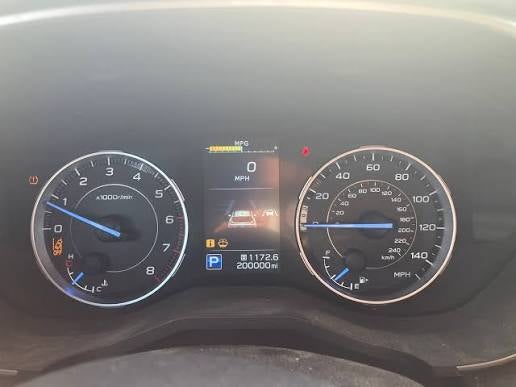
Subaru Ascent reaches 200,000 miles with minimal maintenance

How Regular Service Helps Subaru Models Reach 200,000+ Miles

Reaching the quarter-million-mile mark is a point of pride for Subaru owners, but that kind of longevity is rarely an accident. We sat down with Brent Davis, a Service Advisor at Hanania Subaru with 6 years of experience, to discuss the specific maintenance blueprints required to keep these vehicles running reliably through decades of Florida driving. In this interview, Brent explains how consistent care and technical precision allow models like the Outback and Forester to outlast the industry average. Q: Brent, we often hear about Subarus lasting for decades, but what is the actual baseline for an owner who wants to see 200,000 miles on their odometer? A: The foundation for that kind of longevity starts with the 6,000-mile or six-month service interval. Most people think of this as just an oil change, but for a high-mileage candidate, it is actually a comprehensive health check. In our environment, where the hot Florida sun and high ambient temperatures place constant thermal stress on the engine, staying disciplined with these visits is non-negotiable. I tell owners that the vehicles we see reaching 200,000 miles are almost always the ones that never skipped a fluid inspection or a filter replacement. If you are driving in from Ponte Vedra Beach after a weekend at the coast, that salt air and humidity make it even more important to have our Subaru Service Center technicians look for early signs of corrosion or belt wear. You can reach our team at (904) 906-1235 to discuss a personalized plan, or stop by our location at 6400 Blanding Blvd, Jacksonville, FL 32244 to get a baseline inspection for your vehicle. Q: Walk me through a scenario where an owner is approaching that first major 100,000-mile threshold—what are the most critical items they need to address? A: When a customer brings in a vehicle like the 2026 Subaru Crosstrek with high miles, we focus heavily on the 30,000-mile, 60,000-mile, and 90,000-mile milestones. By the time you hit 100,000 miles, you should have already replaced your spark plugs at least once, especially on FA-series turbo engines where they are rated for 60,000 miles. We also look closely at the cooling system. If the coolant is neglected, it can lead to overheating, which is the quickest way to end an engine's life. For those driving a Subaru Crosstrek or similar model, we also emphasize differential fluid changes. These are often overlooked, but the rear differential needs fresh fluid every 30,000 to 60,000 miles to prevent the internal gears from whining or wearing down prematurely. Catching these items at 90,000 miles sets the stage for the next 100,000 miles of trouble-free driving. Q: Is there a significant difference in how you maintain the Boxer engine compared to a traditional inline-four to ensure it lasts "forever"? A: The horizontally-opposed Boxer engine is a masterpiece of balance, but its layout means gravity affects lubrication and sealing surfaces differently than an upright engine. For maximum life in a 2.5L H4 engine, such as the one found in the Subaru Forester, using the required 0W-20 synthetic oil is critical. Synthetic oil handles the internal heat of our Florida summers much better than conventional blends, preventing the "sludging" that can clog oil passages. I also remind owners that the Boxer engine has more sealing surfaces, so we keep a close eye on valve cover gaskets and cam seals as the vehicle ages. If you notice a faint smell of oil after a long drive, it is time to schedule your service appointment immediately. Addressing a small seep early prevents it from becoming a major leak that could starve the engine of lubrication at high speeds. "The vehicles we see reaching 200,000 miles are almost always the ones that never skipped a fluid inspection or a filter replacement." Q: Many drivers worry about the CVT transmission as they get into higher mileages; what should they be watching for? A: There is a common misconception that CVT fluid is "lifetime," but in my experience, that is only true if you don't plan on keeping the car past 100,000 miles. For a Lineartronic CVT, like the one in the 2026 Subaru Outback, we recommend a fluid exchange every 60,000 miles, or even every 30,000 miles if you are doing heavy stop-and-go commuting. If you live in Yulee and commute daily into Jacksonville along US Highway 17, that constant shifting and heat build-up can degrade the fluid faster. Signs that you need service include a slight shudder when accelerating or a delayed engagement when shifting from Park to Drive. We always use genuine Subaru parts and high-torque CVT fluid because generic fluids can actually cause internal slipping. Maintaining the transmission is vital for the Symmetrical All-Wheel Drive system to function correctly in a Subaru Outback, ensuring power is distributed evenly to all four corners without mechanical strain. Q: How strictly should owners follow the 2/32-inch rule for tire tread depth, and can it really destroy the AWD system? A: It absolutely can. The Symmetrical AWD system is incredibly sensitive to the rolling circumference of the tires. If one tire is significantly more worn than the others, it has to spin faster to keep up, which creates a constant "traction event" in the center differential. This generates heat and mechanical stress that can lead to a repair bill in the thousands. Subaru specifies that tread depth should not vary by more than 2/32 of an inch between any two tires. This is why regular tire rotations every 6,000 miles are so important. If you have a larger vehicle like the 2026 Subaru Ascent, which carries more weight and places more load on the tires, this rule is even more critical. If you ever damage just one tire on your Subaru Ascent, we often have to recommend replacing all four to keep that drivetrain synchronized and protected for the long haul. Q: Brent, why is it better for a long-term owner to choose a dealership like Hanania Subaru over a general repair shop for this 200,000-mile journey? A: I recently observed a customer who had been using a general shop for years and was frustrated by a recurring EyeSight Driver Assist error. It turned out the non-OEM windshield they had installed wasn't calibrated to the cameras. At Hanania Subaru, our technicians are factory-trained specifically on these systems. We also provide the Hanania Lifetime Warranty and two years of maintenance with every new vehicle purchase, which is a massive advantage for someone planning to keep their car for 15 years. Whether you are looking at our Subaru performance inventory for a weekend car or browsing our certified pre-owned Subaru models for a reliable daily driver, you get the peace of mind that comes with OEM parts and specialized diagnostics. You can find us at 6400 Blanding Blvd, Jacksonville, FL 32244, or give us a quick call to discuss how we can help your current Subaru reach that 200,000-mile goal. If you ever run into trouble on the road, remember that Subaru Roadside Assistance is available at 1-800-261-2155 to ensure you are never stranded. Reaching high mileage in a Subaru is a partnership between the owner's diligence and expert technical support. By adhering to the 6,000-mile service interval, using synthetic oil, and respecting the 2/32-inch tire wear rule, you can protect your investment for years to come. Brent Davis and the entire team at Hanania Subaru are dedicated to providing the transparent, expert care necessary to keep your vehicle on the road for its next 100,000 miles. Visit our service department today to ensure your Subaru is prepared for the long journey ahead. © 2026 Hanania Subaru. All rights reserved.

Technician rinsing salt from a Subaru undercarriage to prevent coastal corrosion in Jacksonville

Protecting Your Subaru from Salt Air and Coastal Corrosion in Jacksonville

If you live in Jacksonville Beach, Ponte Vedra, near the Mayport ferry, or you just commute along A1A, salt is part of your daily drive whether you notice it or not. You don't have to park on the sand to deal with rust. Managing salt air corrosion Subaru Jacksonville owners face is really about a simple routine, and this guide from the service team at Hanania Subaru of Orange Park walks you through it, step by step, with no pricing and no upsell. Does salt air really rust cars in Florida even if I never drive on the beach? Yes. Salt air rusts cars across the First Coast even if your tires never touch sand. Airborne salt settles on your undercarriage, brake lines, and paint edges, then pulls moisture from our humid climate. That constant salt-plus-moisture cycle speeds oxidation, so both parked and beach-bound Subarus face real corrosion risk over time. Salt spray can drift up to 50 miles inland, according to NOAA coastal air-quality research, which means neighborhoods well west of the beaches still collect a fine salty film on cars. Corrosion isn't cheap to reverse, either —related repairs cost U.S. drivers roughly three billion dollars over a recent multi-year span, per AAA's reporting on vehicle maintenance costs. The good news: prevention is straightforward. These are the components that tend to corrode first on coastal Subarus: Undercarriage and subframe: where salt spray collects and lingers out of sight. Brake and fuel lines: exposed steel lines are prime rust targets and a safety concern. Exhaust system: heat plus salt accelerates pitting and thinning. Battery terminals: salty, humid air encourages white or greenish corrosion buildup. Paint edges and rock chips: door bottoms, wheel arches, and hood edges where bare metal is exposed. How often should I wash my car if I live near the beach? If you live near or commute past the beaches, rinse your Subaru every one to two weeks, and after any windy coastal day. Always include a thorough undercarriage rinse, since that's where salt hides. Drivers farther inland can stretch to every two to three weeks, but shouldn't skip the underbody flush. A plain-water rinse is better than nothing, but a proper wash with car soap lifts salt more effectively. Here's a practical cadence for coastal Jacksonville drivers: Task How often Why it matters Full wash + undercarriage rinse Every 1–2 weeks (beach-close) Removes salt before it sets and draws moisture Quick water rinse After windy or salty-air days Keeps salt film from baking onto paint Wax or paint sealant Every 3–4 months Adds a barrier over paint and edges Battery terminal check Monthly Catches corrosion buildup early A few extra habits go a long way: park in a garage when you can, use a breathable car cover rather than a plastic tarp that traps moisture, and don't let mud or road grime sit in the wheel wells. If you can reach it with a hose, spray the underbody, inner fenders, and behind the wheels. What are the warning signs of salt air corrosion Subaru Jacksonville drivers should watch for? Watch for bubbling or flaking paint, orange or brown staining near seams and door bottoms, white crust on battery terminals, squeaky or grinding brakes, and any flaking metal under the car. A rough or louder exhaust note can also signal rust thinning the system. Any of these deserves a professional inspection soon. Some corrosion is cosmetic, but some is a safety issue — especially rusted brake lines, which can fail without much warning. Use this quick self-check between service visits: Peek under the car for flaking rust, especially along brake and fuel lines. Run a hand along door bottoms and wheel arches for rough, bubbling paint. Pop the hood and look for powdery buildup on battery terminals. Listen for new squeaks, grinding, or a raspier exhaust. Note any brake pedal that feels soft or spongy — get that checked right away. How can Hanania Subaru of Orange Park help protect my Subaru from corrosion? The service team at Hanania Subaru of Orange Park can perform a corrosion-focused inspection of your undercarriage, brake and fuel lines, exhaust, and battery terminals, then recommend protective treatments and undercoating options suited to coastal driving. Hanania Subaru of Orange Park uses Subaru-specified parts and procedures, so any repairs match how your vehicle was built. If you commute along A1A or live near the water, ask Hanania Subaru of Orange Park to add a corrosion check to your regular maintenance visit. Catching surface rust or a corroding brake line early is far simpler than replacing a component after it fails. Bring any warning signs you've noticed to the appointment so the technician knows where to look first.

Contact Us

Fill out this form below and we'll contact you shortly
*Required Fields