
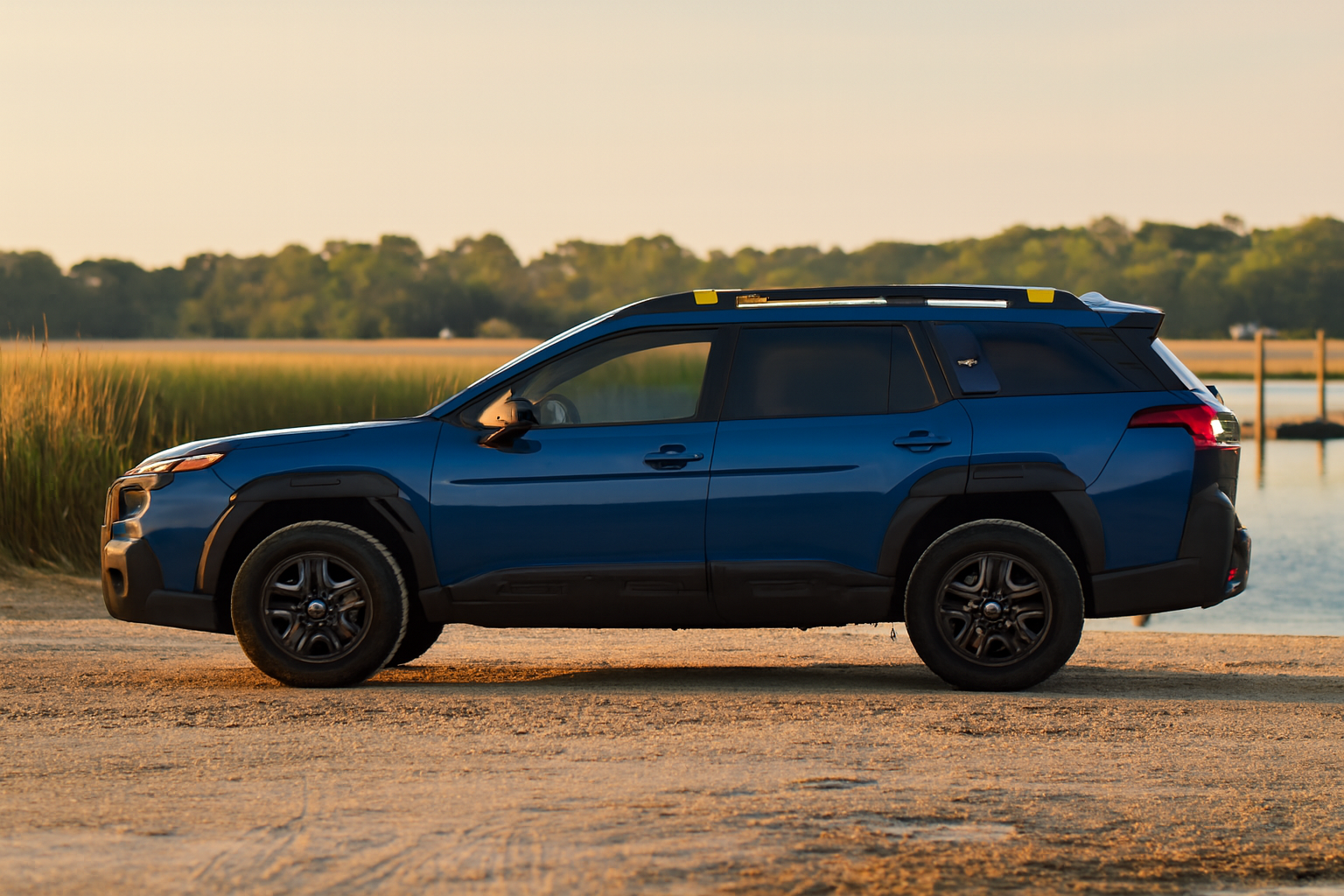
Around the First Coast, the line between pavement and adventure is short. One minute you’re on Heckscher Drive, the next you’re easing down a washed-out boat-ramp approach at Sisters Creek or crawling a sandy two-track near Hanna Park. The Subaru Outback Wilderness is built for exactly that in-between world, and it’s become a favorite for Jacksonville drivers who fish, paddle, and chase the outdoors on weekends. Here’s what its hardware actually buys you, and where honesty matters more than hype.
What Makes the Subaru Outback Wilderness Different on Jacksonville’s Backroads?
The Wilderness trim adds real off-pavement hardware: raised suspension, all-terrain tires, a shorter final-drive ratio, and rugged bumpers with better approach angles. Compared to a standard Outback, it clears ruts, sand berms, and rain-rutted ramp approaches with more confidence, which is exactly what the First Coast’s unpaved edges tend to throw at you.
Ground clearance is the headline number. The Subaru Outback Wilderness offers 9.5 inches of clearance, per Subaru’s published specifications, versus 8.7 inches on the standard Outback. That extra inch sounds small until you’re straddling a rain rut on a Sisters Creek approach or clearing a sandy hump at a Mayport ramp. The all-terrain tires and reworked bumpers do the rest of the quiet, unglamorous work.
- Ground clearance: 9.5 inches for keeping the underbody off ruts and berms
- All-terrain tires: more bite on wet grass, packed sand, and loose gravel
- X-MODE with Dual-Function: tuned settings for snow, dirt, mud, and deep snow/sand
- Symmetrical all-wheel drive: power to all four corners as traction shifts
- Higher-clearance bumpers: improved approach and departure angles on ramps
Is the Subaru Outback Wilderness Good for Off-Road?
For the light-to-moderate terrain most Jacksonville drivers see, yes. The Subaru Outback Wilderness handles packed sand, gravel, wet grass, mild trails, and rutted ramp approaches well. It is a capable all-terrain crossover, not a rock crawler. It has no low-range transfer case and limited clearance for serious obstacles, so match your expectations to the trail.
Where it shines locally is the stuff you actually drive: the graded roads out to remote put-ins, the beach-access approaches, and light trails around Hanna Park. X-MODE helps manage wheel slip and adds hill descent control on loose downgrades, which is handy on a slick, rain-softened ramp. The all-wheel-drive system keeps you moving when one or two tires lose grip.
Just respect the limits. Soft, dry beach sand can bog any crossover, and airing down tires plus knowing the tide chart matters more than any spec sheet. Skip deep water crossings, and don’t confuse an all-terrain crossover with a purpose-built off-roader. Used within its range, it’s one of the more genuinely useful vehicles for First Coast weekends.
Can the Outback Wilderness Tow a Boat?
Yes, within reason. The Subaru Outback Wilderness is rated to tow up to 3,500 pounds when properly equipped, according to Subaru. That covers many small fishing boats, one or two jet-skis on a trailer, or a light utility trailer. It’s plenty for the kind of small-craft launching common at Mayport and Sisters Creek ramps.
Towing weight includes the trailer, the boat, fuel, gear, and coolers, so add it all up honestly before you back down a ramp. A few basics keep it safe:
| Item | Why It Matters |
|---|---|
| Total trailer weight under 3,500 lbs | Stay within the rated limit with a margin |
| Proper hitch and wiring | Trailer lights and secure connection are required |
| Tongue weight balance | Roughly 10–15% on the tongue reduces sway |
| Trailer brakes for heavier loads | Improves stopping on wet ramps and highways |
| Tire pressure (tow and vehicle) | Correct pressure prevents sway and heat buildup |
On a slick ramp, back down slowly and let X-MODE and all-wheel drive manage traction on the wet, algae-covered concrete. If your trailer and boat push toward the rated limit, plan gentler acceleration and longer stopping distances on the way home.
What Pre-Adventure Checks Should You Run Before a Boat Ramp or Trail?
Before any sandy approach, ramp, or trail day, run a quick readiness check: tire condition and pressure, brake feel, all fluids, hitch and trailer wiring, and battery health. It takes minutes and prevents the kind of stuck-at-the-ramp problems that ruin a weekend. Our Hanania Subaru of Orange Park service team runs the same list.
Here’s the checklist we walk through in the shop:
- Tires: tread depth, sidewall condition, and correct pressure for load and terrain
- Brakes: pad life and pedal feel, since wet ramps demand solid stopping
- Fluids: engine oil, coolant, and transmission fluid at proper levels
- Hitch and wiring: secure mount and working trailer lights
- Battery: clean terminals and a healthy charge for repeated ramp restarts
- Underbody: a quick look after sandy or salty trips, plus a rinse to fight corrosion
That last point matters on the coast. Salt spray and brackish ramp water are hard on any vehicle’s underbody. A freshwater rinse after saltwater launches, and an occasional underbody inspection, goes a long way toward keeping your Subaru Outback Wilderness ready for the next trip. If you’d rather have a technician verify it, we’re glad to run the pre-adventure check for you.
Bottom line: within its real-world limits, the Subaru Outback Wilderness fits the First Coast lifestyle better than almost anything in its class. It gets you to the water, down the light trails, and back home, without pretending to be something it isn’t.
Connect with us


- Automotive Partnerships & Collaborations
- Buying & Leasing
- Buying Guide
- Buying Guides
- Community & Outreach Initiatives
- Electric Vehicles
- Event Highlights & Celebrations
- Family Vehicles
- Hanania Subaru of Orange Park Service
- Hybrid & Electric
- Jacksonville Subaru Dealer
- Jacksonville Subaru Service
- Lifestyle
- Local Dealership News & Activities
- Local Living
- Local Ownership Tips
- Maintenance & Service
- Model Comparisons
- Model Research
- New Inventory
- New Vehicle Reviews
- Off-Road Adventures
- Outdoor Lifestyle
- Ownership
- Ownership & Service
- Pet-Friendly Vehicle Features
- Safety Features
- Safety Recall
- Service & Maintenance
- Subaru Care & Maintenance
- Subaru Models
- Subaru Ownership
- Subaru Technology
- Technology & Innovation
- Trade in
- Uncategorized
- Vehicle Comparisons
- Vehicle Features
- Vehicle Guides
- Vehicle Research
- Vehicle Safety
Categories