The Reality Behind the Service Recommendations Customers Decline Most Often My name is Emil Becirevic, and as a Service Advisor here at Hanania Subaru, I spend my days talking to drivers about how to keep their vehicles running safely. Over five years on the service drive, a clear pattern has emerged in the maintenance recommendations that customers choose to decline most frequently. Often, these deferred items are out-of-sight wear parts or preventative fluid flushes that do not have an immediate, obvious symptom. According to automotive industry research, brake work is one of the most commonly deferred safety repairs on a service drive. In fact, studies show that 32% to 37% of customers wait until actual brake failure occurs before they will authorize a repair. This is a concerning trend because delaying these critical safety components puts both the driver and the vehicle at significant risk. Our main goal is keeping drivers safe on daily commutes. Our team is available at (904) 906-1235 to discuss any recent recommendations in detail. Scheduling a service appointment online through our Subaru service center is the fastest way to address a pending maintenance item. For an in-person conversation, dropping by our Jacksonville service lane is always an option, and you can easily schedule your service appointment before you arrive. Table of Contents Why Cabin and Engine Air Filters are Frequently Deferred by Drivers The Hidden Risks of Saying No to Fluid Flushes and Exchanges How Deferred Maintenance Multiplies Long-Term Subaru Ownership Costs Understanding Dealership Service Value and the Power of Digital Inspections Recognizing the Signs of Wheel Alignment and Symmetrical AWD Tire Wear Why Cabin and Engine Air Filters are Frequently Deferred by Drivers The cabin air filter and the engine air filter are the two physical parts that drivers say no to more than almost anything else. Because these filters are tucked away under the glovebox or inside the engine bay, they are completely out of sight. This makes it easy to assume that a replacement recommendation is just an unnecessary upsell rather than a functional necessity. For drivers living near Ponte Vedra Beach, the coastal air brings a unique mix of fine sand, salt, and pollen from maritime forests that can clog a cabin filter much faster than normal. A clogged cabin filter forces your air conditioning system to work harder, reducing airflow and letting allergens circulate inside the cabin. Meanwhile, a dirty engine air filter starves your engine of clean air, which gradually degrades your fuel economy and acceleration. While replacing these filters is a straightforward task that some owners choose to handle themselves, using genuine Subaru parts ensures a perfect seal and correct filtration media density. Keeping a clean cabin filter is especially important for maintaining the cabin comfort of our certified pre-owned Subaru inventory, where preserving the original vehicle smell and interior quality is a top priority. The Hidden Risks of Saying No to Fluid Flushes and Exchanges Fluid exchanges are another category where we frequently hear a polite "not today" from our customers. The primary reason for this hesitation is that dirty fluid rarely causes a noticeable drivability issue until the damage is already done. Without a flashing warning light or a strange noise, spending money on a transmission fluid or differential fluid exchange can feel optional. Modern drivetrains are highly engineered systems that rely on clean, chemically stable lubricants to manage heat and friction. For instance, the continuously variable transmission in our new Forester inventory operates under high pressure and requires specific fluid properties to prevent belt slippage and wear. Over time, heat breaks down these protective additives, allowing microscopic metal shavings to circulate through the system. Skipping these fluid services puts major mechanical components at risk of premature failure. Replacing a transmission or a front differential is exponentially more expensive than performing a scheduled fluid exchange. Keeping up with these services protects the vehicle's long-term health and ensures that your drivetrain performs reliably for years. How Deferred Maintenance Multiplies Long-Term Subaru Ownership Costs Postponing a recommended repair does not make the problem disappear; it simply delays the bill while allowing the underlying damage to grow. Industry data reveals that approximately 60% to 70% of customers who decline service work at a dealership end up completing that exact same repair at an independent shop within three to twelve months. Unfortunately, this delay often means they pay more because the issue has worsened and damaged adjacent parts in the meantime. Consider a performance vehicle like those in our new Subaru performance inventory, where tight tolerances mean a minor suspension wobble can rapidly turn into uneven tire wear and worn wheel bearings. The same logic applies to a daily commuter driving a model from our new Crosstrek inventory. A simple recommendation for a minor leak or a worn bushing can quickly escalate into a major mechanical repair if left unaddressed. Furthermore, a documented, clean service history directly protects your vehicle's resale and trade-in value. When it comes time to upgrade, a buyer or appraiser will look closely at your maintenance records. Evidence of deferred maintenance or a patchy service history will almost always result in a lower trade-in valuation, proving that skipping basic services actually costs more in the long run. Understanding Dealership Service Value and the Power of Digital Inspections It is no secret that cost-related concerns are the primary reason drivers decline recommended services. Dealership service prices are sometimes higher than independent shops because we utilize factory-trained technicians, specialized diagnostic equipment, and genuine OEM parts. These elements ensure that repairs are done correctly the first time, protecting your vehicle's factory warranty and long-term reliability. To help bridge this trust gap, our team utilizes digital vehicle inspections that include clear photos and videos of your vehicle's components. Seeing a photo of a torn CV boot or a measurement gauge showing a worn brake pad on a model from our new Outback inventory makes the recommendation concrete. It removes the guesswork and allows you to see exactly what our technicians see on the lift. These digital reports also give you a clear record of your vehicle's health over time. Instead of relying on a verbal explanation, you have visual proof of which items are urgent and which ones can wait for a future visit. This transparency helps you make informed decisions about your vehicle's maintenance budget without feeling pressured. Recognizing the Signs of Wheel Alignment and Symmetrical AWD Tire Wear A misaligned suspension is another frequently declined service that has serious consequences, especially for vehicles equipped with standard Symmetrical All-Wheel Drive. When your wheels are out of alignment, your tires do not track straight, which causes the vehicle to pull to one side or create a vibration in the steering wheel. Over time, this misalignment produces distinct tire wear patterns, such as feathering or heavy wear on the inner or outer edges of the tread. For commuters driving daily from Yulee toward the city, maintaining a precise alignment is critical for safety on wet highways and for maximizing the lifespan of your tires. Because the all-wheel-drive system constantly monitors traction and distributes power to all four wheels, uneven tire wear can put extra strain on your center differential. If one tire wears down significantly faster than the others due to a bad alignment, you may end up needing to replace all four tires prematurely to protect the drivetrain. Whether you are driving a family SUV from our new Ascent inventory or a compact commuter, keeping your suspension aligned is a simple way to protect your tire investment. If you notice your steering wheel off-center or feel a drift on the highway, we recommend contacting our team at (904) 906-1235 to set up an inspection. You can also get turn-by-turn directions to our Jacksonville service lane to have our technicians check your alignment today. © 2026 Hanania Subaru. All rights reserved.
Subaru BRZ vs WRX: Which One Fits Your Jacksonville Drive?
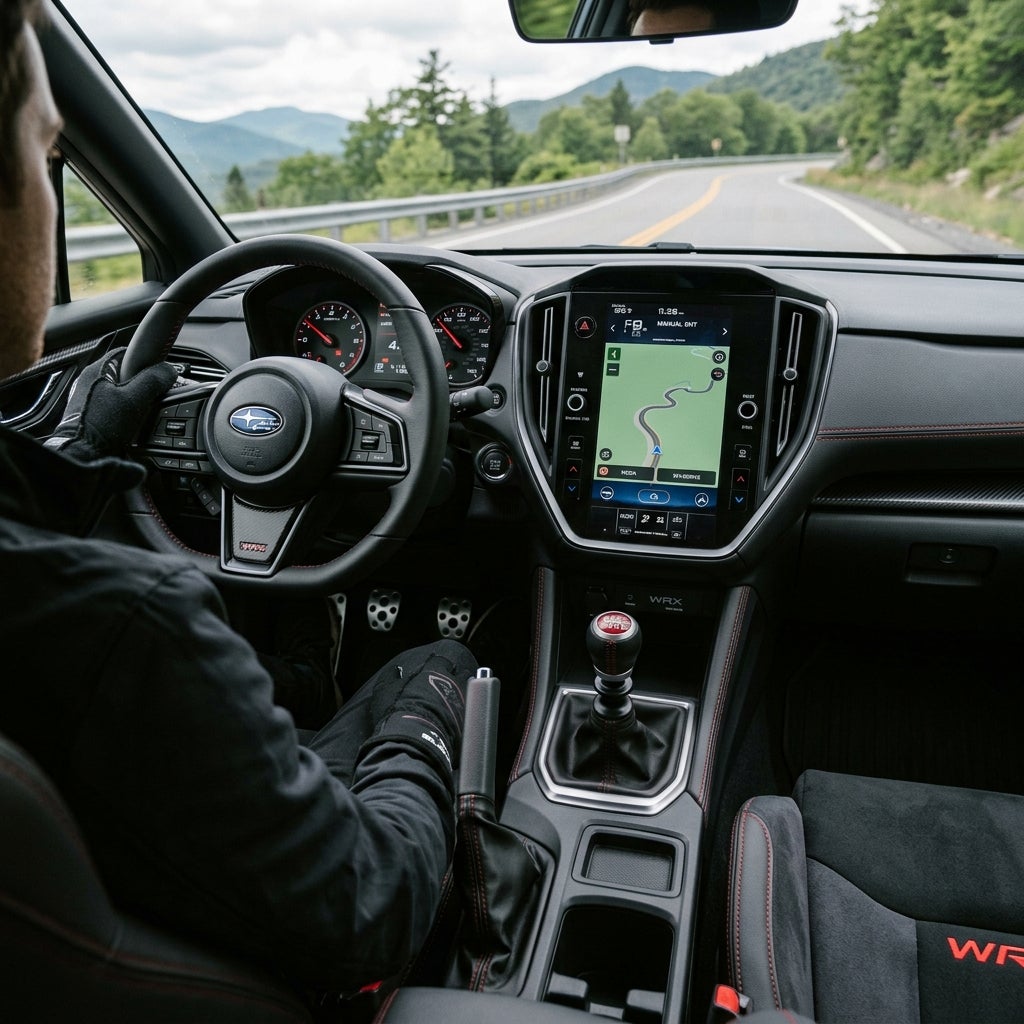
Two Subaru sport models, two very different personalities. The BRZ is a lightweight rear-wheel-drive coupe built around carving corners. The WRX is an all-wheel-drive turbo sedan built to haul people and hold the road in all kinds of weather. Both are fun. Which one fits your Jacksonville life depends on how you actually drive. What's the core difference between the Subaru BRZ and WRX? The BRZ is a two-door, rear-wheel-drive coupe with a naturally aspirated 2.4-liter engine and four small seats. The WRX is a four-door, all-wheel-drive sedan with a turbocharged 2.4-liter engine and full-size back seats. The BRZ is about balance and lightness; the WRX is about grip and everyday practicality. Which Subaru is better for everyday driving in Jacksonville? For daily use, the WRX wins. Its four doors, usable back seat, and larger trunk make school runs, road trips, and grocery hauls easy. All-wheel drive also helps during Jacksonville's sudden summer downpours. The BRZ is a joy on a clear weekend, but its tight rear seats and two doors make it a less flexible daily driver. Choose the WRX if: you need back-seat room, all-weather grip, or one car that does everything. Choose the BRZ if: you want the purest handling feel and mostly carry one or two people. Both deliver: a manual transmission option, Subaru's engineering, and genuine driving enjoyment. How do the BRZ and WRX compare on the numbers? Here's a side-by-side of the key specs so you can scan the trade-offs quickly. Figures reflect the 2025 model-year BRZ Premium and 2025 WRX base trim as configured with the manual transmission. Feature 2025 Subaru BRZ (Premium) 2025 Subaru WRX (base) Doors / seats 2 doors / 4 seats 4 doors / 5 seats Drivetrain Rear-wheel drive Symmetrical all-wheel drive Engine 2.4L naturally aspirated 2.4L turbocharged Horsepower 228 hp 271 hp Best fit Weekend canyon/track feel All-around daily driver According to EPA estimates for the 2025 model year, the BRZ with the manual transmission is rated around 25 mpg combined, while the WRX manual comes in near 22 mpg combined. The turbo and all-wheel-drive hardware of the WRX cost a little at the pump in exchange for grip and power. Does all-wheel drive matter for Florida weather? It matters more than snow-free drivers expect. Jacksonville doesn't get ice, but it gets heavy rain, standing water, and flooded intersections during summer storm season. The WRX's all-wheel drive puts power down more confidently on wet pavement. The BRZ handles rain fine with careful driving, but its rear-wheel drive rewards a lighter throttle foot when roads are slick. Which one holds its value and costs less to own? Both hold value well because enthusiast Subaru models stay in demand. The BRZ's simpler naturally aspirated engine generally means lower routine maintenance stress, while the WRX's turbocharger asks for diligent oil changes and quality fuel. Insurance can run higher on both than on an average sedan, so get a quote before you fall in love with either. Budget for premium fuel on the WRX; the turbo prefers it. Stick to Subaru's recommended service intervals to protect resale value. Factor insurance into your monthly number, not just the payment. Still torn? The honest answer is to drive both back to back. Come see us at Hanania Subaru of Orange Park in Jacksonville, take each one on the same loop, and let the seats, the shifter, and the ride tell you which one is yours. We'll talk you through trims and real numbers without the runaround.
Choosing the Perfect 2026 Subaru Ascent Cabin: 7-Passenger vs. 8-Passenger Configurations for Active Families
When a growing family walks into our showroom, the discussion almost always centers on finding the right balance between passenger capacity, daily convenience, and cargo flexibility. The 2026 Subaru Ascent serves as the ultimate family hauler in the Subaru lineup, but choosing between the seven-passenger layout with second-row captain's chairs and the eight-passenger setup with a second-row bench is a major decision. To help clarify this choice, we sat down with Kyle Nelson, Sales Consultant at Hanania Subaru, to break down the real-world utility of both configurations and help local families make the right choice for their lifestyles. Q: Kyle, what are the primary differences between the seven-passenger and eight-passenger layouts on the 2026 Subaru Ascent? A: When I am helping families navigate this decision, the very first thing I point out is how the second row completely dictates the daily flow of your vehicle. The eight-passenger configuration features a flat-folding 60/40 split-bench seat in the second row, which maximizes your total passenger capacity and is perfect for larger families or carpooling duties. On the other hand, the seven-passenger configuration replaces that bench with two comfortable captain's chairs, creating a highly convenient center aisle that allows kids to easily walk straight through to the third row without needing to tilt or slide the second-row seats. This layout decision also influences which trims are available to you. For example, if you explore our new Ascent inventory, you will find that the luxurious Touring and the bold Onyx Edition Touring are offered exclusively as seven-passenger models, while the Premium and Limited trims give you the flexibility to choose either the seven-passenger or eight-passenger setup depending on your family's needs. For those who want to see these layouts in person, dropping by our showroom at 6400 Blanding Blvd is the best way to test out both seating styles. If you have any quick questions about trim availability before driving over, you can always give our sales team a call at (904) 906-1235 to get immediate answers. While we love showing off our family haulers, sports car enthusiasts can also check out our new Subaru performance inventory to experience a completely different kind of Symmetrical All-Wheel Drive excitement. Q: How easy is it to install child safety seats on the second-row bench versus the captain's chairs? A: The physical design of the second-row seats plays a massive role in how smoothly you can secure child safety seats. The second-row captain's chairs provide incredibly straightforward access to the lower anchors and tethers for children, commonly known as the LATCH system. Because each captain's chair is a standalone seat with open space on either side, you do not have to squeeze your hands between heavy seat cushions or struggle with overlapping seatbelt buckles, making the installation process remarkably fast and stress-free. However, the eight-passenger bench seat offers its own unique advantages for growing families. The bench provides a wide, flat surface that can accommodate multiple car seat configurations, and it allows you to position a child seat in the center position, which is often preferred by parents for maximum peace of mind. If you are currently driving an older vehicle and find yourself constantly wrestling with car seats during school drop-offs, it might be time to upgrade. We invite you to browse our entire used vehicle inventory to find high-quality three-row options that make family life much easier. Q: Can families actually fit three car seats across the second-row bench of the Ascent? A: Yes, you can absolutely fit three car seats across the second-row bench of the Ascent, but it does require some planning regarding the specific car seat models you choose. The second-row 60/40 split-bench seat is highly accommodating, but using bulky, wide convertible seats can make a three-across installation tight. To make this work seamlessly, I always recommend that parents look into slim-profile or narrow car seats specifically designed for three-across placement. When you utilize the bench seat this way, you preserve the entire third row for older children or extra cargo, which is incredibly useful for weekend getaways. If you are thinking about upgrading your current vehicle to a more spacious family SUV, we make the transition incredibly simple. You can easily value your trade-in online to see what your current vehicle is worth, which can then be applied directly toward your new Ascent purchase. Q: What is the third-row legroom like on the 2026 Ascent, and how does it compare to the Toyota Grand Highlander? A: Third-row comfort is a major talking point for families who plan to use all three rows on a regular basis. The 2026 Subaru Ascent provides 31.7 inches of legroom in the third row, which is highly competitive and offers plenty of space for children, teenagers, and even adults on shorter trips around town. To put that into perspective, the Toyota Grand Highlander offers 33.5 inches of third-row legroom, which is a bit more space on paper, but the Ascent counters this with standard Symmetrical All-Wheel Drive and 8.7 inches of ground clearance, giving you superior capability when navigating sandy coastal parking lots or wet roads during heavy summer rainstorms. "Many families find that the open center aisle of the seven-passenger Ascent makes the third row feel much more spacious and inviting because passengers can stretch their legs out into the middle walkway." For families living in affluent coastal areas like Ponte Vedra Beach, where weekend trips to the beach, golf outings, and outdoor recreation are a way of life, having a capable and comfortable third row is essential for hauling both kids and gear. To ensure your family vehicle always performs at its best for these coastal adventures, you can easily schedule a service appointment online with our factory-trained technicians. Q: Are there overhead climate vents in the back to keep kids comfortable during hot Florida summers? A: This is a crucial detail that many shoppers overlook until they are already on a test drive on a hot afternoon. Yes, the 2026 Subaru Ascent features standard roof-mounted, tri-zone climate control vents for both the second and third rows. Rather than placing the vents down low on the back of the center console, Subaru engineered them into the ceiling, allowing cool air to cascade downward directly over your passengers for rapid cabin cooling. This advanced ventilation system is an absolute lifesaver for families in growing suburban communities like Yulee, where daily commutes into the city and weekend outdoor sports can leave everyone craving immediate relief from the heat. If you are looking for strong value, you can also explore our certified pre-owned Subaru inventory, which features thoroughly inspected, late-model vehicles that offer these same family-friendly comfort features at an exceptional price point. Q: How flat do the rear seats fold down when families need to haul large cargo instead of passengers? A: When you need to transition from carrying passengers to hauling bulky items, the Ascent shines. Both the second-row seats and the third-row seats fold almost completely flat to create an even, continuous loading floor. This design eliminates the awkward slopes and gaps that you find in some competing SUVs, making it incredibly easy to slide in large boxes, camping gear, or sports equipment without snagging the upholstery. With all rear seats folded down, the Ascent opens up a massive cargo cavern. This flexibility is perfect for suburban homeowners who find themselves visiting local home improvement stores or packing up gear for a family camping trip. The mechanism to fold the seats is also incredibly lightweight and can be operated easily with one hand, which is exactly the kind of thoughtful engineering Subaru is known for. Q: Is the popular Onyx Edition available with an eight-passenger configuration? A: No, the Onyx Edition and the premium Onyx Edition Touring are exclusively available in the seven-passenger configuration featuring the second-row captain's chairs. This design choice aligns perfectly with the sporty, active-lifestyle character of these specific trims. The Onyx Edition stands out with its striking black-finish exterior accents, 20-inch black-finish alloy wheels, and water-repellent StarTex upholstery, making it a favorite for families who love outdoor adventures but still want a modern, high-tech interior. By pairing the durable, easy-to-clean cabin materials of the Onyx Edition with the effortless third-row access of the seven-passenger captain's chairs, Subaru created an SUV that is uniquely suited for active families. It is ready to handle muddy shoes, spilled drinks, and wet swim gear without breaking a sweat. Q: What is the factory warranty coverage on a new Ascent, and what is the best way to start a purchase? A: Peace of mind is standard with every new Subaru. The 2026 Ascent comes backed by a comprehensive 3-year/36,000-mile basic warranty and a robust 5-year/60,000-mile powertrain warranty, which includes 3 years of roadside assistance for added security on the road. Furthermore, exclusively at Hanania Subaru of Orange Park, all of our customers receive a complimentary Vehicle Lifetime Warranty and 2 years of maintenance with every new vehicle purchase, ensuring your family is fully covered for the long haul. If you are ready to experience the comfort and capability of the Ascent firsthand, we invite you to browse our new Subaru inventory to find the perfect trim for your family. To save time at the dealership, you can apply for financing online to get pre-approved from the comfort of your home. If you want to compare models, we also carry a fantastic selection of other family favorites, so feel free to check out our new Outback inventory, our highly versatile new Forester inventory, or the compact and adventurous new Crosstrek inventory. When you are ready for a test drive, you can get easy directions to our Blanding Blvd showroom or call our friendly team at (904) 906-1235 to schedule a personalized appointment today. Pricing Pricing by trim Feature Limited Limited Bronze Edition Onyx Edition-Touring Premium Touring Base MSRP (excluding taxes, title, license, dealer fees, and optional equipment; pricing subject to change) $47,885 $48,995 $51,995 $40,795 $51,165 Destination charge (may vary; confirm current pricing with dealer) $1,450 $1,450 $1,450 $1,450 $1,450 Engine & Performance Powertrain specs by trim Feature Limited Limited Bronze Edition Onyx Edition-Touring Premium Touring Engine 2.4L 2.4L 2.4L 2.4L 2.4L Horsepower 260 hp 260 hp 260 hp 260 hp 260 hp Torque 277 lb-ft 277 lb-ft 277 lb-ft 277 lb-ft 277 lb-ft Transmission Lineartronic CVT Lineartronic CVT Lineartronic CVT Lineartronic CVT Lineartronic CVT Drivetrain All-wheel drive All-wheel drive All-wheel drive All-wheel drive All-wheel drive Keep Your Vehicle Running Strong Keep your vehicle performing at its best with our service team: Genuine Subaru Parts Subaru Service Center © 2026 Hanania Subaru. All rights reserved.
Subaru Outback vs Toyota RAV4: A Jacksonville Buyer's Comparison
If you're shopping crossovers in Jacksonville, the Subaru Outback and the Toyota RAV4 probably both landed on your short list. They're aimed at the same buyer, but they don't drive, pack, or price the same. Here's a straight comparison built around how people actually use these vehicles here on the First Coast. How do the Subaru Outback and Toyota RAV4 compare for Jacksonville driving? The Outback is a longer, wagon-style vehicle with a lower, planted feel and standard all-wheel drive. The RAV4 is a taller, more upright compact SUV that's easy to park downtown. Both handle I-295 traffic well, but the Outback rides calmer on longer hauls toward Gainesville or Savannah. Body style: Outback is a raised wagon; RAV4 is a compact SUV. All-wheel drive: Standard on every Subaru Outback; optional on many RAV4 trims. Cargo: The Outback's long roofline swallows longer gear; the RAV4's boxier shape is handy for tall boxes. Parking: The RAV4's shorter length is a little easier in tight Riverside spots. Which one handles Florida weather and flooding better? For summer downpours and the occasional flooded intersection, ground clearance and all-wheel traction matter. According to Subaru, the 2026 Outback offers 8.7 inches of ground clearance, a touch more than most RAV4 configurations. That extra height and standard symmetrical all-wheel drive give the Outback a small edge on standing water and soft surfaces. That said, both vehicles are built for sudden Jacksonville storms. The RAV4's AWD trims put down solid traction, and its higher seating position gives good sightlines in heavy rain. If your routine includes beach access roads at Huguenot or unpaved boat ramps, the Outback's clearance is the safer bet. For pavement-only commuting, either handles our weather fine. Feature Subaru Outback Toyota RAV4 Ground clearance 8.7 in (per Subaru) ~8.1–8.6 in by trim All-wheel drive Standard Optional on most trims Body style Raised wagon Compact SUV Best for Long trips, light off-pavement City parking, tall cargo What do the Outback and RAV4 cost to own around Jacksonville? Sticker price between comparable trims lands close, so day-to-day costs matter more. Fuel economy is competitive on both, and Duval County insurance rates are similar for the two. The bigger swing comes from options and how you finance. We'd rather walk you through the real monthly picture than quote a naked number. For example, a 2026 Subaru Outback Premium trim and a comparably equipped 2026 Toyota RAV4 XLE trim usually price within a modest range of each other before incentives. Standard all-wheel drive on the Outback means you're not paying extra for a feature that's genuinely useful in Florida rain, which can shift the value math in the Subaru's favor. Which should you buy for your Jacksonville commute? Pick the Outback if you want more ground clearance, standard all-wheel drive, and a smoother highway ride for trips to St. Augustine or the mountains. Pick the RAV4 if you prioritize a shorter footprint for tight parking and a taller, upright driving position. Both are dependable daily drivers here. The honest answer is that your body-style preference usually decides it. Sit in both, load your gear, and drive them on the same stretch of road. If you're leaning Subaru, our team at Hanania Subaru of Orange Park can set up a back-to-back test drive and lay out the full ownership numbers with no surprises at the counter.
Subaru Forester vs Honda CR-V for Jacksonville Drivers
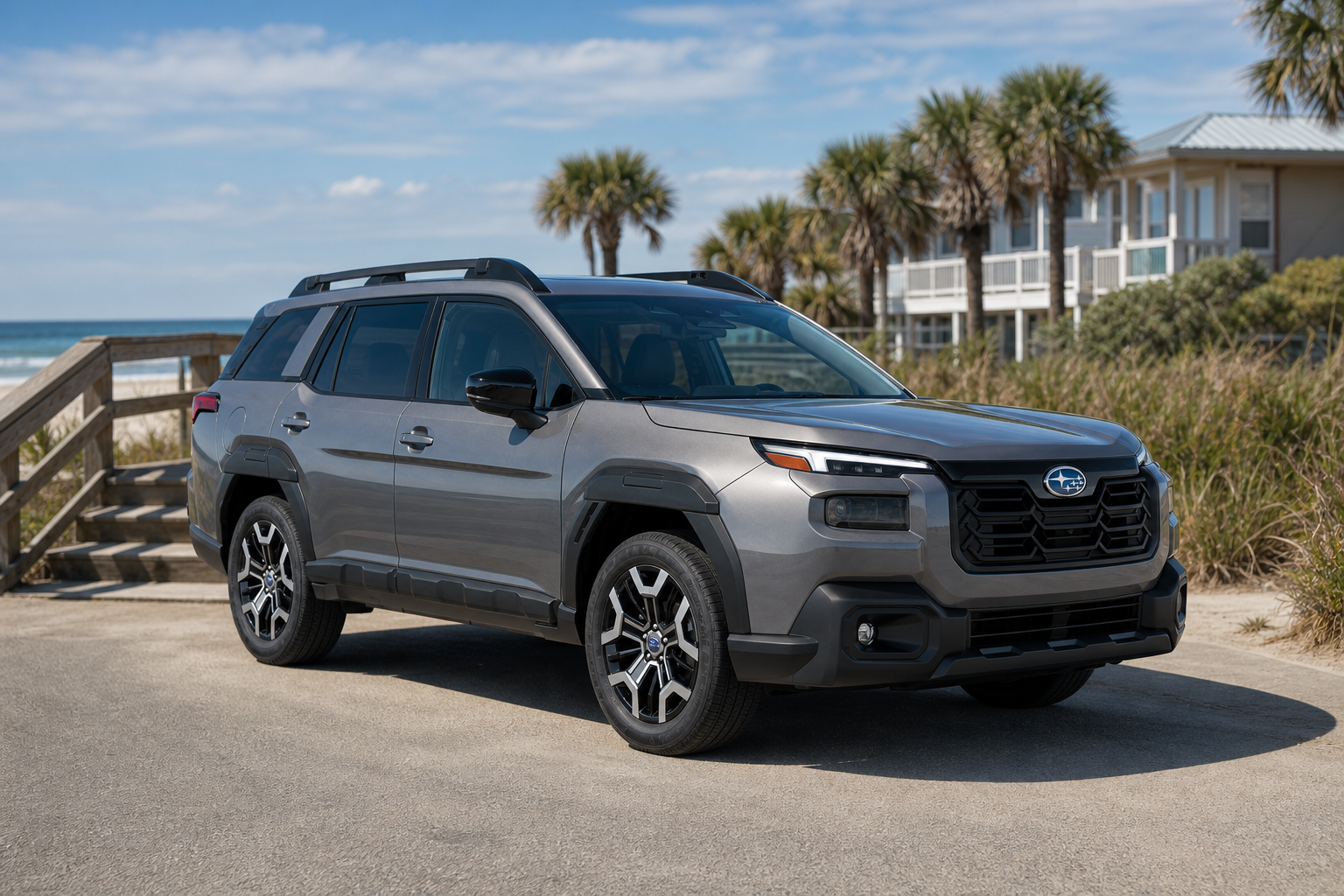
Two of the most cross-shopped compact SUVs in Northeast Florida sit right next to each other on shopping lists all over Jacksonville: the Subaru Forester and the Honda CR-V. Both are reliable, practical, and family-friendly. But they take different approaches, and those differences matter depending on whether you're commuting on I-295, hauling gear to Amelia Island, or splitting a downpour on Beach Boulevard. We'll lay out where each one leads, what to weigh, and how to decide without the sales pressure. What is the biggest difference between the Forester and the CR-V? The clearest split is drivetrain. Every 2026 Subaru Forester comes with standard symmetrical all-wheel drive on all trims. The 2026 Honda CR-V is front-wheel drive standard, with all-wheel drive offered as an option. For Jacksonville's sudden storms and occasional wet-road traction issues, that standard setup is a real distinction. Which SUV handles Jacksonville weather and roads better? For our climate, the Forester's standard all-wheel drive gives it a slight edge in heavy rain and on slick on-ramps, since power reaches all four wheels without you selecting anything. The CR-V drives well and rides comfortably too, but its base trims are front-wheel drive, so match the trim to your traction needs. Jacksonville gets roughly 52 inches of rain a year, well above the national average of about 38 inches, according to National Weather Service climate data. That's a lot of wet pavement between Mandarin and the Beaches, so traction confidence is worth thinking about here more than in drier metros. Standard AWD: Forester (all trims) vs CR-V (optional) Ground clearance: Forester sits a bit higher, useful for flooded intersections Visibility: Forester's upright glass area is generous; CR-V's is also strong Ride comfort: CR-V leans slightly quieter and more cushioned on the highway How do cargo space and interior room compare? Both are genuinely spacious compact SUVs, and families rarely feel cramped in either. The Honda CR-V generally offers a touch more maximum cargo volume behind the front seats, while the Subaru Forester counters with wide door openings, an airy cabin, and easy rear-seat access for car seats and coolers alike. Feature 2026 Subaru Forester 2026 Honda CR-V Standard drivetrain All-wheel drive Front-wheel drive Rear-seat access Very wide door openings Wide, family-friendly Max cargo volume Generous Slightly larger Hybrid option Available Available Driver-assist suite EyeSight standard Honda Sensing standard Which one is the smarter long-term buy in Jacksonville? It comes down to priorities. If you want standard all-wheel drive, higher ground clearance, and a cabin built around outdoor use, the Forester fits. If maximum cargo room and a slightly plusher highway ride top your list, the CR-V makes sense. Both hold value well, so test-drive both before deciding. Ownership cost is close between the two, and both brands have earned strong reliability reputations. We'd rather you drive each back-to-back on local roads than take our word for it. Bring your car seats, your golf clubs, or whatever you actually haul, and see which one loads easier for your life. If you'd like to compare a specific 2026 Forester trim like the Premium or Wilderness against a comparable CR-V, we're happy to walk through pricing, features, and financing openly at Hanania Subaru of Orange Park. Every price we quote comes with the model year and trim spelled out, so there are no surprises at the counter.
2026 Subaru Solterra Range and Charging in Jacksonville: What to Expect
If you're eyeing an electric Subaru for daily driving around Duval County, the two questions that matter most are simple: how far will it go, and where do you plug it in? We'd rather walk you through the real numbers than hand you a glossy brochure. Here's what the 2026 Subaru Solterra actually does on Jacksonville roads, how charging fits into a normal week, and how our humidity and heat play into the math. How far can the 2026 Subaru Solterra go on a full charge? The 2026 Subaru Solterra targets roughly 227 to 288 miles of range on a full charge depending on trim and wheel size, per Subaru's published EPA estimates. Front-drive-focused setups land higher; larger-wheel all-wheel-drive trims land a bit lower. For most Jacksonville commutes, that covers several days between charges. To put that in local terms, a round trip from Orange Park to downtown Jacksonville and back runs well under 30 miles. The drive out to Amelia Island and back is roughly 70 miles. Even a day at the beach in Jacksonville Beach leaves plenty of buffer. Range anxiety tends to fade fast once you see how little a normal day actually uses. Orange Park to Downtown Jacksonville: about 15 miles each way Orange Park to Jacksonville Beach: about 30 miles each way Orange Park to Amelia Island: about 35 miles each way Orange Park to Gainesville: about 75 miles each way How long does it take to charge a 2026 Subaru Solterra? On a DC fast charger, the 2026 Subaru Solterra can go from roughly 10% to 80% in about 35 minutes under good conditions, according to Subaru. On a Level 2 home charger, a full charge takes around 9 to 10 hours overnight. A standard 120-volt wall outlet is far slower and best treated as a trickle top-up. For most owners, home charging on a 240-volt Level 2 unit covers everything. You plug in when you park at night, and you wake up full. Fast charging is the tool for road trips, not daily life. Here's how the three options compare in plain terms. Charging type Typical power What it's good for 120V household outlet (Level 1) ~1.4 kW Emergency or very light top-up 240V home charger (Level 2) ~7-11 kW Overnight daily charging DC fast charger (Level 3) up to ~100+ kW Road trips, quick 10-80% stops Where can you charge a Subaru Solterra around Jacksonville? You can charge across the Jacksonville metro at public stations near the St. Johns Town Center, along I-95 and I-10 corridors, downtown parking garages, and shopping centers in Orange Park and Mandarin. Home charging remains the backbone for most owners, with public DC fast chargers covering longer trips north to Georgia or south toward Gainesville and Orlando. A few practical tips for our area: many grocery and retail lots now offer Level 2 charging while you shop, which quietly tops you off during errands. For longer hauls, plan a fast-charging stop before you head out of town rather than scrambling at 15%. Apps that map station status help you avoid a broken or occupied plug, which is the real hassle, not distance. Does Jacksonville heat and humidity affect Solterra range? Yes, but less than cold would. Running air conditioning hard in summer pulls energy that would otherwise go to miles, so you may see modest range reductions on the hottest days. The good news for Jacksonville drivers is that heat costs an EV far less range than the deep cold that hurts batteries up north. A couple of habits soften the impact. Precondition the cabin while the vehicle is still plugged in, so the air conditioning draws from the wall instead of the battery. Park in shade when you can. And keep your daily charge target reasonable rather than always charging to 100%, which is easier on the battery over the long haul during our warm months. Is the 2026 Subaru Solterra a good fit for Jacksonville drivers? For most local drivers, yes. Our commutes are short, our winters are mild, and home charging handles the vast majority of miles without a second thought. The standard all-wheel drive and Subaru's ground clearance suit our occasional heavy rain and the odd unpaved beach access road better than many electric crossovers. Where it takes a little planning is the long road trip north or south, where you'll want to map fast chargers ahead. If your household does frequent multi-hundred-mile drives with no time to stop, that's worth a candid conversation before you buy. For everyday Jacksonville life, the fit is strong. Come see one at Hanania Subaru of Orange Park and we'll answer whatever the brochure won't.
2026 Subaru Crosstrek Hybrid: MPG and Features Explained
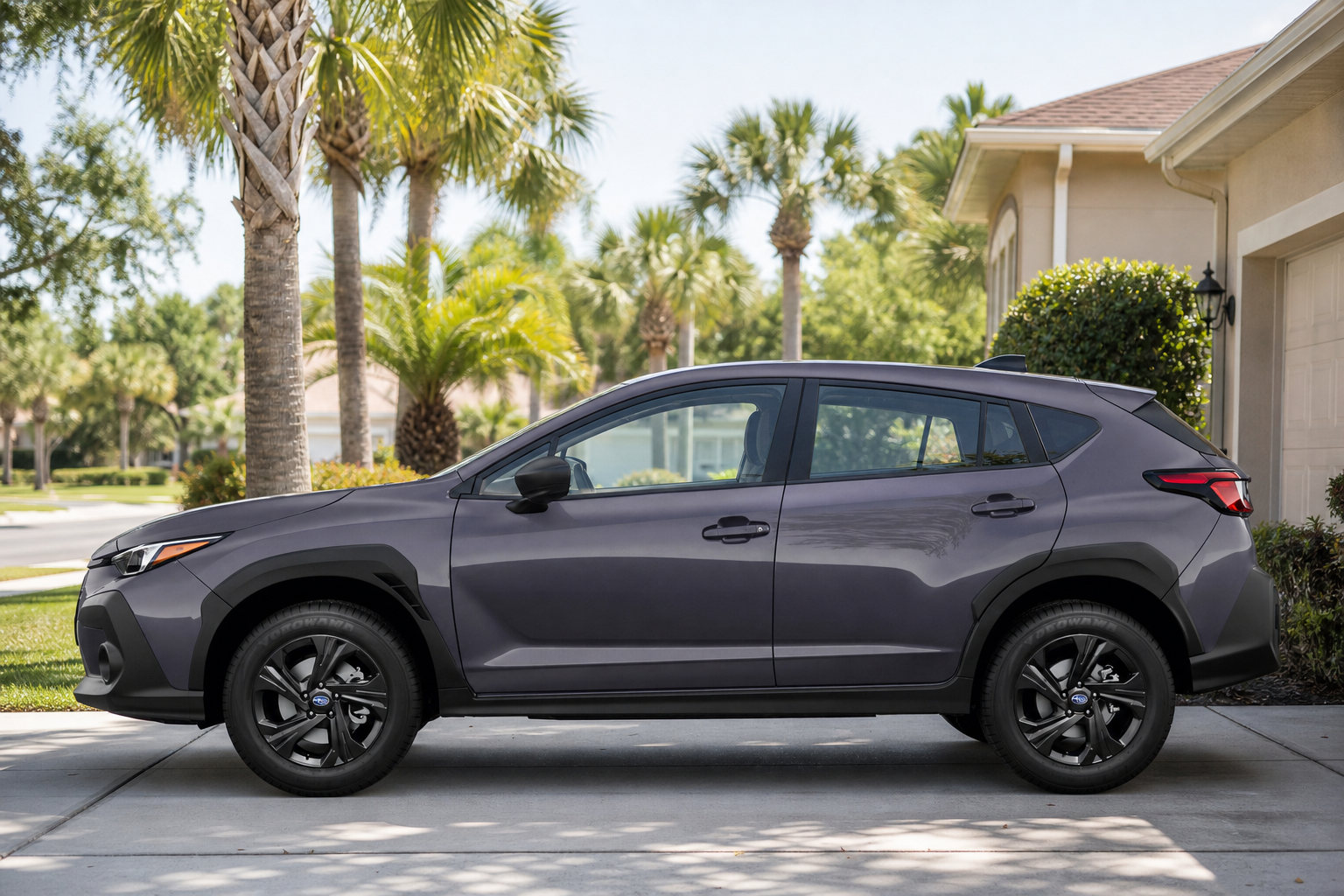
The 2026 Subaru Crosstrek Hybrid pairs the compact SUV shoppers already know with a new hybrid powertrain aimed at squeezing more miles out of every gallon. If you drive the Buckman Bridge every day or take I-10 west on weekends, the fuel math matters. Here's what the numbers look like and what you actually get. What is the 2026 Subaru Crosstrek Hybrid MPG? The 2026 Subaru Crosstrek Hybrid is rated at up to 35 mpg combined, according to preliminary EPA estimates Subaru has shared. That's a meaningful jump over the standard gas Crosstrek, which lands closer to 29 mpg combined. Your real-world result depends on stop-and-go city driving versus steady highway cruising. City: roughly 36 mpg estimated Highway: roughly 34 mpg estimated Combined: up to 35 mpg estimated For a Jacksonville commuter covering about 12,000 miles a year, the gap between 29 and 35 mpg can trim a couple hundred dollars off annual fuel spending, depending on gas prices at your local pump. What features come on the 2026 Crosstrek Hybrid? The 2026 Crosstrek Hybrid keeps standard Symmetrical All-Wheel Drive and adds the hybrid system on top of Subaru's familiar safety and tech package. You get the EyeSight driver assist suite, a large center touchscreen, wireless smartphone connectivity, and the raised ground clearance Crosstrek owners rely on for rough roads and beach access. Feature What it does Symmetrical All-Wheel Drive Standard grip for wet Florida roads and summer downpours EyeSight Driver Assist Adaptive cruise, lane centering, pre-collision braking Hybrid powertrain Electric assist for better city fuel economy Ground clearance Raised stance for unpaved trails and boat ramps Touchscreen infotainment Wireless Apple CarPlay and Android Auto support Is the Crosstrek Hybrid worth it in Jacksonville? For drivers logging heavy city miles around Orange Park, downtown, and the Southside, the hybrid's better city economy pays back over time. If you mostly cruise the highway, the standard gas Crosstrek closes the gap. The all-wheel drive and clearance stay the same, so choose based on how and where you drive. Our team is happy to walk you through 2026 Crosstrek Hybrid trim levels and pricing in person, since specific figures depend on the trim you choose and current incentives. We'd rather show you the out-the-door numbers on the model and trim you want than quote a vague figure that doesn't fit your situation. How does the hybrid affect maintenance? The 2026 Crosstrek Hybrid follows the same core maintenance schedule as the gas model for oil changes, tire rotations, and fluid checks. The hybrid battery is covered under Subaru's hybrid component warranty, and the regenerative braking system can extend brake pad life since the motor handles some of the slowing. Bring it to our Orange Park service department for scheduled visits, and our technicians will handle both the conventional items and the hybrid-specific inspections. Regular care keeps the fuel-economy benefit where it should be.
Best Subaru for Long Road Trips: A Jacksonville Owner's Guide
Florida is built for road trips. From the beaches at Amelia Island to the Blue Ridge Parkway a day's drive north, folks in Jacksonville put real miles on their vehicles. If you're shopping for a Subaru that can eat up I-95 and I-10 without wearing you out, here's a plain look at which models earn their keep on a long haul. Which Subaru is best for long road trips? For most Jacksonville drivers, the 2026 Subaru Outback is the sweet spot for long trips. It pairs a comfortable ride, roughly 500-plus highway miles per tank, and generous cargo room with standard all-wheel drive. If you need three rows, the Ascent is the better call. For tighter budgets, the Forester still travels well. The Outback rides like a wagon but sits a little higher, so you get car-like handling with SUV visibility. On a five-hour drive to the Panhandle, that combination keeps you fresh instead of fighting the road. How do the Outback, Ascent, and Forester compare for a road trip? They serve different travelers. The 2026 Outback wins on efficiency and cargo for two to four people. The 2026 Ascent seats up to eight and hauls family gear for a week at the coast. The 2026 Forester splits the difference with a smaller footprint that's easy to park downtown but still comfortable for two. Model (2026) Seating Best for Standout trait Outback 5 Couples, small families Long fuel range, low load floor Ascent 7–8 Big families, group trips Third row and towing capacity Forester 5 Solo drivers, weekend duos Great outward visibility, easy parking All three come with symmetrical all-wheel drive and the EyeSight driver-assist suite, which includes adaptive cruise control and lane centering. That adaptive cruise is the feature you'll appreciate most on flat, monotonous stretches like I-10 heading west. What features actually matter most for highway comfort? Focus on the things you'll feel every hour: adaptive cruise control to ease your right foot, supportive seats to save your back, strong fuel range to cut fill-up stops, and quiet cabin insulation. Cargo flexibility matters too, so gear doesn't pile up on passengers during a multi-day trip. Adaptive cruise control: reduces fatigue on long, steady highway runs. Fuel range: fewer stops means more ground covered before dark. Seat support: heated seats and lumbar adjustment pay off after hour three. Cargo room: a flat load floor beats cramming bags around passengers. All-wheel drive: steady footing when a summer downpour hits I-95. Traffic deaths tend to spike around holiday travel; the National Safety Council estimated 407 traffic fatalities over the 2024 Fourth of July holiday period, per the NSC. Driver-assist features and a rested, alert driver both help you avoid becoming a statistic on a busy travel weekend. How should I prep my Subaru before a long drive from Jacksonville? Give yourself about a week's lead time. Check tire pressure and tread, top off fluids, test your battery, and confirm your oil is within its service interval. Florida heat is hard on batteries and tires, so a quick inspection before you leave beats a roadside wait in August. Set tire pressure to the door-jamb spec when tires are cold. Verify oil life and coolant level, especially in summer heat. Have the battery tested if it's over three years old. Check wiper blades before afternoon thunderstorm season. Pack a basic kit: water, phone charger, and a small first-aid bag. Our service team at Hanania Subaru of Orange Park can knock out a pre-trip inspection in a single visit. We'd rather catch a soft battery in the shop than have you catch it in a rest-stop parking lot near the state line. Is all-wheel drive worth it for flat Florida highways? Yes, more for weather than terrain. Florida is flat, but sudden heavy rain is common, and standing water on the interstate can cause hydroplaning. Standard all-wheel drive on every Subaru helps keep power distributed for steadier grip in those conditions, which is reassuring when a storm rolls over I-95 at highway speed. It also pays off the moment you leave the state. If your trip heads toward the North Georgia mountains or a rainy stretch of the Carolinas, that same system earns its keep on wet, winding roads. Want to sit in an Outback, Ascent, and Forester back to back before your next trip? Stop by Hanania Subaru of Orange Park and we'll help you match the right one to how you actually travel.
2026 Subaru Outback Features: What's New for Jacksonville Drivers
The 2026 Subaru Outback keeps the things Florida drivers rely on and sharpens the details that matter on daily commutes and weekend trips to the coast. Here's a straight look at what the wagon-crossover offers this model year, so you can decide whether it fits how you actually drive around Jacksonville. What are the standout 2026 Subaru Outback features? The 2026 Outback comes with standard Symmetrical All-Wheel Drive, the EyeSight Driver Assist safety suite, a large vertical touchscreen on most trims, and generous ground clearance for rough roads and beach access points. Higher trims add turbocharged power, heated seats, and upgraded audio for longer drives. Standard all-wheel drive on every trim, useful during summer downpours on I-295 EyeSight with adaptive cruise control and lane-keep assist 8.7 inches of ground clearance for uneven surfaces and flooded intersections 11.6-inch vertical touchscreen on most trims with Apple CarPlay and Android Auto Available turbocharged engine on Wilderness and XT-style trims for stronger passing power How much cargo and passenger space does it have? The 2026 Outback seats five and offers roughly 32.6 cubic feet of cargo behind the rear seats, expanding to about 75.6 cubic feet with them folded, per Subaru's published specifications. That's enough for stroller-and-groceries weeks and big enough for camping gear, coolers, and beach chairs on Amelia Island runs. The roof rails on most trims are rated to carry crossbars for kayaks and paddleboards, which matters if your weekends involve the St. Johns River. Rear-seat legroom stays comfortable for adults, so carpool duty and road trips down I-95 don't feel cramped. Which 2026 Outback trim is right for me? Pick based on how you drive. If you stick to city and highway miles, a base or Premium trim covers you. If you tow, haul, or want more passing power, step up to a turbocharged trim. If you head off pavement often, the Wilderness trim adds clearance and rugged touches built for it. Trim style Best for Key feature Base / Premium Daily commuting Standard AWD and EyeSight Limited / Touring Comfort and longer trips Leather-trimmed seats, upgraded audio Turbocharged (XT-style) Towing and passing power Turbo engine, higher tow rating Wilderness Off-pavement adventures Extra ground clearance, all-terrain tires We'd rather help you match a trim to your real driving than push the priciest one. Stop by Hanania Subaru of Orange Park in Jacksonville and we'll walk you through each 2026 Outback trim in person, no rush.
Best Subaru for Camping: Which One Fits Your Trip?
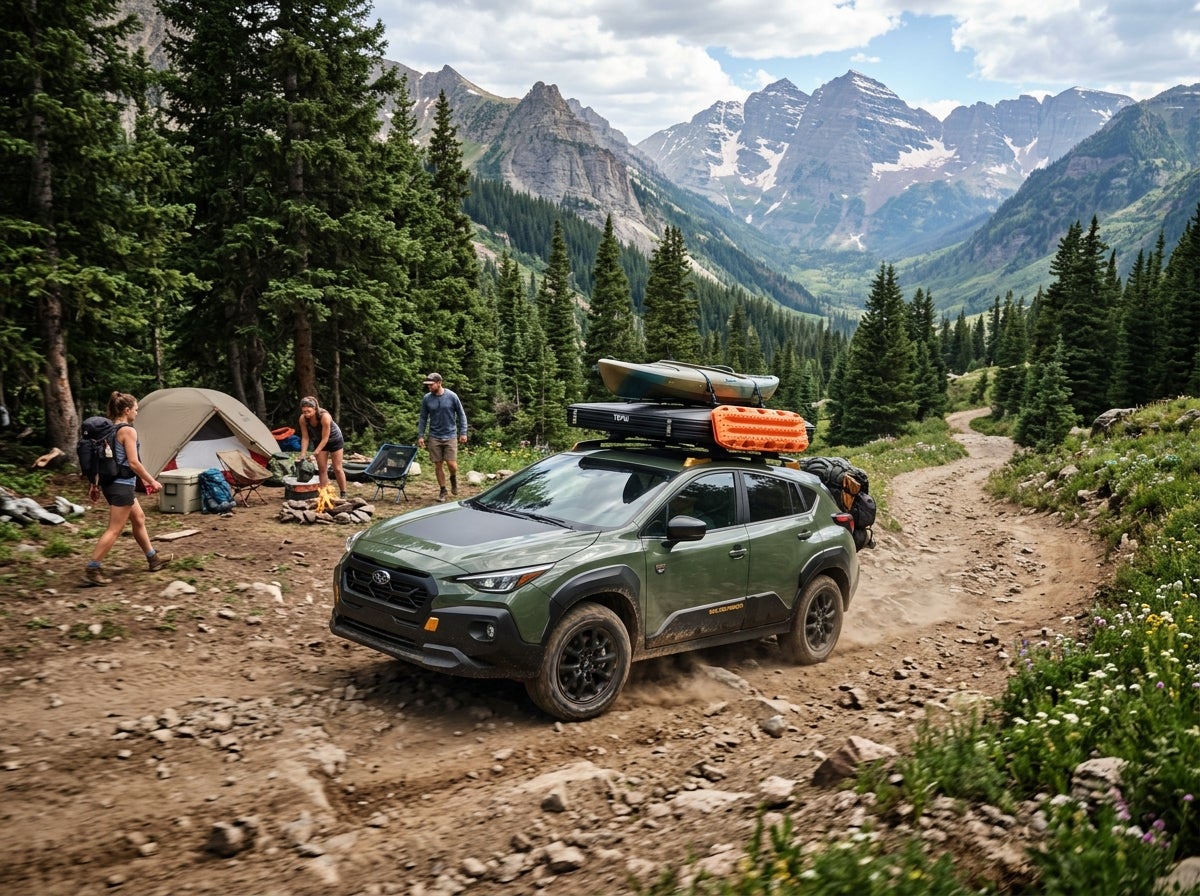
Around Jacksonville, camping means a lot of things: a weekend at Little Talbot Island, a drive out to the Ocala National Forest, or a longer haul up toward the Appalachians when summer heat gets old. The right Subaru depends on how many people you pack, how much gear you haul, and whether you plan to sleep inside. Here's a plain look at how the lineup stacks up. Which Subaru is the best for camping? For most Jacksonville campers, the 2026 Subaru Outback is the best all-around pick. It has the most usable cargo space of the car-based models, standard all-wheel drive, and enough length in the rear that two adults can stretch out with the seats folded. If you want more trail clearance, the Outback Wilderness trim adds it. That said, "best" changes with your setup. A solo camper or a couple who car-camps light will find the Crosstrek plenty. Families of five or six who camp with a trailer or a rooftop tent lean toward the Ascent. The point is matching the vehicle to your trips, not chasing the biggest number on the spec sheet. How much cargo and sleeping space do you actually get? With the rear seats folded, the 2026 Outback opens up to roughly 75.6 cubic feet of cargo room, according to Subaru's published specs. The Forester gives you about 69.1 cubic feet, and the three-row Ascent tops the group when you fold everything flat. The Crosstrek is the smallest of the four but still swallows a weekend's worth of gear. 2026 Subaru Outback: Longest flat load floor of the car-based models; two adults can sleep inside with a pad. Standard all-wheel drive. 2026 Subaru Forester: Taller roof means more headroom for gear stacked upright; slightly shorter for lying flat. 2026 Subaru Crosstrek: Best for one sleeper or a couple who tent outside; easiest to park and the most fuel-efficient of the group. 2026 Subaru Ascent: Three rows for the family; fold the back two rows for the most raw cargo volume, plus higher tow capacity for a small camper. Do you need a Wilderness trim for Florida camping? For most Florida camping, no. The regular Outback, Forester, and Crosstrek all come with standard symmetrical all-wheel drive and enough ground clearance for sandy access roads and gravel campground loops. A Wilderness trim earns its keep if you regularly hit rough forest roads, deep ruts, or plan mountain trips where the extra clearance and all-terrain tires matter. The Wilderness versions of the Outback, Forester, and Crosstrek add higher ground clearance, more aggressive tires, and revised gearing for low-speed control. If your weekends are mostly paved-then-packed-sand runs to the coast, you can save money and skip it. If your idea of camping involves washboard trails, it's worth the look. Model (2026) Best for Cargo (seats folded) Standard AWD Subaru Crosstrek Solo or couple, light gear ~54.7 cu ft Yes Subaru Forester Tall gear, headroom ~69.1 cu ft Yes Subaru Outback Sleeping inside, all-around ~75.6 cu ft Yes Subaru Ascent Families, towing a small camper Most of the group Yes What features should you look for before a camping trip? Look for standard all-wheel drive, a flat-folding rear seat, and roof rails you can actually mount a cargo box or tent to. All four models covered here include roof rails and all-wheel drive on most trims. Also check the tow rating if a trailer or teardrop camper is in your future, and confirm the 12-volt outlets and available power sources for charging gear. Before any trip, a quick service check goes a long way: tire condition and pressure, coolant for the Florida heat, brakes if you're heading to hilly terrain, and wiper blades before summer storm season. Our service team can knock out a pre-trip inspection so you're not troubleshooting at a trailhead two hours from a shop. Ready to compare in person? Come drive them back to back. At Hanania Subaru of Orange Park in Jacksonville, you can fold the seats down, lay out your gear, and see which layout fits your camping style before you commit. Bring your cooler and your tent if you want to test the fit; we'd rather you know for sure than guess.
Selecting the Best Subaru Models for the Back-to-School Season
Preparing for a new academic year involves managing a busy calendar of morning drop-offs, afternoon carpools, and weekend sports tournaments. Having a vehicle that seamlessly transitions from highway commuting to hauling heavy gear makes a noticeable difference in daily stress levels. The Subaru lineup is engineered to handle these diverse demands, offering standard capability, flexible interior layouts, and legendary durability. Selecting the right model depends on your family's specific passenger needs, cargo requirements, and driving habits to ensure the best fit for your lifestyle. For larger families or active carpool organizers, the 2026 Subaru Ascent serves as an exceptional three-row choice. This spacious SUV offers comfortable seating for up to eight passengers and a maximum towing capacity of 5,000 lbs when properly equipped, making it easy to pull a utility trailer or weekend camper. If a compact footprint is preferred for navigating tight school parking lots, the 2026 Subaru Forester delivers outstanding visibility, a comfortable cabin with about 30 cubic feet of rear cargo space, and a highly efficient powertrain. Drivers seeking a blend of wagon-like utility and SUV capability will appreciate the 2026 Subaru Outback, which features about 35 cubic feet of rear cargo space and integrated roof rails with tie-down points for carrying bicycles or extra luggage. Parents shopping for a reliable vehicle for high school or college students often look for a balance of safety, efficiency, and maneuverability. The compact and sporty nature of the lineup ensures younger drivers remain secure while enjoying their time behind the wheel. To find the ideal fit for your household's upcoming school year, we invite you to browse our new-vehicle inventory online. If your student is looking for an engaging, performance-oriented drive for their daily commute to campus, you can also explore our new Subaru performance models. Our team is dedicated to helping you find a vehicle that matches your lifestyle and budget. To experience these models firsthand, you can visit us at 6400 Blanding Blvd, Jacksonville, FL 32244. For personalized assistance, directions, or to confirm vehicle availability, feel free to get directions to our showroom or give our sales department a quick call today. Table of Contents Standard Safety Features and EyeSight Technology of the 2025 Subaru Forester Comparing Starting Prices and Trims for the 2025 Subaru Outback Fuel Economy Comparison: How the Subaru Forester Stacks Up Against the Toyota RAV4 Subaru Boxer Engine Durability and Long-Term Oil Consumption Facts Recommended Maintenance Schedules and Oil Change Intervals for Your 2025 Subaru Common Questions About Buying and Servicing a Subaru at Hanania Subaru Streamline Your Purchase with Online Financing and Trade-In Tools Standard Safety Features and EyeSight Technology of the 2025 Subaru Forester Safety is a primary concern for parents sending their children off to school, whether they are riding in the back seat of a family carpool or driving themselves to college. The 2025 Subaru Forester addresses this priority by coming standard with the latest generation of EyeSight Driver Assist Technology. This camera-based system acts as an extra set of eyes on the road, monitoring traffic movement, optimizing cruise control, and warning you when you sway outside your lane. By integrating these advanced driver-assist features directly into the base engineering, Subaru ensures that every driver benefits from top-tier protection without needing to purchase expensive add-on packages. The standard safety suite on the 2025 Subaru Forester includes several key active safety systems designed to prevent collisions and mitigate driving fatigue: Pre-Collision Braking: Can apply full braking force in emergency situations to help reduce frontal impact damage or prevent a collision entirely. Advanced Adaptive Cruise Control with Lane Centering: Helps maintain a safe distance from the vehicle ahead while providing steering assistance to keep you centered in your lane. Lane Departure and Sway Warning: Alerts the driver with visual and audible cues if the vehicle begins to drift without a turn signal activated. Emergency Stop Assist: A new safety innovation that can bring the vehicle to a complete stop, activate the hazard lights, and unlock the doors if the driver becomes unresponsive while using adaptive cruise control. While the base model provides exceptional protection, moving up to trims like the Premium, Sport, or Limited adds Blind-Spot Detection with Lane Change Assist and Rear Cross-Traffic Alert as standard or available features. These systems are highly beneficial when backing out of busy school parking spaces or changing lanes on crowded local highways. To find a model equipped with the exact safety technologies your family requires, you can search our current new Forester inventory. For those seeking excellent value, we also maintain a diverse selection of high-quality pre-owned vehicles; feel free to explore our pre-owned vehicle inventory to find the perfect fit. Comparing Starting Prices and Trims for the 2025 Subaru Outback The 2025 Subaru Outback remains a favorite for families who demand a versatile, comfortable crossover that is equally prepared for daily school runs and rugged weekend getaways. For the 2025 model year, the Outback continues to offer a diverse lineup of trims tailored to different budgets and driving preferences. The entry-level Premium trim starts at an MSRP of $34,995, delivering an impressive array of standard features including heated front seats, dual-zone automatic climate control, and a large center touchscreen. For buyers seeking upgraded comfort and premium materials, the Limited trim starts at $41,715 and introduces leather-trimmed upholstery, a premium audio system, and keyless access. If you require more passing power for highway commuting, the Limited XT starts at $44,365 and swaps the standard engine for a potent turbocharged powerplant. To help you visualize the lineup, here is how the starting manufacturer's suggested retail prices compare across the primary trims: Premium: Starting MSRP of $34,995 (plus a $1,450 destination charge) Limited: Starting MSRP of $41,715 (plus a $1,450 destination charge) Limited XT: Starting MSRP of $44,365 (plus a $1,450 destination charge) Each of these trims utilizes standard all-wheel drive to ensure maximum traction during sudden afternoon downpours. The spacious interior provides up to about 35 cubic feet of cargo room behind the second row, which easily expands to accommodate larger projects or sports gear when the rear seats are folded flat. If you are ready to compare these trims in person, you can browse our new Outback inventory to find the right color and configuration for your driveway. For existing owners looking to customize their current crossover with all-weather floor liners or cargo organizers, our parts department is fully stocked with genuine Subaru parts and accessories to keep your vehicle protected throughout the school year. Pricing Pricing by trim Feature Limited Limited Bronze Edition Onyx Edition-Touring Premium Touring Base MSRP $47,885 $48,995 $51,995 $40,795 $51,165 Destination charge $1,450 $1,450 $1,450 $1,450 $1,450 Fuel Economy Comparison: How the Subaru Forester Stacks Up Against the Toyota RAV4 When choosing a back-to-school vehicle, fuel economy is often a deciding factor for families trying to manage monthly household expenses. The compact SUV segment is highly competitive, with the Subaru Forester and the Toyota RAV4 standing out as two of the most popular choices for daily commuters. While both vehicles offer efficient four-cylinder engines, they approach traction and efficiency in slightly different ways. Understanding these differences can help you determine which crossover delivers the best overall value for your driving habits. The standard gas-powered Toyota RAV4 achieves up to an EPA-estimated 35 mpg on the highway in its front-wheel-drive configuration. However, adding all-wheel drive to the RAV4 reduces its efficiency. In comparison, the 2026 Subaru Forester comes standard with Subaru Symmetrical All-Wheel Drive across all trim levels and delivers up to 26 city / 33 hwy mpg. This means you get continuous, active power sent to all four wheels for superior wet-weather traction without sacrificing competitive fuel efficiency. For drivers who want to maximize their fuel savings, the 2026 Forester Hybrid trims offer an advanced hybrid-electric powertrain that extends your driving range up to an impressive 581 miles on a single tank. For suburban families who prioritize standard all-weather capability, a spacious cabin with about 111 cubic feet of passenger volume, and standard safety tech, the Forester offers a more complete package than front-wheel-drive competitors. If you love the idea of standard all-wheel drive but prefer an even more compact and agile footprint for daily driving, the Crosstrek is another highly efficient option worth considering. We encourage you to explore our new Crosstrek inventory to compare its efficiency and dimensions against the Forester. Fuel Economy Fuel economy and range by trim Feature Limited Limited Bronze Edition Onyx Edition-Touring Premium Touring MPG 19 city / 25 hwy / 21 combined 19 city / 25 hwy / 21 combined 19 city / 25 hwy / 21 combined 19 city / 26 hwy / 22 combined 19 city / 25 hwy / 21 combined Subaru Boxer Engine Durability and Long-Term Oil Consumption Facts A common question among long-term shoppers researching vehicle reliability is whether Subaru boxer engines experience high oil consumption over time. This inquiry typically stems from online discussions regarding specific engine designs from over a decade ago. It is helpful to understand the engineering history and the concrete updates Subaru has implemented to resolve these concerns in modern vehicles, ensuring your family's investment remains dependable for hundreds of thousands of miles. The unique horizontally opposed layout of the boxer engine offers distinct advantages, including a lower center of gravity for improved handling and enhanced safety during a frontal collision. In older models, early iterations of low-friction piston rings occasionally allowed small amounts of oil to enter the combustion chamber under specific driving conditions. Subaru addressed this directly by redesigning the piston rings and optimizing engine manufacturing tolerances. Modern boxer engines, such as the 2.5L engine found in the Forester and Outback, as well as the 2.4L turbocharged engine producing 260 hp and 277 lb-ft of torque in the Ascent, have proven to be exceptionally durable and do not suffer from abnormal oil consumption when properly maintained. To ensure your engine continues to run smoothly, regular maintenance is key. Our factory-trained technicians utilize specialized tools and diagnostic equipment designed specifically for the boxer engine layout. If you ever have questions about your vehicle's performance, fluid levels, or long-term health, our certified Subaru service center is always here to provide transparent advice and professional care. For families requiring maximum passenger space and robust turbocharged performance, you can also view our new Ascent inventory to see how this durable powertrain performs in a larger three-row configuration. Engine & Performance Powertrain specs by trim Feature Limited Limited Bronze Edition Onyx Edition-Touring Premium Touring Engine 2.4L 2.4L 2.4L 2.4L 2.4L Horsepower 260 hp 260 hp 260 hp 260 hp 260 hp Torque 277 lb-ft 277 lb-ft 277 lb-ft 277 lb-ft 277 lb-ft Transmission Lineartronic CVT Lineartronic CVT Lineartronic CVT Lineartronic CVT Lineartronic CVT Drivetrain All-wheel drive All-wheel drive All-wheel drive All-wheel drive All-wheel drive Recommended Maintenance Schedules and Oil Change Intervals for Your 2025 Subaru Keeping up with routine maintenance is the most effective way to protect your vehicle's resale value and ensure it remains safe for daily carpools. Modern Subaru vehicles utilize advanced synthetic motor oil, which provides superior lubrication and thermal protection, especially during hot summers with sustained high ambient temperatures. Following the manufacturer's recommended service intervals helps prevent premature engine wear and maintains your factory warranty protection. For the 2025 Subaru Forester, Outback, and other modern models, the standard maintenance schedule is straightforward and easy to follow: Every 6,000 miles or 6 months: Replace the engine oil and oil filter, rotate the tires to ensure even wear, and perform a basic multi-point inspection. Every 12,000 miles or 12 months: Replace the cabin air filter to keep the A/C system blowing clean air, and inspect the braking system. Every 30,000 miles or 30 months: Replace the engine air filter, replace the brake fluid, and inspect the engine cooling system and suspension components. Staying on top of these intervals is easy when you partner with a trusted team of experts. When it is time for your vehicle's next routine checkup, you can quickly schedule your service appointment online to choose a time that fits your busy family schedule. If you are currently driving an older vehicle and are looking to upgrade to a highly reliable, late-model vehicle with lower maintenance requirements, we invite you to browse our certified pre-owned Subaru inventory, where every vehicle undergoes a rigorous 152-point safety inspection before hitting our lot. Common Questions About Buying and Servicing a Subaru at Hanania Subaru Navigating the vehicle buying or servicing process can raise several questions, especially when you are trying to coordinate a purchase before the busy school year begins. Our team believes in complete transparency, providing clear answers to help you make informed decisions about financing, trade-ins, and long-term vehicle care. Q: What are the benefits of buying a new vehicle at Hanania Subaru? Every new vehicle purchase at our dealership may include select dealership offers and maintenance benefits, subject to current availability and terms. This exclusive benefit ensures you do not have to choose between long-term powertrain protection and initial maintenance savings, giving you complete peace of mind as your family embarks on daily school runs and weekend road trips. Q: Does the 2025 Subaru Forester come standard with all-wheel drive? Yes, all trim levels of the 2025 Subaru Forester come standard with Subaru Symmetrical All-Wheel Drive. This continuous, active system monitors road conditions and distributes power to the wheels with the best traction, providing superior stability on wet roads during heavy afternoon rain showers. Q: What is included in the Subaru Roadside Assistance program? Subaru vehicles are backed by a comprehensive roadside assistance program that provides 24/7 emergency support, including towing to the nearest authorized service center, flat tire changes, emergency fuel delivery, and jump-starts. You can reach the manufacturer-backed support line directly at Subaru Roadside Assistance: 800-261-2155 for professional coordination and warranty-protected service quality. Q: How long does the online finance pre-approval process take? Our online financing tool is designed to save you time at the dealership. By completing our secure application, you can receive a pre-approval decision in just a few minutes, allowing you to shop our inventory with a clear understanding of your buying power. When you are ready to take the next step, you can easily apply for financing online from the comfort of your home. Streamline Your Purchase with Online Financing and Trade-In Tools We understand that your time is valuable, especially when balancing back-to-school shopping, school registrations, and work commitments. That is why we have designed our digital shopping tools to make the vehicle purchasing process as efficient and stress-free as possible. You can complete the majority of the research, trade-in valuation, and financing steps online, allowing you to spend less time in the showroom and more time enjoying your new vehicle. Before visiting our physical location, you can utilize our online valuation tool to get an accurate estimate of what your current vehicle is worth. Simply input your vehicle's details to value your trade-in in seconds. This transparent value can then be applied directly toward the purchase of a new or pre-owned Subaru, helping to help reduce your overall purchase cost. Once you have estimated your trade-in value and explored our online inventory, our team is ready to help you finalize the details. You can visit our showroom at 6400 Blanding Blvd, Jacksonville, FL 32244 to take a test drive and experience our friendly, pressure-free environment. If you have any questions about current vehicle availability or want to speak with a finance specialist, please give us a quick call and we will be happy to assist you. © 2026 Hanania Subaru. All rights reserved.
Subaru WRX Gas Mileage: What Jacksonville Drivers Really Get
The Subaru WRX is built for grip and quick throttle response, not for topping fuel-economy charts. Still, plenty of Jacksonville drivers want honest numbers before they commit. Here's what the WRX actually returns, why it sits where it does, and how your driving habits move the needle around town and on the highway to St. Augustine. What is the Subaru WRX gas mileage rating? Per EPA estimates, the 2025 Subaru WRX with the six-speed manual returns about 19 mpg city, 26 mpg highway, and 22 mpg combined. Fitted with the Subaru Performance Transmission (automatic), it lands near 18 city, 25 highway, and 21 combined. Real-world Jacksonville numbers usually track close to those figures. 2025 WRX Transmission City Highway Combined 6-speed manual 19 mpg 26 mpg 22 mpg Subaru Performance Transmission (auto) 18 mpg 25 mpg 21 mpg These are EPA-rated estimates. Your own average depends on traffic, how hard you use the boost, and how much idling you do in summer heat with the air conditioning running. Why isn't the WRX gas mileage higher? The WRX runs a turbocharged 2.4-liter boxer engine paired with standard all-wheel drive. That combination adds power and traction but also weight and drivetrain drag, which pulls fuel economy below a typical front-wheel-drive commuter car. You're trading efficiency for performance and all-weather grip on purpose. A few factors that keep the numbers where they are: Turbocharged engine: Rewards a heavy foot, and it's tempting to use that power in a car this responsive. Standard all-wheel drive: Great for wet Florida roads, but it moves more hardware than a two-wheel-drive setup. Performance tuning: The WRX is geared and calibrated for acceleration, not for coasting economy. Premium fuel: Subaru recommends premium unleaded, which affects your cost per mile even when mpg stays steady. How can I improve my WRX fuel economy in Jacksonville? Smooth, steady driving does the most. Ease into the throttle instead of chasing boost, keep tires at the door-jamb pressure, and use cruise control on I-295 and I-95. Cutting hard acceleration and long idle time can meaningfully raise your combined average across a typical week of stop-and-go commuting. Simple habits that pay off: Check tire pressure monthly; underinflated tires waste fuel and wear faster in summer heat. Stay on top of oil changes and air filters so the turbo engine breathes and runs clean. Combine errands to avoid repeated cold starts in short trips. Remove roof racks or extra cargo weight you're not using. Use the recommended premium fuel to keep the engine mapping happy. According to the U.S. Department of Energy, aggressive driving—rapid acceleration and hard braking—can lower gas mileage by roughly 15% to 30% at highway speeds, so a lighter foot is the cheapest upgrade you can make. Does the WRX require premium gas? Yes. Subaru recommends premium unleaded fuel (91 octane or higher) for the WRX's turbocharged engine to deliver its rated power and protect long-term reliability. Running lower octane regularly can trigger the engine to pull timing, reducing performance and potentially efficiency. Budget for premium when you're comparing running costs against a non-turbo model. Is the WRX a good daily driver for a Jacksonville commute? For many drivers, yes. The WRX handles I-95 traffic, summer downpours, and weekend trips to the beach with confidence thanks to standard all-wheel drive. The trade-off is fuel economy in the low-20s mpg range and a preference for premium gas. If a longer commute is your priority, weigh those costs honestly before you buy. Want to see the current WRX in person and talk real ownership costs? Stop by Hanania Subaru of Orange Park in Jacksonville and our team will walk you through fuel expectations, trims, and a test drive on local roads.