Hanania Subaru of Orange Park

Blog / Buying Guides

Understanding the Subaru Trailseeker vs. Solterra: Your Complete Guide to Subaru’s Next-Gen Electric SUVs

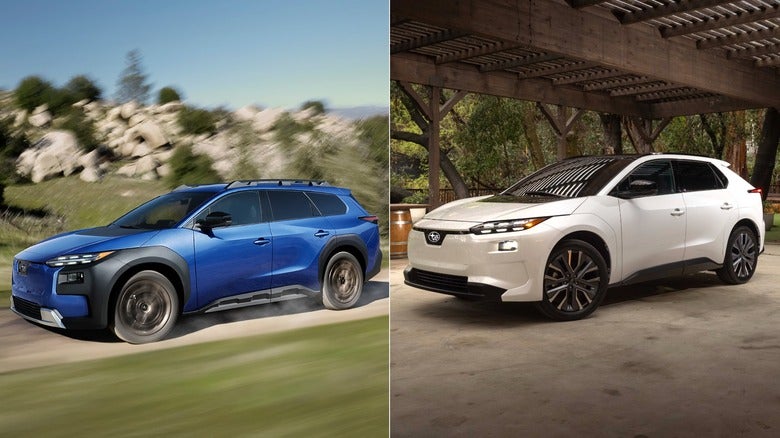
Subaru Trailseeker Vs. Solterra: What's The Difference?

If you’re exploring the future of electric SUVs and wondering how the new Subaru Trailseeker compares to the Subaru Solterra, you’ve come to the right place. Both vehicles represent Subaru’s commitment to safety, performance, and eco-friendly driving, but each brings unique features and capabilities to the table. At Hanania Subaru, located at 6400 Blanding Blvd, Jacksonville, FL 32244, we’re excited to help you explore these models, whether you’re coming from Atlantic Beach, Middleburg, or Jacksonville Beach. Call us today at (904) 906-1235 to chat with our experts or schedule a test drive.

Table of ContentsKey Differences Between Subaru Trailseeker and Solterra: Explore the major distinctions in power, size, towing capacity, and design between these two electric SUVs.What Will the Subaru Trailseeker Cost?: Detailed insights into pricing expectations for the Trailseeker’s trims and how it fits within the EV market.Installing a Trailer Hitch on the Solterra: Comprehensive look at trailer hitch options and towing capabilities for the Solterra EV.Understanding the Range of the 2026 Subaru Trailseeker: Technical details on battery capacity, estimated mileage, and charging features.Is the 2026 Solterra Any Good? A Closer Look: An expert review of the Solterra’s performance, design improvements, and user experience.What Is the Subaru Trailseeker Based On?: Background on the Trailseeker’s platform and its connection to the Solterra and Toyota’s EV technology.

Key Differences Between Subaru Trailseeker and Solterra

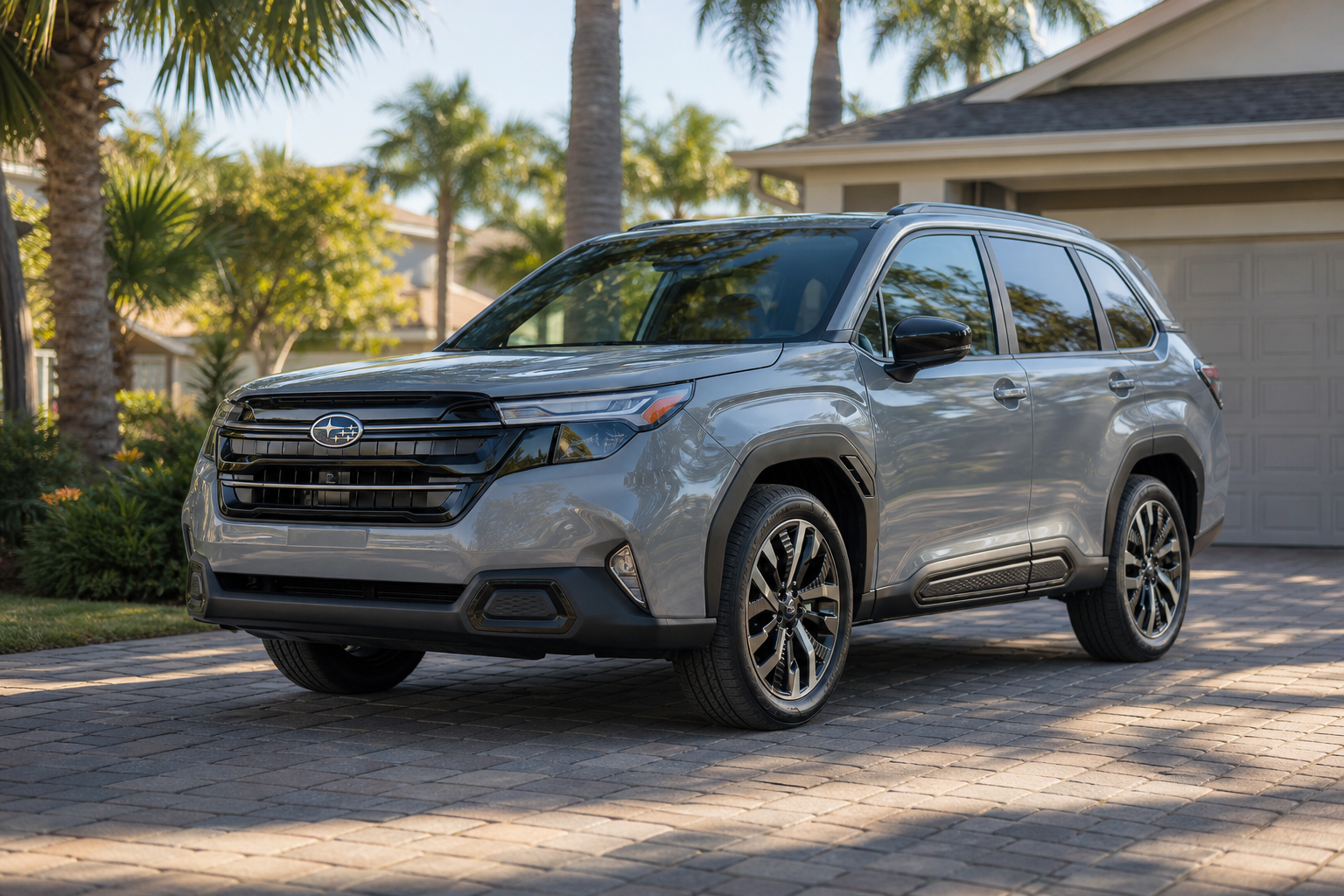
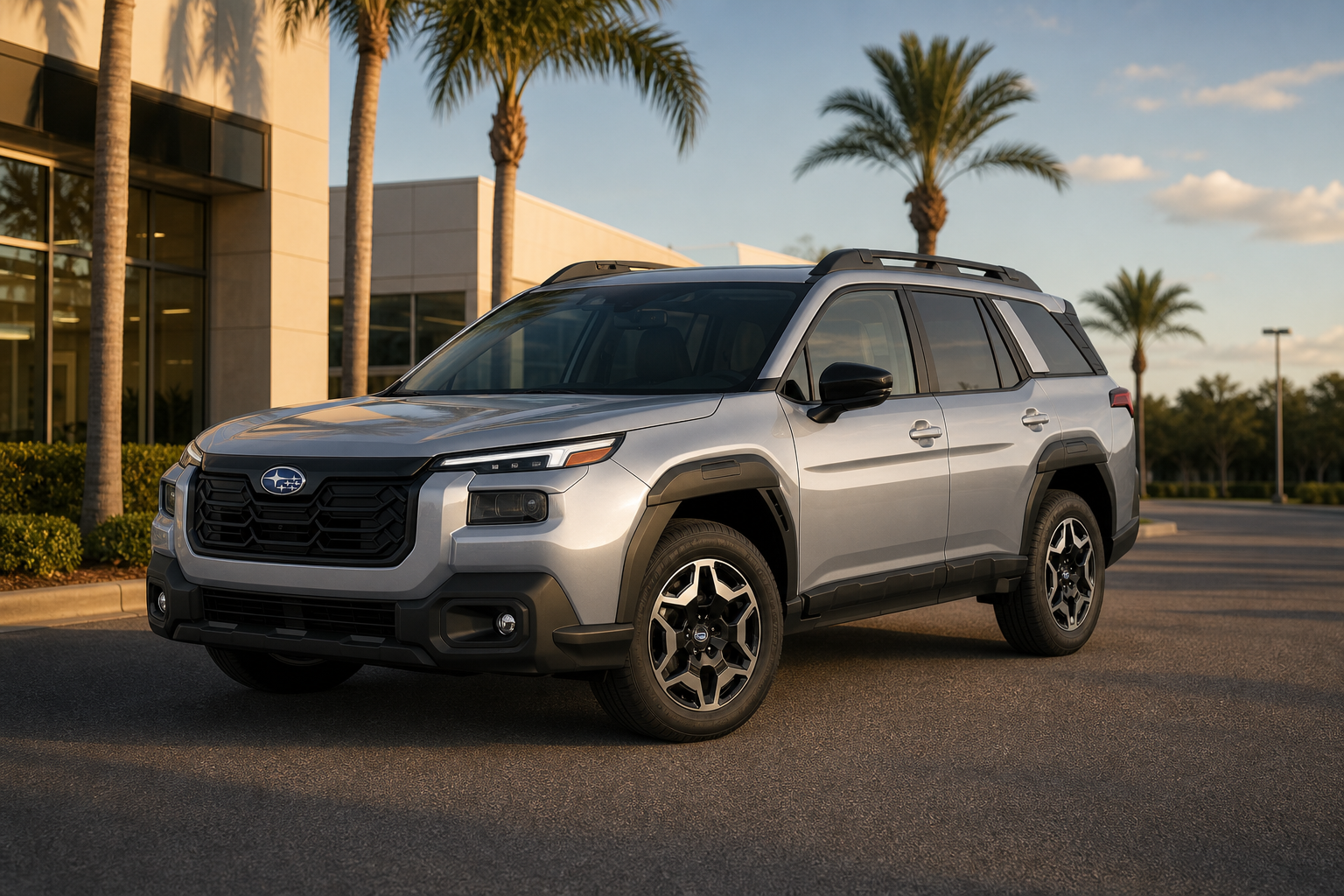
The Subaru Trailseeker and Solterra both showcase Subaru’s dedication to all-wheel-drive electric vehicles, but the Trailseeker is designed to push the boundaries further with enhanced power, size, and utility tailored for adventurous families in places like Orange Park and Ponte Vedra Beach.

Power and Performance:
The Solterra offers a dependable all-electric powertrain delivering up to 338 horsepower, suitable for typical daily driving and light off-road excursions. In contrast, the Trailseeker steps up the game with a robust dual-motor setup producing approximately 375 horsepower. This boost not only improves acceleration but also supports a towing capacity of up to 3,500 pounds, making it an excellent option for hauling trailers or boats along the scenic shores of Neptune Beach or St. Marys.

Size and Design:
The Trailseeker is larger—about six inches longer and nearly an inch taller than the Solterra—resulting in a more SUV-like profile reminiscent of Subaru’s classic Outback and Forester models. This increase in size translates to more cargo space and improved rear passenger comfort, ideal for family outings around Middleburg or Kingsland. Both vehicles feature Subaru’s signature symmetrical all-wheel drive for confident handling in Florida’s variable weather and terrain.

Interior and Technology:
While both models share a modern, tech-forward cabin with a 14-inch touchscreen infotainment system, the Trailseeker integrates additional creature comforts such as dual 15W wireless charging pads and available water-resistant StarTex upholstery, designed to withstand the active lifestyles of Jacksonville’s outdoor enthusiasts. The Trailseeker’s interior also benefits from refined design cues that elevate the driving experience.

What Will the Subaru Trailseeker Cost?

Understanding the pricing of the Subaru Trailseeker helps Jacksonville drivers make informed decisions when considering an upgrade to electric SUVs. The Trailseeker is expected to debut with a competitive starting price around $45,000, positioning it well within reach for families and professionals transitioning to electric vehicles.

Pricing Range:

  • The base Trailseeker model begins near $45,000, offering a well-equipped entry point for those prioritizing performance and utility.
  • Higher trims like the Premium, Limited, and Touring are anticipated to range between $52,000 and $55,000, with added luxury and technology features.
  • This pricing aligns closely with other midsize electric SUVs but stands out thanks to Subaru’s reputation for safety and reliability, especially valued in communities like Yulee and Atlantic Beach.

Value Propositions:
Purchasing a Trailseeker at Hanania Subaru includes benefits such as the exclusive Vehicle Lifetime Warranty and 2 years of complimentary maintenance, a unique offering in the Jacksonville area that ensures long-term peace of mind without added cost. For those considering trade-ins, our Get Trade Value tool provides a transparent evaluation of your current vehicle’s worth.

Installing a Trailer Hitch on the Solterra

For Solterra owners in Jacksonville, Ponte Vedra Beach, and surrounding areas, adding a trailer hitch expands the vehicle’s versatility, enabling you to tow gear or attach bike racks for weekend adventures.

Trailer Hitch Options:
The EcoHitch® Stainless Steel Trailer Hitch is specifically designed for the 2022-2025 Subaru Solterra EV, featuring a sleek, stealth design that preserves the vehicle’s aerodynamic profile. Manufactured with a unique stainless steel receiver, this hitch resists rust and corrosion—a significant advantage in Florida’s humid climate.

Weight and Towing Capacity:

  • The hitch supports a towing capacity of 3,500 pounds and a tongue weight rating of 350 pounds, sufficient for e-bike racks, cargo trays, or small trailers.
  • Installation is straightforward with a 100% bolt-on design requiring no drilling, meeting national SAE J684 towing safety standards.

Installation and Maintenance:
Hanania Subaru’s certified technicians can install this trailer hitch efficiently, ensuring your Solterra is ready for any outdoor activity. Schedule your appointment with our Subaru Service Center to get expert care and genuine parts from our Genuine Subaru Parts department.

Understanding the Range of the 2026 Subaru Trailseeker

Range anxiety is a common concern among electric vehicle buyers, especially in suburban and beachside communities such as Neptune Beach and St. Marys. The 2026 Subaru Trailseeker addresses this with an improved battery and charging system.

Battery Specifications:

  • Equipped with a 74.7 kWh lithium-ion battery, the Trailseeker offers an estimated driving range of over 260 miles on a full charge.
  • This range is competitive within the midsize electric SUV segment, balancing size and power with efficiency.

Charging Technology:

  • The Trailseeker adopts the North American Charging Standard (NACS) port, ensuring compatibility with Tesla Supercharger stations and a growing network of public chargers.
  • With a maximum DC fast charging rate of 150 kW, the Trailseeker can recharge from 10% to 80% in approximately 30 minutes.
  • An advanced battery preconditioning system helps maintain consistent charging speed across varying temperatures, ideal for Florida’s summer heat and winter humidity.

Is the 2026 Solterra Any Good? A Closer Look

Since its 2023 release, the Subaru Solterra has evolved with notable improvements that enhance its appeal for Jacksonville drivers seeking a reliable, eco-friendly SUV.

Performance and Handling:
The Solterra offers a smooth and quiet ride with an all-wheel-drive system that maintains Subaru’s hallmark traction capabilities. The Touring XT trim delivers up to 338 horsepower and can accelerate from zero to 60 mph in under five seconds, impressive for an electric SUV in this class.

Interior Comfort and Technology:

  • The cabin includes a 14-inch infotainment touchscreen with wireless Apple CarPlay and Android Auto, plus a power-operated liftgate for convenience.
  • Despite solid upgrades, some drivers note the wireless charging pad placement can cause phones to slide during sharp turns, a minor issue compared to the vehicle’s many benefits.

Range and Charging:
The Solterra offers up to 288 miles of range, slightly higher than the Trailseeker’s estimate, though the Trailseeker compensates with increased power and space. Fast charging capabilities up to 150 kW support efficient recharging for busy Jacksonville commuters.

What Is the Subaru Trailseeker Based On?

Understanding the Trailseeker’s engineering roots provides insight into its capabilities and Subaru’s strategic direction in electric vehicles.

Platform and Development:
The Trailseeker builds upon the foundation set by the Solterra, which itself shares a platform with the Toyota bZ4X, a collaboration between Subaru and Toyota. However, the Trailseeker is uniquely tailored with:

  • A more SUV-like body that is longer and taller, enhancing cargo capacity and passenger comfort.
  • An all-wheel-drive system developed in-house by Subaru engineers, distinct from the joint project used in the Solterra.
  • Advanced off-road features such as X-MODE with selectable traction controls for Snow/Dirt and Deep Snow/Mud conditions, plus hill descent control.

Design Philosophy:
The Trailseeker’s styling cues align more closely with Subaru’s flagship models like the Outback and Forester, making it a natural fit for families and outdoor enthusiasts in Jacksonville and nearby communities, who demand rugged capability paired with electric efficiency.


Whether you are ready to explore the cutting-edge 2026 Subaru Trailseeker or want to experience the refined 2026 Solterra, Hanania Subaru is your trusted partner. Browse our extensive New Subaru Inventory or consider a like-new option from our All Used Inventory. Don’t forget to take advantage of our exclusive Vehicle Lifetime Warranty and complimentary maintenance program available only at Hanania Subaru of Orange Park.

Ready to take the next step? Schedule your personalized test drive or service appointment online with our Schedule your service appointment page, and experience the safety, technology, and comfort Subaru is known for.

Drive confidently through Jacksonville’s dynamic seasons with Subaru’s advanced AWD and electric innovation—visit us today at 6400 Blanding Blvd, Jacksonville, FL 32244 or call (904) 906-1235 to connect with our knowledgeable team. Your next adventure awaits with Hanania Subaru.


© 2025 Hanania Subaru
Posted in:

Related Posts

Interior view of a driver steering a Subaru WRX with manual transmission on a winding mountain road. (Representative image for illustration purposes only. Actual vehicle may vary based on trim and configuration.)

Analyzing the Evolution of Three-Pedal Performance in the Modern Subaru Lineup

The automotive landscape has shifted dramatically over the last decade, with automatic gearboxes and continuously variable transmissions replacing traditional manual setups in almost every vehicle segment. For drivers who value the mechanical connection of a third pedal, it often feels like options are disappearing entirely. We recognize this shifting tide at Hanania Subaru, where we help performance enthusiasts find vehicles that match their driving style. Subaru has consolidated its manual transmission strategy to focus purely on dedicated sports cars. While the brand discontinued the manual option in the Impreza after the 2023 model year, leaving the modern Sport and RS trims equipped exclusively with the Lineartronic CVT, the dedication to three-pedal performance remains alive in the brand's engineering division. To support this enthusiast community, the newly formed Sports Vehicle Planning Office in Japan is actively researching ways to expand performance offerings. This specialized team is exploring heavy-duty manual gearboxes, such as the legendary TY85 design, which is capable of managing over 440 lb-ft of torque and supporting higher horsepower outputs than standard automatic options. Drivers who want to explore these performance developments can browse our new Subaru inventory online or view our new Subaru performance inventory to see the latest arrivals. For those who want to discuss upcoming performance options with our knowledgeable team, please give us a quick call or visit our physical showroom at 6400 Blanding Blvd to experience our lineup firsthand. Table of Contents The Remaining Three-Pedal Champions: Demystifying the Manual Options in the WRX and BRZ Deciding Between the Turbocharged WRX and the Agile BRZ for Your Daily Commute Comparing the Performance Dynamics of Subaru and Mazda Manual Gearboxes Protecting Your Investment: Gear Oil Maintenance, Powertrain Warranties, and Resale Value Quick Answers to Common Manual Subaru Questions Taking the Next Step Toward Your Three-Pedal Subaru Adventure The Remaining Three-Pedal Champions: Demystifying the Manual Options in the WRX and BRZ For driving enthusiasts who still want to operate a clutch pedal, the current lineup features two dedicated performance models. The first is the rear-wheel-drive BRZ, which provides a classic sports car layout. Every manual-equipped BRZ features a 2.4L Subaru BOXER engine that delivers 228 hp and 184 lb-ft of torque. This powertrain is standard on the Limited trim, which starts at $35,860, the track-focused tS trim at $38,360 with its STI-tuned suspension and Brembo high-performance braking system, and the exclusive Series Yellow special edition at $39,360. For a weekend cruise past the scenic golf courses and coastal dunes of Ponte Vedra Beach, the lightweight, rear-wheel-drive BRZ offers pure sports car dynamics. The second option is the turbocharged WRX, which pairs engaging performance with everyday utility. The WRX utilizes standard Symmetrical All-Wheel Drive and a 2.4-liter turbocharged BOXER engine generating 271 hp and 258 lb-ft of torque. A 6-speed manual transmission is standard on the Base, Premium, Limited, and tS trims, as well as the limited-production Series Yellow trim. The high-end GT trim is configured exclusively with the Subaru Performance Transmission for drivers who prefer rapid automatic shifting. If you are looking for a high-quality used model, you can explore our used car inventory, or if you require a larger family vehicle, you can browse our new Outback inventory to find the perfect fit for your household. Engine & Performance Powertrain specs by trim Feature Limited Series Yellow tS Engine 2.4L 2.4L 2.4L Horsepower 228 hp 228 hp 228 hp Torque 184 lb-ft 184 lb-ft 184 lb-ft Transmission 6-speed manual 6-speed manual 6-speed manual Drivetrain Rear-wheel drive Rear-wheel drive Rear-wheel drive ​ Deciding Between the Turbocharged WRX and the Agile BRZ for Your Daily Commute Selecting the ideal daily driver requires balancing raw performance with everyday comfort and cargo space. The WRX serves as a highly versatile four-door sedan, offering comfortable seating for five passengers and a trunk with about 13 cubic feet of cargo space. This practical layout makes it easy to load groceries or sports gear while maintaining a spirited drive. Commuters driving from Yulee down US Highway 17 appreciate the WRX's secure traction and turbocharged acceleration during heavy rainstorms. The manual WRX is rated at 19 mpg city and 26 mpg highway, making it a viable commuter that handles wet pavement with ease. In contrast, the BRZ is designed for drivers who prioritize lightweight agility and cornering precision. This two-door coupe features a low center of gravity, highly bolstered front seats, and about 6 cubic feet of trunk space, which can be expanded by folding down the rear seatback. The manual BRZ achieves an EPA-estimated 20 mpg city and 27 mpg highway, offering efficient performance for spirited weekend drives. While the BRZ delivers an incredibly engaging driving experience, its compact dimensions and rear-wheel-drive setup make it a more specialized choice compared to the all-weather capability of the WRX. Drivers looking to customize their performance vehicles can order genuine Subaru parts through our department, while those who need maximum passenger capacity can look at our new Ascent inventory to accommodate up to eight passengers. Fuel Economy Fuel economy and range by trim Feature Limited Series.Yellow tS MPG 20 city / 27 hwy / 22 combined 20 city / 27 hwy / 22 combined 20 city / 27 hwy / 22 combined ​ Comparing the Performance Dynamics of Subaru and Mazda Manual Gearboxes Comparing manual performance cars often leads enthusiasts to contrast the engineering philosophies of different Japanese brands. The BRZ competes directly with the Mazda MX-5 Miata, but it offers a distinct set of advantages. While the manual Miata starts at $31,665 and produces 181 hp from its 2.0-liter engine, the manual BRZ Limited starts at $35,860 and delivers 228 hp from its 2.4L Subaru BOXER engine. Additionally, the BRZ features a standard rear seat and a more stable wheelbase, providing a level of daily usability that the strict two-seat Miata layout cannot match. When comparing the WRX to Mazda's current manual offerings, the contrast is even more pronounced. Mazda restricts its manual gearbox to the front-wheel-drive Mazda3 hatchback, which starts at $38,225 in its premium manual trim. The WRX provides a standard 6-speed manual transmission paired with standard Symmetrical All-Wheel Drive and a 2.4-liter turbocharged BOXER engine that produces 271 hp. This easily surpasses the Mazda3's naturally aspirated 2.5-liter engine, which generates 191 hp and lacks the all-weather grip of standard all-wheel drive. Enthusiasts who want to secure their next performance car can apply for financing online to streamline the process, or they can browse our certified pre-owned Subaru inventory to find factory-backed manual models. ​ Protecting Your Investment: Gear Oil Maintenance, Powertrain Warranties, and Resale Value Proper maintenance is the foundation of long-term sports car reliability, especially in hot climates. Subaru recommends inspecting the manual transmission gear oil every 30,000 miles or 30 months, with a complete fluid replacement typically suggested between 30,000 and 60,000 miles depending on driving habits and environmental conditions. Keeping fresh gear oil in the manual transmission prevents premature wear on the syncros and gears, ensuring smooth shifts during high-temperature summer drives. When performance enthusiasts visit our finance desk to custom-order a manual sports car, they often ask if a deposit is required to secure the build from the factory. At Hanania Subaru, please contact us for current custom factory order and deposit details. Protecting your investment also involves understanding your warranty coverage. The five-year or 60,000-mile powertrain warranty covers the internal mechanical components of the manual transmission, including the gears, shafts, and bearings. However, traditional wear items like the clutch disc, pressure plate, and throwout bearing are covered under the three-year or 36,000-mile Subaru Limited Warranty. Because manual-equipped sports cars are increasingly rare, well-maintained models tend to hold their resale value exceptionally well. To prepare for your upgrade, you can evaluate your trade-in value online, and then schedule an appointment with our authorized Subaru service center to keep your current vehicle in top condition. If you decide that a utility-focused vehicle is a better fit for your lifestyle, you can also explore our new Forester inventory to find a spacious, all-road crossover. Pricing Pricing by trim Feature Limited Series.Yellow tS Base MSRP $35,860 $39,360 $38,360 Destination charge $1,195 $1,195 $1,195 ​ Quick Answers to Common Manual Subaru Questions Navigating the options and maintenance requirements of a performance vehicle often brings up specific questions for prospective buyers. If you are also considering other versatile options in our lineup, you can browse our new Crosstrek inventory to compare different utility setups. Q: Does the Subaru WRX still offer a manual transmission? Yes, the WRX remains highly committed to three-pedal driving. The 6-speed manual transmission comes standard on the Base, Premium, Limited, and tS trims, as well as the limited-run Series.Yellow edition. Only the GT trim is restricted to an automatic transmission. Q: How does Subaru's EyeSight driver assist technology work with manual transmissions? The advanced safety suite has been carefully engineered to integrate with manual gearboxes. The system utilizes standard features like automated emergency braking, lane-keeping assist, and adaptive cruise control while allowing the driver to depress the clutch pedal during safety interventions without stalling the engine. Q: What is the 0-60 mph time of the manual Subaru WRX? The manual WRX accelerates from 0 to 60 mph in approximately 5.6 seconds. This sprint showcase highlights the immediate power delivery of the turbocharged flat-four engine when paired with a precise manual gearbox. Q: Is Subaru planning any new manual models beyond the current lineup? While mainstream models have transitioned to CVT-only configurations, Subaru continues to support performance-oriented vehicles for driving enthusiasts in the future. Q: What is the price difference between a manual and automatic Subaru BRZ? The manual transmission serves as the standard configuration for the BRZ, representing the purest driving setup. Opting for the six-speed automatic transmission may increase the vehicle's MSRP, depending on the chosen trim level. ​ Taking the Next Step Toward Your Three-Pedal Subaru Adventure Finding the perfect sports car comes down to experiencing the mechanical connection firsthand on the road. At Hanania Subaru, we are dedicated to helping you find a vehicle that brings excitement back to your daily driving. Every new vehicle purchase from our dealership is supported by our team, and current warranty and maintenance details are available upon request. Additionally, every new vehicle is backed by the comprehensive three-year or 36,000-mile Subaru Limited Warranty, which includes access to 24-hour emergency assistance. If you ever experience a flat tire, dead battery, or require emergency towing, you can call Subaru Roadside Assistance: 1-800-261-2155 for manufacturer-backed support utilizing brand-specific expertise and genuine OEM parts. Our team is ready to assist you with every phase of your automotive journey, from initial research to long-term care. You can schedule a service appointment online to keep your current vehicle running smoothly, or you can contact our sales team at (904) 906-1235 to discuss our current performance options. When you are ready to take a test drive, visit our physical showroom at 6400 Blanding Blvd to explore our inventory and meet our dedicated team of automotive experts. © 2026 Hanania Subaru. All rights reserved.

Unbadged SUV parked on a sunlit coastal road near a Jacksonville beach access point on a summer day

Subaru Touring vs Limited Trim: What You Actually Get

When you're shopping a Subaru at the top of the lineup, the choice usually comes down to the Limited and the Touring. Both are loaded compared to the base trims, but the gap between them is smaller than a lot of shoppers expect. Here's an honest look at what actually changes when you step up, so you can decide whether the Touring is worth it for how you drive around Jacksonville. What is the difference between Subaru Touring and Limited trims? The Limited is the leather-and-tech sweet spot: heated seats, upgraded audio, and driver aids. The Touring sits above it with finishing touches like ventilated front seats, a Harman Kardon audio system on several models, unique wheels, and premium interior trim. Mechanically the two are nearly identical; the differences are comfort and cosmetics. Which Subaru trim gives you the most for your money? For most Jacksonville drivers, the Limited delivers the strongest value because it already includes leather-trimmed upholstery, heated front seats, and the full EyeSight suite. The Touring earns its price if you want ventilated seats for summer, a premium sound system, and the nicer cabin materials. If you commute long and love comfort, the step up pays off. Limited highlights: Leather-trimmed seating, heated front seats, power liftgate on SUVs, upgraded infotainment, and the full EyeSight driver-assist package. Touring adds: Ventilated front seats, Harman Kardon premium audio on many models, Nappa or premium leather accents, exclusive wheel finishes, and heated rear seats or steering wheel depending on the model. Ventilated seats deserve a mention here in Florida. On a July afternoon when the cabin bakes, cooled seats are one of those features you use every single drive, not once a year. Is the Subaru Touring worth it in Jacksonville's climate? If your daily reality includes long hot commutes on I-295 or beach trips down to Ponte Vedra, the Touring's ventilated seats and premium climate touches genuinely earn their keep. If you rarely sit in traffic and don't care about the audio upgrade, the Limited covers almost everything you'd use day to day. It really comes down to comfort priorities. Feature Limited Touring Leather-trimmed seats Yes Yes (premium accents) Heated front seats Yes Yes Ventilated front seats No Yes Premium audio (Harman Kardon) Optional/No Standard on many models EyeSight driver assist Yes Yes Exclusive wheels/trim No Yes Availability of specific features varies by model line and by model year, so confirm the exact 2026 equipment on the trim you're considering before you decide. How much more does the Touring cost over the Limited? The jump is typically a few thousand dollars depending on the model line and model year. Exact pricing on a 2026 Subaru Outback Touring versus a 2026 Subaru Outback Limited, for example, changes with equipment and current incentives, so we'd rather show you real numbers on the specific vehicle than quote a figure that won't match the window sticker. According to Experian's State of the Automotive Finance Market, the average new-vehicle monthly payment recently topped 700 dollars, which is exactly why the trim decision matters. A modest jump in price can move your payment by 30 to 50 dollars a month over a typical loan term, so it's worth deciding whether the Touring features fit your budget and how you actually use the car. The best move is to sit in both trims and feel the difference. The materials, the seat comfort, and the audio are the kind of things a spec sheet can't fully convey. Stop by Hanania Subaru of Orange Park and we'll walk you through the exact equipment and pricing on the model year you want, no surprises at the counter.

An unbadged crossover parked at a sunny Florida beach access lot with palm trees and clear skies overhead

Best Used Subaru Models to Buy in Florida

Florida throws a specific set of challenges at any used car: relentless heat, salt air near the coast, flooding roads in hurricane season, and stop-and-go traffic on I-95. The good news is that several used Subaru models handle all of it well and hold their value while doing it. Here is our honest read on which ones make the most sense for Jacksonville drivers, and what to look at before you sign. Which used Subaru models hold up best in Florida heat and humidity? For Florida conditions, the Outback, Forester, and Crosstrek are the standouts. All three run Subaru's naturally aspirated 2.0L or 2.5L boxer engines that tolerate heat well, ride high enough to clear standing water, and have simple, durable cabins that shrug off humidity. The Legacy and Impreza are strong value picks too. Subaru Outback (2015 and newer) — roomy, comfortable, and easy to find in clean condition. Subaru Forester (2014 and newer) — tall glass, great visibility, and cargo room for beach and errand runs. Subaru Crosstrek (2018 and newer) — compact, fuel-friendly, and ideal for tight downtown parking. Subaru Legacy (2015 and newer) — the sedan option, often priced below the SUVs. Subaru Impreza (2017 and newer) — the budget entry point with standard all-wheel drive. Do you really need all-wheel drive in flat Florida? Yes, more than you'd think. Nearly every Subaru comes with symmetrical all-wheel drive standard, and that traction matters most during Florida's sudden downpours and slick summer roads, not snow. It also helps on soft sand near coastal access points and pays off at resale, since buyers here specifically look for it. Florida sees a lot of wet pavement. According to the National Weather Service, Jacksonville averages roughly 52 inches of rain per year, much of it in short, heavy afternoon storms between June and September. That constant traction demand is exactly where a Subaru's all-wheel-drive system earns its keep compared with a front-wheel-drive competitor. What should you check before buying a used Subaru in Florida? Focus on four areas: the head gasket history on older 2.5L engines, the CVT transmission behavior, any rust underneath on coastal cars, and the air conditioning. A used Subaru that shifts smoothly, blows cold air, and has clean service records is usually a safe bet. Always get a pre-purchase inspection. Check Why it matters in Florida A/C performance Non-negotiable in the heat; repairs add up fast. CVT operation Should feel smooth with no shudder; confirm fluid service history. Undercarriage rust Coastal salt air can corrode components on neglected cars. Head gaskets (older 2.5L) Ask about repairs on pre-2013 engines; heat accelerates wear. Tire condition All-wheel drive needs matched tires with even wear. Which used Subaru gives the best value for the money? For most Jacksonville shoppers, a certified pre-owned Forester or Outback from the 2018 to 2021 model years hits the sweet spot. They pair modern safety tech and the EyeSight driver-assist system with prices well below new. If your budget is tighter, a well-kept Impreza or Crosstrek delivers the same all-wheel drive for less. Certified pre-owned models also carry an extended factory-backed warranty, which takes some of the guesswork out of buying used. When you stop by Hanania Subaru of Orange Park, we'll walk you through the inspection records and pricing on each specific model year and trim so there are no surprises at the counter. How many miles is too many on a used Subaru? A properly maintained Subaru with 100,000 to 150,000 miles can still have plenty of life left, especially the newer CVT-equipped models. What matters more than the odometer is documented maintenance: regular oil changes, CVT fluid service, and no history of overheating. A low-mileage car with gaps in service can be a bigger risk. Ask for the maintenance history and match it against the recommended service intervals. A car that's had consistent care at 120,000 miles is often a smarter buy than a neglected one at 70,000.