Hanania Subaru of Orange Park

Blog / Vehicle Guides

Blog

All Vehicle Guides Buying Guides Hanania Subaru of Orange Park Service Jacksonville Subaru Dealer Subaru Models Safety Features Automotive Partnerships & Collaborations Jacksonville Subaru Service Maintenance & Service Model Comparisons Outdoor Lifestyle Model Research Service & Maintenance Vehicle Comparisons Off-Road Adventures Technology & Innovation Community & Outreach Initiatives Event Highlights & Celebrations Subaru Ownership New Vehicle Reviews Vehicle Safety Buying Guide Family Vehicles Vehicle Features Vehicle Research Local Dealership News & Activities Ownership Subaru Care & Maintenance Local Living New Vehicles Ownership & Service Pet-Friendly Vehicle Features Safety Recall Trade in Buying & Leasing Buying & Trade-In Electric Vehicles Hybrid & Electric Jacksonville Used Cars Lifestyle Local Ownership Tips New Inventory Subaru Lineup Subaru Technology Used Vehicles
Compact crossover parked on a sandy beach-access road near Jacksonville at golden hour with dunes nearby

Subaru Crosstrek Gas Mileage: What Jacksonville Drivers Really Get

Gas mileage is one of the first questions we hear at the counter, and it deserves a straight answer instead of a shrug. Below we break down what the Subaru Crosstrek is rated to do, why the two engines behave differently, and what those numbers actually look like on I-295 and around Orange Park. What is the Subaru Crosstrek's gas mileage? The 2026 Subaru Crosstrek with the 2.0-liter engine (Base and Premium trims) is EPA-rated at roughly 27 mpg city, 34 highway, and 29 combined. Trims with the 2.5-liter engine (Sport and Limited) land near 25 city, 29 highway, and 27 combined. The Wilderness trim comes in a touch lower. Every Crosstrek uses all-wheel drive and a continuously variable transmission, which helps the small SUV squeeze usable efficiency out of both engines without the driver thinking about it. 2026 Crosstrek Trim Engine City / Hwy / Combined (MPG) Base / Premium 2.0L 27 / 34 / 29 Sport / Limited 2.5L 25 / 29 / 27 Wilderness 2.5L 25 / 29 / 26 According to fueleconomy.gov, the EPA combined figure is based on a blended test cycle, so your real number moves with traffic, terrain, and how heavy your right foot gets in the Buckman Bridge on-ramp. Why does the 2.0-liter get better mileage than the 2.5-liter? The 2.0-liter engine is smaller and asks for less fuel to keep the Crosstrek moving in everyday driving, so it posts higher EPA numbers. The 2.5-liter trades a few miles per gallon for noticeably more pulling power, which matters for merging, passing, and loaded trips to the coast. Here is how we usually frame the choice for shoppers: Mostly commuting and errands? The 2.0-liter's extra highway mpg adds up over a Jacksonville work week. Regular highway hauls, gear, or a full car? The 2.5-liter feels calmer and less strained, and the mpg gap shrinks under load. Light off-pavement or beach-access trips? The Wilderness leans toward capability over efficiency, and that tradeoff is intentional. How can I get closer to the Crosstrek's rated mileage in Jacksonville? You get closer to the ratings by managing the things the EPA test can't see: tire pressure, smooth acceleration, and steady highway speeds. Our humid heat and stop-and-go stretches on Blanding Boulevard both work against you, so small habits and on-time maintenance make a measurable difference over a tank. A few practical moves that pay off: Check tire pressure monthly; underinflated tires drag mileage down and wear unevenly in Florida heat. Ease off idling with the A/C blasting in long drive-thru lines. Keep up with oil changes and air filter service so the engine breathes clean. Skip the roof-mounted cargo boxes when you don't need them, since they add wind resistance on the highway. Combine errands so the engine spends more time warm and efficient. If your mileage suddenly drops without a change in how you drive, that's worth a look. A tired oxygen sensor, a dragging brake, or low tire pressure can quietly cost you several miles per gallon, and our service team on Wells Road can pin down the cause before it gets expensive. Does all-wheel drive hurt the Crosstrek's gas mileage? All-wheel drive adds a small amount of weight and drivetrain drag, which is part of why a Crosstrek won't match a front-wheel-drive econobox on paper. In exchange you get year-round traction on wet Jacksonville roads and soft beach approaches, and Subaru's system is tuned to keep that mpg penalty modest. For most Northeast Florida drivers, the everyday confidence in summer downpours is worth the handful of miles per gallon. If you want the leanest possible fuel number, choose a 2.0-liter trim and keep up with maintenance; if you want more grunt, the 2.5-liter is the pick and the difference at the pump is smaller than people expect. Have a specific trim in mind? Come drive both engines back to back at Hanania Subaru of Orange Park and see which one fits your commute before you commit.
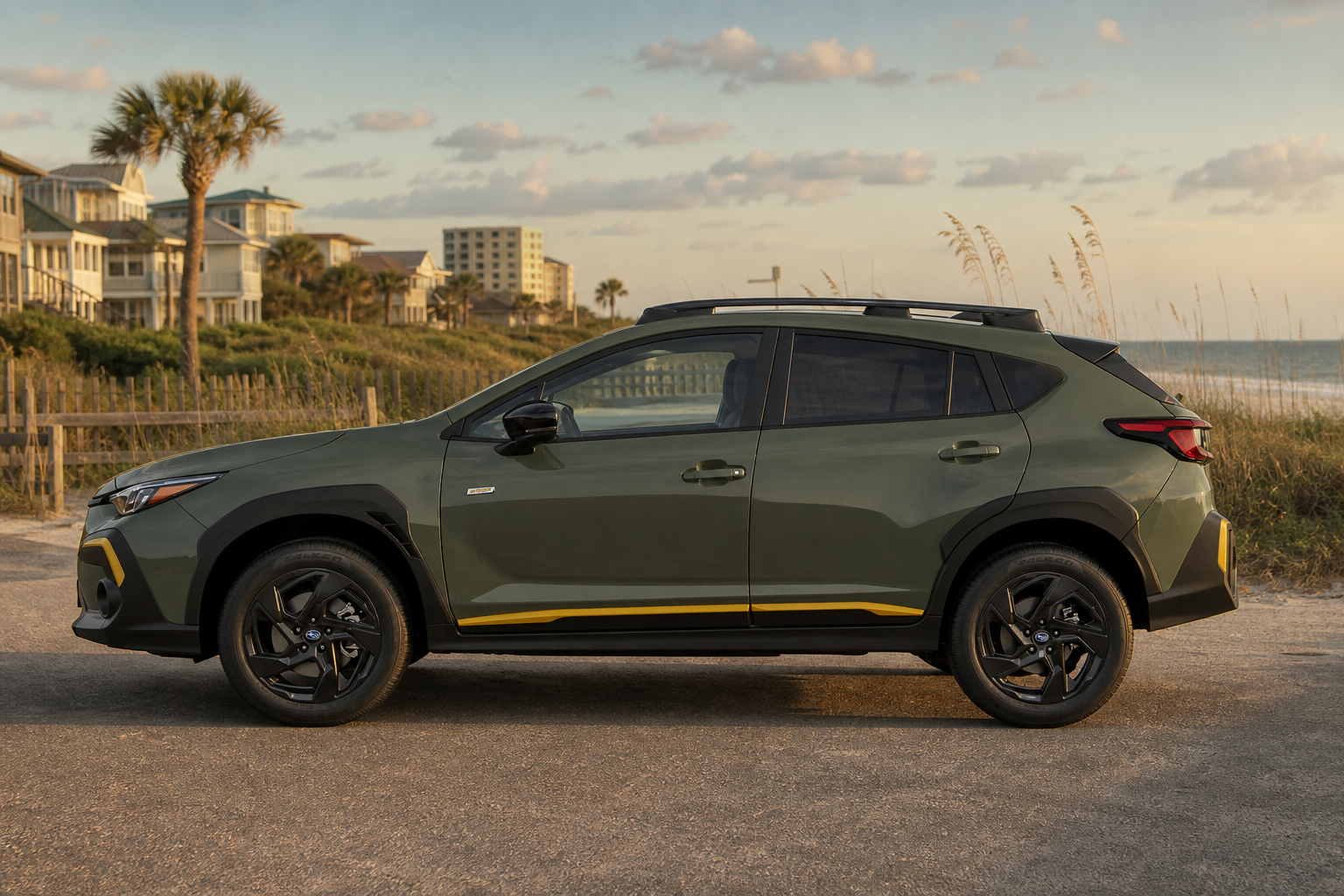
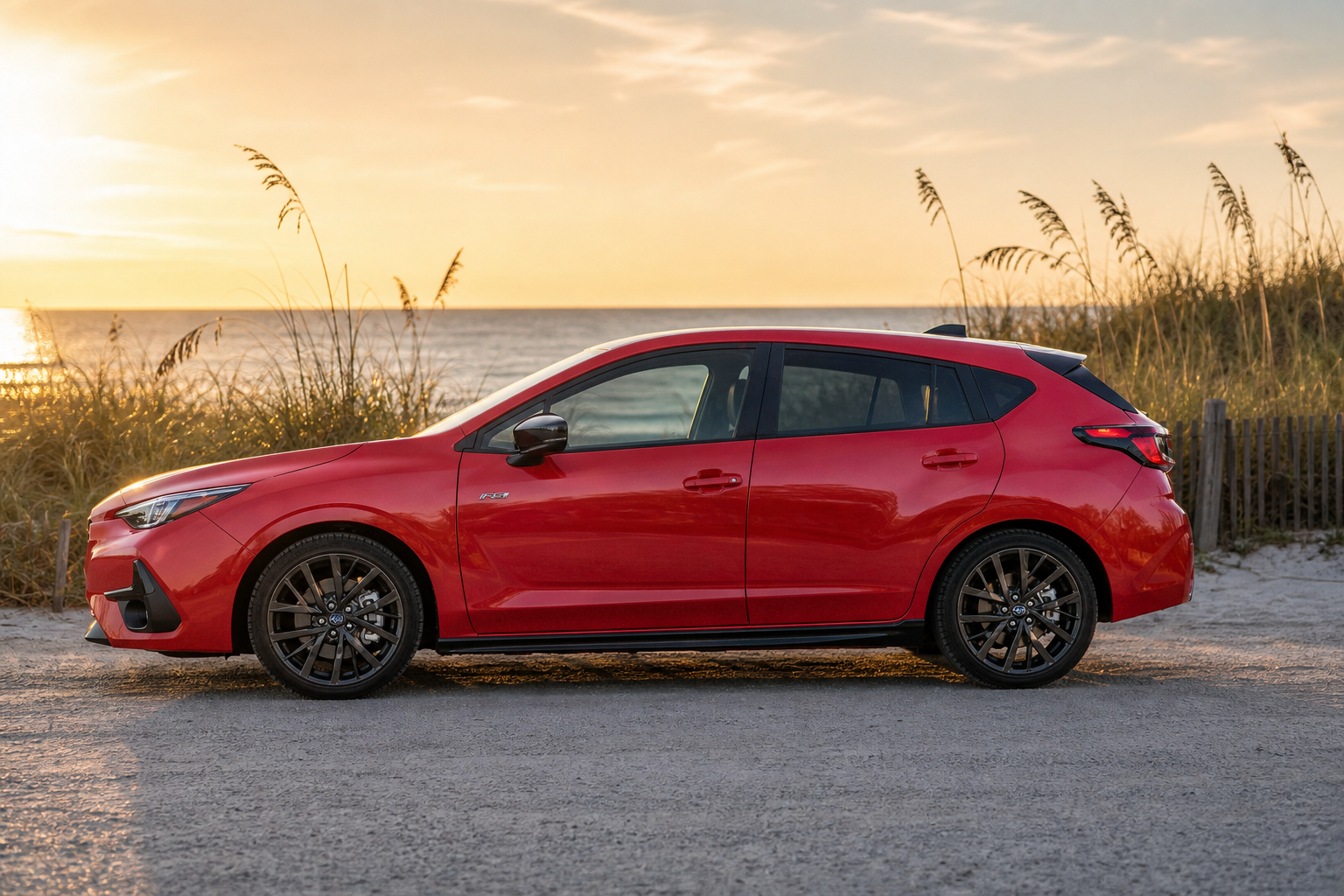
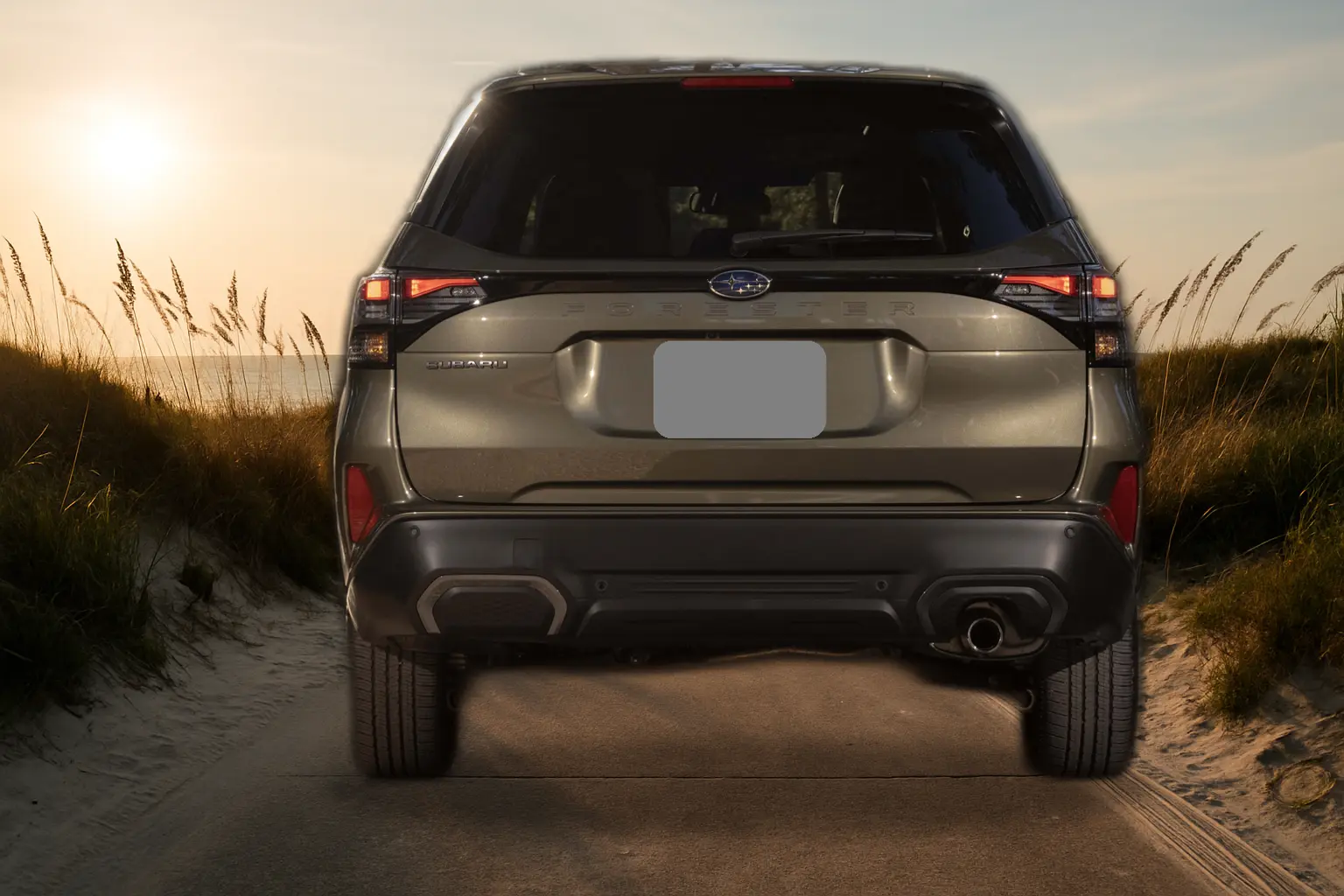
Lone crossover parked on a sandy beach access road at sunset with dunes and sea oats nearby

The Best Subaru for Jacksonville Beaches: A Local Buyer's Guide

Living near the water in Northeast Florida means your vehicle sees sand, salt air, and the occasional soft-shoulder parking spot at Hanna Park. The good news: most of the Subaru lineup handles our coastal life well. The better news is that a few models fit certain beach routines better than others. Here's a straight look at what actually matters for Jacksonville drivers. Which Subaru handles Jacksonville beach access roads best? For gravel lots, packed-sand access roads, and the occasional soft shoulder around Hanna Park or Amelia Island, the Outback and Forester lead the pack. Both offer 8.7 inches of ground clearance and standard Symmetrical All-Wheel Drive, so you clear rutted approaches and rain-flooded lots without scraping or spinning. If your beach days involve loading coolers, chairs, and a couple of boards, the Outback's longer cargo area and roof rails make it the practical pick. The Forester is a little easier to park at crowded spots like Jacksonville Beach and offers great visibility. The Crosstrek is the compact option that still carries that same 8.7 inches of clearance in a smaller footprint. Outback: Most cargo room, best for gear-heavy beach and camping trips Forester: Tall visibility, easy parking, roomy back seat Crosstrek: Compact, nimble, same clearance in a smaller size Wilderness trims (Outback, Forester, Crosstrek): Extra clearance and rugged tires if you regularly hit rougher access points Do you need all-wheel drive for Florida beach driving? For everyday beach trips on paved and packed surfaces, all-wheel drive is a real advantage but not a permit to drive on open sand. Florida beaches like those in Duval County generally prohibit driving on the sand, so AWD's job here is traction on wet ramps, gravel lots, and rain-slicked A1A, not dune crawling. Every Subaru except the BRZ comes with Symmetrical All-Wheel Drive as standard equipment, which means power goes to all four wheels the moment a tire starts to slip. On a summer afternoon when a Florida thunderstorm dumps two inches in an hour, that steady grip getting out of a flooded lot is where you feel the difference. According to the National Weather Service, Jacksonville averages roughly 52 inches of rain per year, with most of it falling between June and September. That's a lot of wet pavement between you and the sand, and it's the main reason coastal drivers here appreciate standard AWD. How do salt air and sand affect your Subaru near the coast? Salt air and blown sand accelerate corrosion on any vehicle, working into wheel wells, brake components, and undercarriage seams. The fix is simple and cheap: rinse the underbody regularly, especially after beach trips, and keep up with routine service. A Subaru cared for this way holds up well against coastal wear. Here in Orange Park and across Jacksonville, we tell owners to hose down the undercarriage every couple of weeks in summer and to book an occasional inspection of brake lines and suspension hardware. Sand also loves cabin air filters and door seals, so a quick check of those keeps things comfortable. Coastal concern Simple habit Salt on undercarriage Rinse underbody every 1–2 weeks in summer Sand in cabin filter Inspect and replace at scheduled intervals Brake corrosion Ask for a brake inspection at service visits Faded exterior Wash and wax before peak summer sun What does a beach-ready Subaru cost in Jacksonville? Pricing shifts with trim and availability, so we won't quote a naked number. As a general guide, the 2026 Subaru Crosstrek Base is the most affordable way into the lineup, the 2026 Forester Premium hits a middle ground on features and space, and the 2026 Outback Wilderness sits toward the top for gear haulers who want extra clearance. The smartest move is to tell us how you use the beach—quick surf mornings, family cooler runs, or weekend camping toward St. Augustine—and we'll match a specific model year and trim to your budget. Current incentives change monthly, so ask us what's active before you shop. Which Subaru is best for a family beach day versus a solo surf trip? For family beach days with coolers, canopies, chairs, and kids, the 2026 Outback or 2026 Ascent give you the most cargo space and easy loading. For a solo surf morning or a couple heading to Ponte Vedra, the 2026 Crosstrek is compact, fuel-friendly, and simple to park at busy access points. Big family days: Ascent (three rows) or Outback (long cargo bay) Couples and gear: Forester for headroom and roof-rail flexibility Solo or two-person runs: Crosstrek for parking and efficiency Come see them side by side at Hanania Subaru of Orange Park—we'll help you picture your beach setup in each one before you decide.

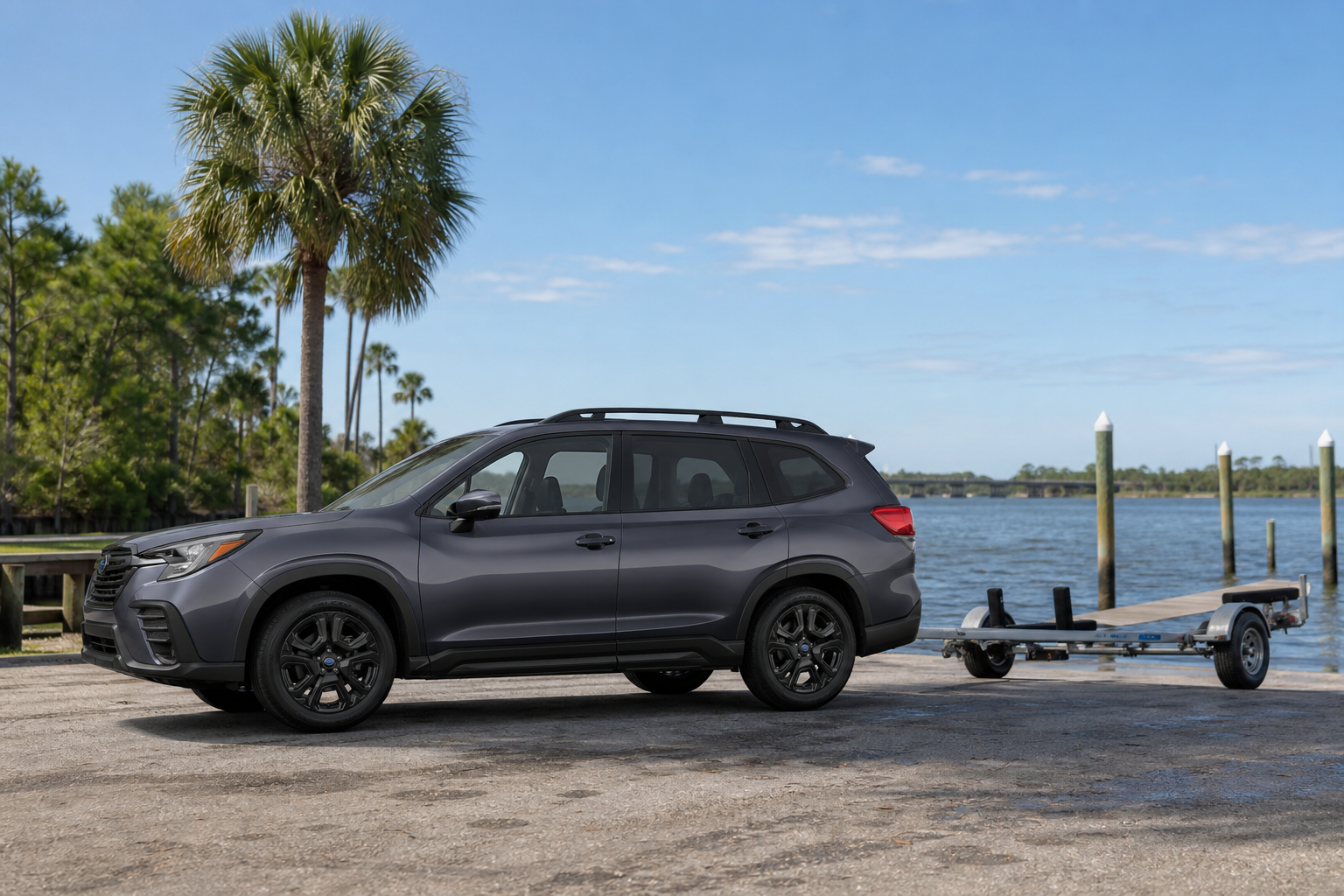
Unbadged SUV parked at a Florida boat ramp on a bright morning, ready for towing near the water

How Much Can a Subaru Ascent Tow? A Jacksonville Owner's Guide

Whether you're hauling a boat to the St. Johns River or towing a camper up to the mountains, the Subaru Ascent gives you real pulling power for a three-row SUV. We'd rather lay out the exact numbers and the fine print than let you guess at the ramp. Here's what the Ascent can actually tow, what eats into that number, and how to set it up right. How much can a Subaru Ascent tow? A properly equipped Subaru Ascent tows up to 5,000 pounds across every trim from the 2019 model year through the current 2026 model. That figure applies when the Ascent has the factory or dealer-installed trailer hitch and wiring, plus proper weight distribution. It's one of the higher ratings among midsize three-row SUVs. Every Ascent uses the same 2.4-liter turbocharged flat-four engine and standard Symmetrical All-Wheel Drive, so towing capacity doesn't change between the base trim and the top Touring trim. That 5,000-pound number covers a lot of common loads Jacksonville families deal with. Small to midsize boat and trailer: often 2,500–4,000 lbs combined Pop-up or small travel camper: typically 1,500–3,500 lbs Enclosed utility or car trailer: varies widely, so weigh it loaded Jet skis on a double trailer: usually well under 3,000 lbs According to Subaru's published specifications, the 5,000-lb maximum requires a weight-distributing hitch for trailers over a certain tongue weight, so check the owner's manual for the exact threshold before your first haul. What affects the Ascent's real-world towing capacity? The 5,000-pound rating is a maximum, not a target you'll always hit. Passengers, cargo, gear, and even a full fuel tank all count against your available towing weight. Florida heat and stop-and-go traffic also add strain, so leaving a margin below the max keeps your drivetrain and brakes happier over time. Two numbers matter most when you're loading up: Term What it means GVWR The most the SUV itself can weigh, loaded with people and cargo GCWR The most the SUV and trailer can weigh combined Tongue weight Downward force the trailer puts on the hitch, usually 10–15% of trailer weight Payload Total weight of passengers and cargo you can add inside Here's the practical version: if you load five people and a weekend's worth of coolers into the Ascent, you've used up payload that would otherwise be available at the hitch. Weigh your trailer loaded, not empty, and stay comfortably under 5,000 pounds for the smoothest tow on I-295 or heading north on I-95. What towing equipment does a Subaru Ascent need? To tow safely, an Ascent needs a properly rated trailer hitch, wiring for the trailer's lights and brakes, and often a weight-distributing hitch for heavier loads. Many Ascent trims include factory hitch prep, but you'll still want a technician to confirm the receiver, wiring harness, and brake controller compatibility before you hook anything up. A quick checklist we walk owners through in our Orange Park service drive: Hitch receiver rated for your trailer weight Trailer wiring harness so brake lights and turn signals work Weight-distributing hitch for larger trailers and higher tongue weights Trailer brake controller if your trailer has electric brakes Correct tire pressure and a recent brake inspection The Ascent's standard Symmetrical All-Wheel Drive helps with traction at boat ramps and on wet Jacksonville roads, but it doesn't raise the tow rating. Good equipment and honest weight math do the heavy lifting. Is the Subaru Ascent a good tow vehicle for Jacksonville? Yes, for most local towing the Ascent is a strong fit. Its 5,000-pound capacity handles typical boats, small campers, and utility trailers, and the all-wheel-drive system earns its keep at slick launches along the St. Johns River. For very large travel trailers or big offshore boats, you'll want a full-size truck instead. Think about how you'll actually use it. Weekend fishing trips, a jet-ski trailer, or a lightweight camper for a Georgia mountain getaway all sit well within the Ascent's range. If you're eyeing a 30-foot travel trailer, that's beyond what any midsize SUV should pull. Before you buy or before your first big tow of the season, stop by Hanania Subaru of Orange Park and let our service team confirm your setup. We can check the hitch, wiring, and brakes so your first trip out of Jacksonville is a smooth one.

Compact SUV parked at a sandy Jacksonville beach access ramp during golden hour with dunes nearby

Why Jacksonville Families Choose the 2026 Subaru Forester for Weekend Adventures

Weekends in Jacksonville rarely go according to plan. One Saturday it's the ramp at Huguenot with soft sand and salt spray, the next it's a downpour on the way to Ichetucknee. Families around Orange Park keep landing on the 2026 Subaru Forester for the same reasons, and we'd rather walk you through the honest ones than sell you a slogan. What makes the 2026 Subaru Forester good for Jacksonville weekends? Standard all-wheel drive, a high seating position, and roughly 8.7 inches of ground clearance make the 2026 Subaru Forester comfortable on sandy beach approaches, flooded intersections after summer storms, and the packed-dirt roads out to North Florida springs. It handles the everyday drive to work just as easily, which is what most families actually need. The cabin is the other half of it. Wide door openings, a flat cargo floor, and roof rails that accept crossbars mean coolers, paddleboards, and beach chairs load without a fight. For a family bouncing between the St. Johns River and the Nassau County line, that flexibility matters more than any spec sheet number. How does the Forester handle Florida heat, rain, and sandy roads? Florida throws heat, humidity, and sudden downpours at a vehicle year-round, and the 2026 Subaru Forester is built to shrug them off. Symmetrical all-wheel drive sends power to all four wheels for grip on wet pavement and loose sand, while the raised ride height keeps the undercarriage clearer of standing water on flooded streets. Jacksonville sees serious rain. The National Weather Service reports the Jacksonville area averages about 52 inches of rainfall per year, well above the U.S. average, so wet-weather traction isn't a luxury here—it's a weekly reality. The Forester's driver-assist features and strong visibility also help on those low-light drives home from the coast. Beach access: Ground clearance and all-wheel drive help on soft, unpaved ramps like Huguenot Memorial Park. Storm season: Raised ride height gives more margin over flooded intersections. Springs and trails: Steady grip on packed dirt and gravel to Ichetucknee, Ginnie, and beyond. Daily commute: Same setup makes rainy I-295 mornings less stressful. How much cargo and passenger room does the 2026 Forester offer? The 2026 Subaru Forester seats five and offers a genuinely usable cargo area behind the rear seats, expanding significantly when you fold them flat. That's enough for a family's beach gear, a weekend of camping supplies, or a big-box run, and the low load floor means you're not hoisting a cooler over your head. Here's how families in our showroom tend to use the space across a typical Jacksonville weekend: Weekend Plan How the Forester Fits It Beach day at Mickler's Landing Chairs, umbrella, cooler, and boards with seats up Camping at Little Talbot Island Rear seats folded for tent, bags, and gear Springs trip to Ichetucknee Coolers and tubes, roof rails for extra length Costco or farmers market run Full grocery haul plus stroller and kids Is the 2026 Subaru Forester a smart buy for a growing family? For most Jacksonville families, yes. The 2026 Subaru Forester pairs the capability you want for coastal and springs trips with the safety features, easy car-seat access, and predictable ownership costs you want Monday through Friday. It's a single vehicle that covers the whole week instead of forcing a compromise. Pricing depends on trim, so we won't throw a naked number at you—come see how a 2026 Subaru Forester Base or 2026 Subaru Forester Premium is equipped and we'll break down current offers with the model year and trim spelled out. If you're weighing new against a certified pre-owned option, our team at Hanania Subaru of Orange Park will lay out both side by side. Where can Jacksonville families see the 2026 Forester in person? You can see and test-drive the 2026 Subaru Forester at Hanania Subaru of Orange Park, right here in the Jacksonville area. We keep a range of trims on the lot so you can compare seating, cargo room, and features in person before deciding. Bring the car seats and the beach chairs—we encourage the real-world test. A test drive tells you more than any brochure. Take it down a familiar stretch of road, load your usual gear, and see whether the space and ride actually fit your family's weekends. Our team is happy to answer questions without rushing you toward a signature.

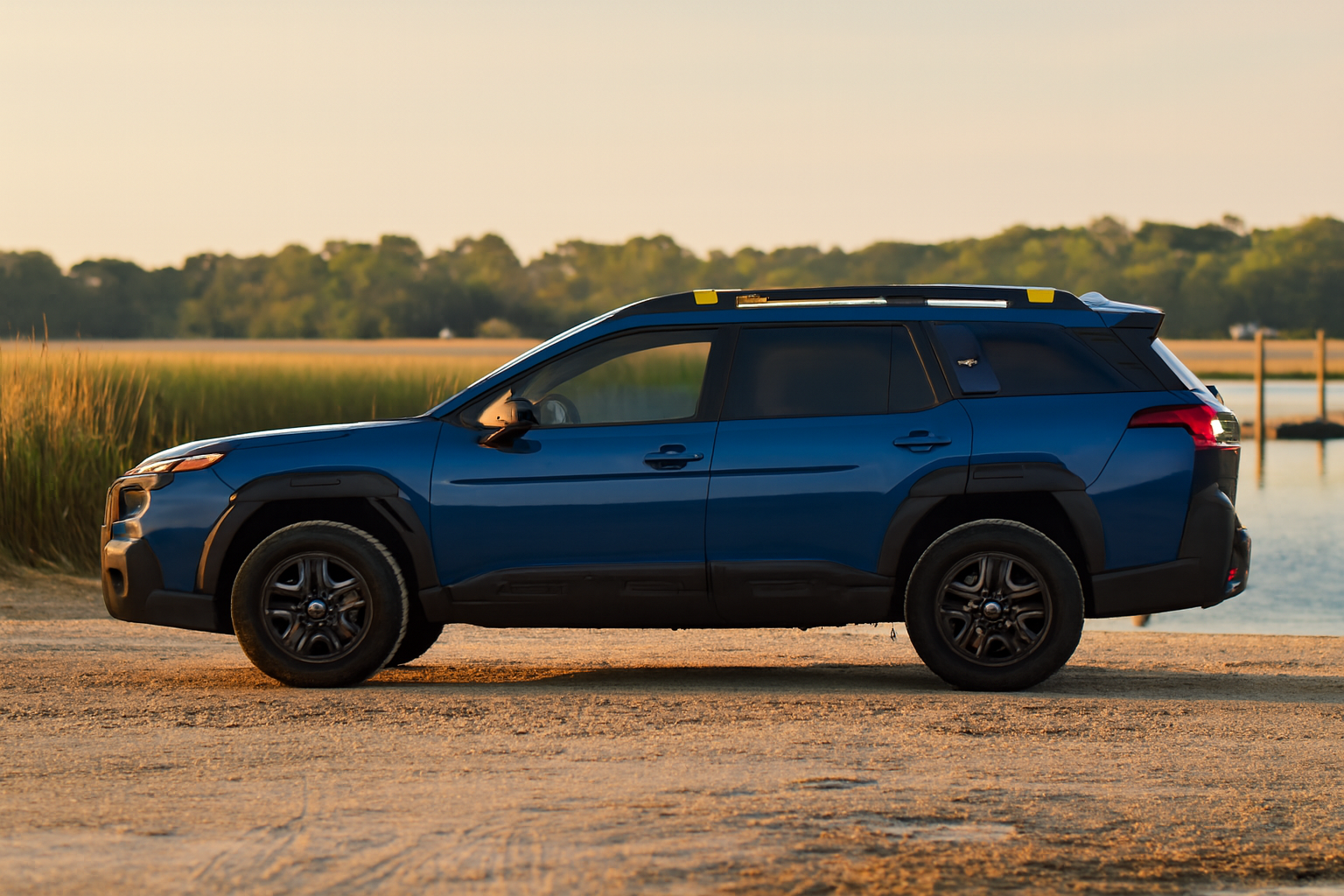
Sandy coastal boat-ramp approach at golden hour with a rugged crossover parked near a river launch dock

Why the Subaru Outback Wilderness Owns Jacksonville's Backroads and Boat Ramps

Around the First Coast, the line between pavement and adventure is short. One minute you're on Heckscher Drive, the next you're easing down a washed-out boat-ramp approach at Sisters Creek or crawling a sandy two-track near Hanna Park. The Subaru Outback Wilderness is built for exactly that in-between world, and it's become a favorite for Jacksonville drivers who fish, paddle, and chase the outdoors on weekends. Here's what its hardware actually buys you, and where honesty matters more than hype. What Makes the Subaru Outback Wilderness Different on Jacksonville's Backroads? The Wilderness trim adds real off-pavement hardware: raised suspension, all-terrain tires, a shorter final-drive ratio, and rugged bumpers with better approach angles. Compared to a standard Outback, it clears ruts, sand berms, and rain-rutted ramp approaches with more confidence, which is exactly what the First Coast's unpaved edges tend to throw at you. Ground clearance is the headline number. The Subaru Outback Wilderness offers 9.5 inches of clearance, per Subaru's published specifications, versus 8.7 inches on the standard Outback. That extra inch sounds small until you're straddling a rain rut on a Sisters Creek approach or clearing a sandy hump at a Mayport ramp. The all-terrain tires and reworked bumpers do the rest of the quiet, unglamorous work. Ground clearance: 9.5 inches for keeping the underbody off ruts and berms All-terrain tires: more bite on wet grass, packed sand, and loose gravel X-MODE with Dual-Function: tuned settings for snow, dirt, mud, and deep snow/sand Symmetrical all-wheel drive: power to all four corners as traction shifts Higher-clearance bumpers: improved approach and departure angles on ramps Is the Subaru Outback Wilderness Good for Off-Road? For the light-to-moderate terrain most Jacksonville drivers see, yes. The Subaru Outback Wilderness handles packed sand, gravel, wet grass, mild trails, and rutted ramp approaches well. It is a capable all-terrain crossover, not a rock crawler. It has no low-range transfer case and limited clearance for serious obstacles, so match your expectations to the trail. Where it shines locally is the stuff you actually drive: the graded roads out to remote put-ins, the beach-access approaches, and light trails around Hanna Park. X-MODE helps manage wheel slip and adds hill descent control on loose downgrades, which is handy on a slick, rain-softened ramp. The all-wheel-drive system keeps you moving when one or two tires lose grip. Just respect the limits. Soft, dry beach sand can bog any crossover, and airing down tires plus knowing the tide chart matters more than any spec sheet. Skip deep water crossings, and don't confuse an all-terrain crossover with a purpose-built off-roader. Used within its range, it's one of the more genuinely useful vehicles for First Coast weekends. Can the Outback Wilderness Tow a Boat? Yes, within reason. The Subaru Outback Wilderness is rated to tow up to 3,500 pounds when properly equipped, according to Subaru. That covers many small fishing boats, one or two jet-skis on a trailer, or a light utility trailer. It's plenty for the kind of small-craft launching common at Mayport and Sisters Creek ramps. Towing weight includes the trailer, the boat, fuel, gear, and coolers, so add it all up honestly before you back down a ramp. A few basics keep it safe: Item Why It Matters Total trailer weight under 3,500 lbs Stay within the rated limit with a margin Proper hitch and wiring Trailer lights and secure connection are required Tongue weight balance Roughly 10–15% on the tongue reduces sway Trailer brakes for heavier loads Improves stopping on wet ramps and highways Tire pressure (tow and vehicle) Correct pressure prevents sway and heat buildup On a slick ramp, back down slowly and let X-MODE and all-wheel drive manage traction on the wet, algae-covered concrete. If your trailer and boat push toward the rated limit, plan gentler acceleration and longer stopping distances on the way home. What Pre-Adventure Checks Should You Run Before a Boat Ramp or Trail? Before any sandy approach, ramp, or trail day, run a quick readiness check: tire condition and pressure, brake feel, all fluids, hitch and trailer wiring, and battery health. It takes minutes and prevents the kind of stuck-at-the-ramp problems that ruin a weekend. Our Hanania Subaru of Orange Park service team runs the same list. Here's the checklist we walk through in the shop: Tires: tread depth, sidewall condition, and correct pressure for load and terrain Brakes: pad life and pedal feel, since wet ramps demand solid stopping Fluids: engine oil, coolant, and transmission fluid at proper levels Hitch and wiring: secure mount and working trailer lights Battery: clean terminals and a healthy charge for repeated ramp restarts Underbody: a quick look after sandy or salty trips, plus a rinse to fight corrosion That last point matters on the coast. Salt spray and brackish ramp water are hard on any vehicle's underbody. A freshwater rinse after saltwater launches, and an occasional underbody inspection, goes a long way toward keeping your Subaru Outback Wilderness ready for the next trip. If you'd rather have a technician verify it, we're glad to run the pre-adventure check for you. Bottom line: within its real-world limits, the Subaru Outback Wilderness fits the First Coast lifestyle better than almost anything in its class. It gets you to the water, down the light trails, and back home, without pretending to be something it isn't.

Contact Us

Fill out this form below and we'll contact you shortly
*Required Fields