Hanania Subaru of Orange Park

Blog / Buying & Trade-In

Blog

All Buying & Trade-In Buying Guides Jacksonville Subaru Dealer Hanania Subaru of Orange Park Service Subaru Models Vehicle Guides Safety Features Automotive Partnerships & Collaborations Jacksonville Subaru Service Maintenance & Service Model Comparisons Outdoor Lifestyle Model Research Service & Maintenance Vehicle Comparisons Off-Road Adventures Subaru Ownership Technology & Innovation Buying Guide Community & Outreach Initiatives Event Highlights & Celebrations New Vehicle Reviews Vehicle Safety Family Vehicles Ownership Vehicle Features Vehicle Research Buying & Leasing Local Dealership News & Activities Ownership & Service Pet-Friendly Vehicle Features Subaru Care & Maintenance Local Living New Vehicles Safety Recall Trade in Dealership Electric Vehicles Hybrid & Electric Jacksonville Used Cars Lifestyle Local Ownership Tips New Inventory Subaru Lineup Subaru Technology Used Vehicles
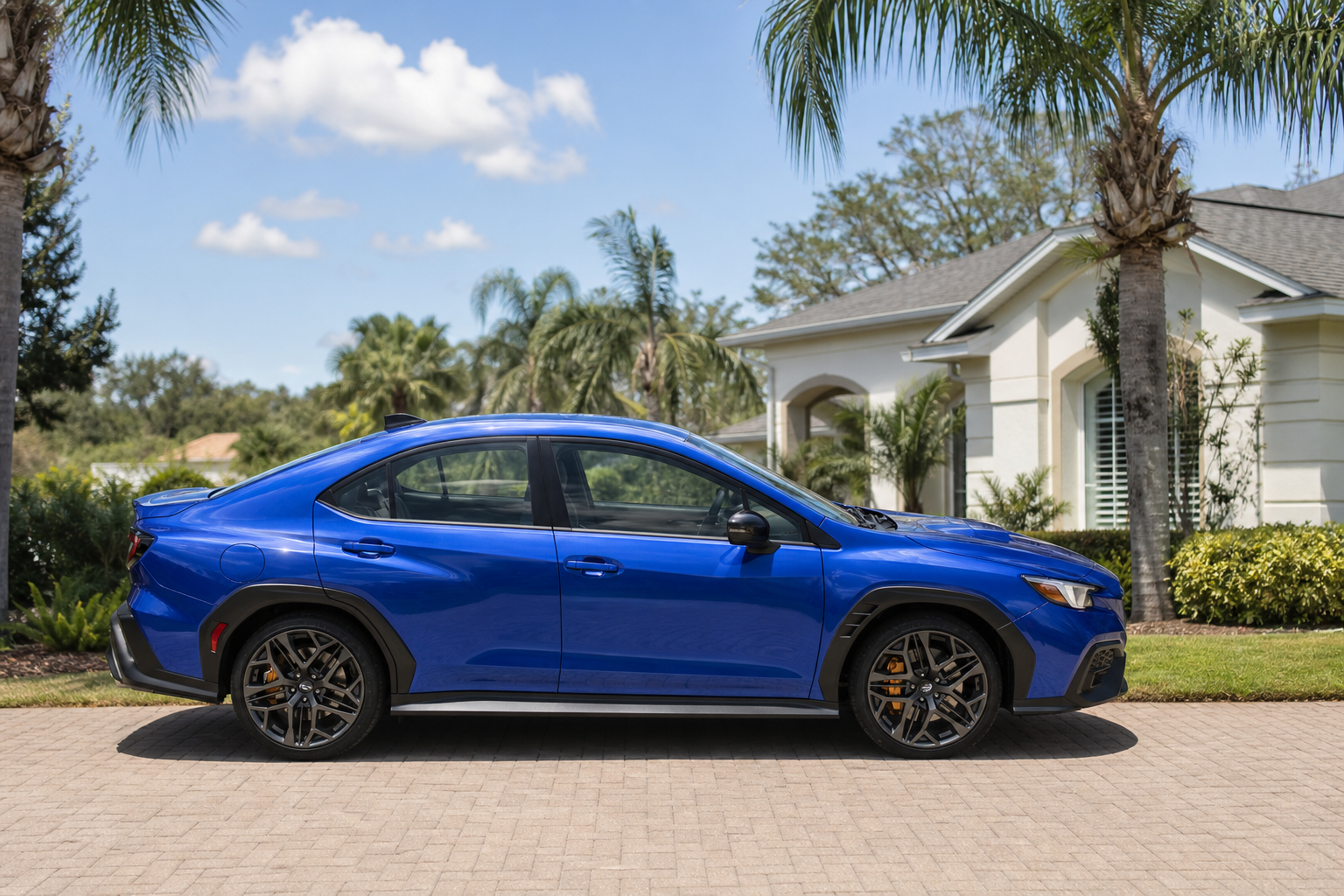
Compact SUV parked in a sunny Jacksonville driveway lined with palm trees under a clear sky

Subaru Lease Deals in Jacksonville: How They Actually Work

Leasing can be a smart way to drive a new Subaru without committing to a long loan, but the fine print matters. Here at Hanania Subaru of Orange Park, we'd rather walk you through the real numbers than hand you a flashy monthly figure and hope you don't ask questions. Below is how leasing works, what to watch for in Jacksonville, and how to compare offers side by side. How do Subaru lease deals work in Jacksonville? A lease lets you pay for the portion of the vehicle you use over a set term, usually 36 months, instead of buying it outright. You cover depreciation, taxes, and fees rather than the full sticker. At the end, you return the Subaru, buy it, or lease something new. Monthly payments are typically lower than a comparable loan. The payment depends on a few moving parts: the negotiated vehicle price, the residual value (what the Subaru is projected to be worth at lease-end), the money factor (basically the interest rate), and any money you put down up front. Lower the price or the money factor and the payment drops. Reduce the term or raise the residual and it shifts too. Capitalized cost: the agreed price of the vehicle you're leasing. Residual value: the projected worth at the end of the term. Money factor: the lease equivalent of an interest rate. Mileage allowance: the annual miles included, often 10,000 or 12,000. Due at signing: first payment, fees, and any down payment. What mileage limit makes sense for Jacksonville drivers? Most Subaru leases include 10,000 or 12,000 miles per year, and going over means paying a per-mile charge at return. If you commute across the river to downtown, drive to St. Augustine on weekends, or run kids around Orange Park, add up your real miles first. Buying a higher allowance up front is usually cheaper than paying overage later. The average American drives about 13,476 miles per year, according to Federal Highway Administration data. That's above the standard 12,000-mile lease cap, so plenty of Jacksonville drivers should size up their allowance rather than assume the base number fits. A quick look at your current odometer over the past year tells you more than any estimate. Annual driving style Suggested mileage tier Short local commute, mostly Orange Park errands 10,000 miles Mixed commuting plus weekend trips 12,000 miles Long commute or frequent I-95 travel 15,000 miles Is leasing or buying a Subaru better for me? Leasing fits drivers who like a new vehicle every few years, want lower monthly payments, and stay within their mileage. Buying makes more sense if you drive heavy miles, plan to keep the vehicle long term, or want to build equity. Neither is universally better; it comes down to your budget, mileage, and how long you keep a car. One honest way to decide: think about the last three cars you owned and how long you kept each. If you traded roughly every three years, leasing a 2026 Subaru Outback Premium or a 2026 Subaru Crosstrek Premium may line up with your habits. If you tend to drive a vehicle until it's paid off and then some, financing usually costs less over the long haul. We're happy to run both scenarios so you see the numbers, not just a payment. What should I bring to lease a Subaru? Bring a valid Florida driver's license, proof of insurance, and proof of income such as recent pay stubs. If you're trading a vehicle, bring the title or loan payoff details and your registration. Having these ready lets us structure an accurate lease and give you real figures instead of rough estimates the same day. Valid Florida driver's license Proof of insurance meeting lease requirements Recent pay stubs or income documentation Trade-in title, payoff amount, and registration Any co-signer information, if applicable Lease offers change with each model year and Subaru's regional programs, so the smartest move is to confirm current terms with our finance team before you sign. We'll disclose the model year, trim, mileage cap, and everything due at signing in writing so there are no counter-surprises. Written by Dana L., Finance Manager (Finance), Finance at Hanania Subaru of Orange Park
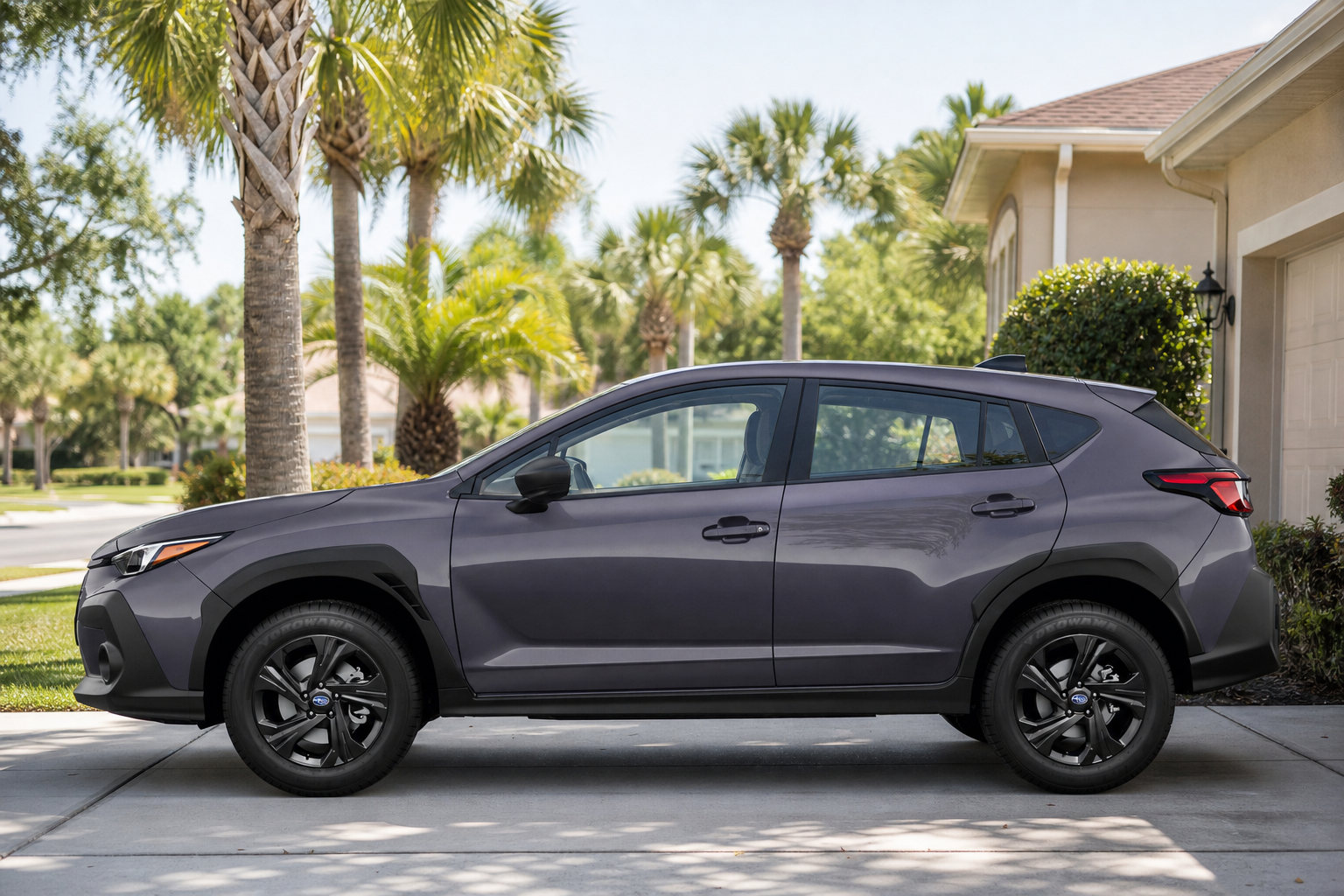
Clean unbadged SUV parked in a sunny Jacksonville driveway ready for a trade-in appraisal appointment

The Subaru Trade-In Process in Jacksonville: What to Expect

Trading in a car should feel straightforward, not stressful. This guide walks through the Subaru trade-in process in Jacksonville step by step, so you know what to bring, how the number gets set, and where you can actually save money at the counter. How does the Subaru trade-in process in Jacksonville work? A Subaru trade-in in Jacksonville usually takes under an hour. You bring the vehicle and paperwork to Hanania Subaru of Orange Park, an appraiser inspects and test-drives it, checks current market data, and gives you a written offer. You can apply that value toward a new or used Subaru, or take it as a standalone offer. Step 1: Schedule or drop in for an appraisal. Step 2: A team member inspects tires, brakes, glass, body, and interior, then verifies mileage. Step 3: The vehicle gets a short test-drive to confirm how it runs. Step 4: You receive a written trade-in offer to review. Step 5: If you buy, the value is applied to your purchase and the paperwork is handled for you. What documents do you need to trade in your Subaru? Bring your title or current loan payoff details, your registration, a valid Florida driver's license, and all keys and fobs. If your name has changed or there is a co-owner, bring supporting documents and have the co-owner present. Having these ready keeps a Subaru trade-in in Jacksonville moving quickly. Document Why it matters Title or loan payoff info Confirms ownership or the amount still owed Registration Verifies the vehicle is current and matches you Driver's license Confirms identity for the transaction All keys and fobs Missing keys can lower the offer Service records Shows the vehicle was maintained How is your Subaru trade-in value determined in Jacksonville? Value comes from three things: the vehicle's condition, its mileage, and what similar vehicles are selling for right now in Northeast Florida. An appraiser at Hanania Subaru of Orange Park weighs recent maintenance, tires, and cosmetic wear against live wholesale and retail demand to reach a fair written figure for your Subaru trade-in in Jacksonville. You can help your number by cleaning the vehicle, gathering service records, and fixing small issues like a burned-out bulb. Well-kept Subaru models with documented maintenance tend to appraise stronger because they need less reconditioning before resale. Does a trade-in lower your sales tax in Florida? Yes. Florida charges 6% statewide sales tax on vehicle purchases, and per the Florida Department of Revenue, that tax applies only to the price after your trade-in credit is subtracted. So a trade-in reduces the taxable amount, which is real savings you would not get selling privately and buying separately. For example, when you trade a vehicle toward a purchase, you are taxed on the difference between the purchase price and the trade allowance rather than the full sticker. That built-in tax break is one reason many shoppers trade in at Hanania Subaru of Orange Park instead of handling two separate deals. Can you trade in a Subaru with a loan still on it? Yes, you can trade in a Subaru that still has a loan. Hanania Subaru of Orange Park gets your exact payoff from the lender and compares it to your trade value. If the value is higher, the difference goes toward your next vehicle. If you still owe more than it is worth, the gap can often be rolled into financing. Positive equity: Trade value exceeds payoff, and the surplus lowers your new balance. Negative equity: You owe more than the value, and the shortfall may be financed into the new loan. Even trade: Value and payoff match, so the loan simply closes out. Whatever your situation, the trade-in process is meant to be clear from the first number to the signed paperwork. Ask for the appraisal in writing, ask how each figure was reached, and you will leave knowing exactly where your money went.

Contact Us

Fill out this form below and we'll contact you shortly
*Required Fields